
Table of Contents
My inbox has three emails from VAs this week asking the same question in different ways: “Should I be worried about AI taking my job?”
Meanwhile, I’m also getting messages from business owners asking: “Can I just replace my VA with ChatGPT and save money?”
Both groups are asking the wrong question. The real story of what’s happening with virtual assistants and AI in 2026 is more nuanced than either fear or hype suggests. And it’s actually more interesting.
What Actually Happened (Not the Headlines)
Let me tell you about Sarah. She’s been a virtual assistant for eight years, primarily handling admin work for small business owners. Email management, calendar scheduling, basic customer support, data entry.
Two years ago, when ChatGPT launched, she panicked. Half her clients were asking if they still needed her. The VA forums were full of doom and gloom about AI replacement.
Here’s what actually happened: Sarah learned to use AI tools. Now she uses them to draft email responses, which she reviews and personalizes before sending. She uses them to transcribe meeting notes, then adds context and action items. She uses them to gather research, then applies judgment about what matters.
She’s handling three times more volume than before. Her rates went up because her output increased. None of her clients left. In fact, she’s at capacity and turning down new work.
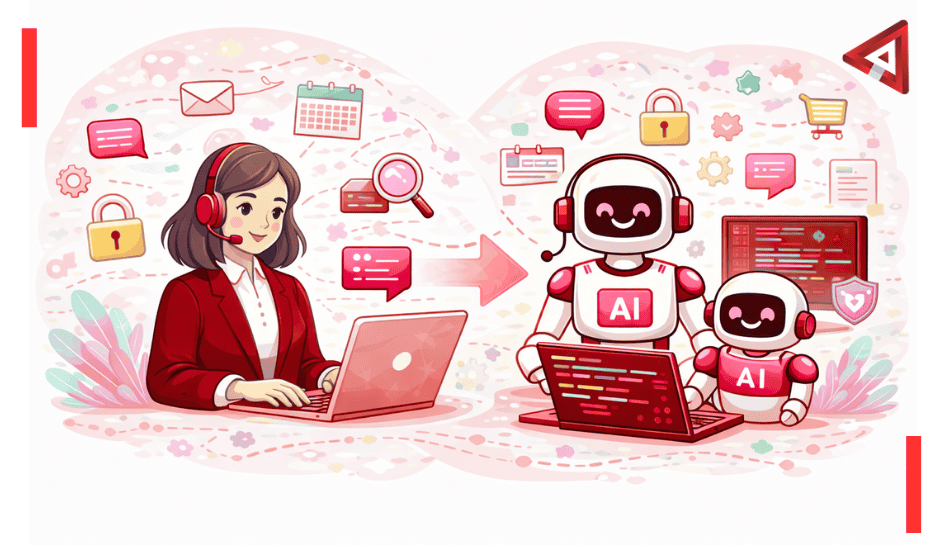
That’s the story the headlines miss. AI didn’t replace VAs. It changed what being a VA means.
What AI Turned Out to Be Good At
Let’s be specific about where AI actually delivers on the replacement hype, because it’s real in certain areas.
The grunt work
Data entry, basic formatting, copying information between systems. AI handles this stuff fast and accurately. Better than humans, honestly. There’s no reason for a person to spend hours moving data around when software can do it in seconds.
This was always the lowest-value part of VA work anyway. Nobody became a VA because they loved data entry.
Pattern matching at scale
Responding to the same question asked fifty different ways. AI is excellent at this. It can recognize that “What’s your refund policy?” and “Can I get my money back?” and “How do returns work?” are all asking the same thing.
For high-volume, low-complexity support, AI works well. Faster than humans. Available 24/7. No vacation days.
Initial drafts of routine stuff
Need a standard follow-up email? A meeting summary? A basic social media post? AI can generate a decent first draft quickly.
Notice I said first draft. The VAs who are thriving use these drafts as starting points, not finished products. They add personality, context, and judgment.
Research and information gathering
AI can pull information from multiple sources faster than any human. It can summarize long documents. It can find relevant data quickly.
But it can’t tell you what’s important versus what’s just there. It can’t apply your specific business context. It can gather; it can’t quite synthesize in the way experienced humans can.
Where Humans Still Win (And Why)
Now here’s where it gets interesting. There’s a whole category of work where AI either fails or does a mediocre enough job that you’re better off with a human.
Reading the room
A client emails saying “No rush on this.” Your VA knows from working with them that “no rush” from this particular client actually means “I need this by tomorrow but I’m being polite.”
AI reads “no rush” literally. It doesn’t pick up on the relationship context, the history, the unspoken urgency.
This matters more than people think. Business relationships are full of subtext.
Judgment calls about priorities
Your calendar says you have back-to-back meetings all day. Someone important emails asking for time. Do you move the 2pm meeting or the 4pm one? Which matters more this week given what’s happening in the business?
A good VA knows. They understand your business well enough to make smart calls. AI follows rules but doesn’t understand context that changes daily.
Managing actual relationships
Your vendor is late on a delivery again. You’re frustrated but you need to maintain the relationship because they’re one of three companies who can do what you need.
A human VA handles this with the right balance of firmness and diplomacy. AI generates either overly formal or inappropriately casual responses. It doesn’t navigate the political realities of business relationships.
Handling the weird stuff
Most work is routine. But every business has situations that don’t fit patterns. A customer with an unusual request. A crisis that needs creative problem-solving. An opportunity that requires quick thinking.
Humans adapt. They figure it out. AI tries to match new situations to patterns it’s seen before, and when it can’t, it either guesses poorly or tells you it can’t help.
Building trust over time
There’s value in having someone who knows your business deeply. Who remembers that thing from six months ago. Who understands how you think. Who anticipates what you’ll need before you ask.
This accumulated knowledge and relationship makes experienced VAs incredibly valuable. It’s not replicable with AI, at least not yet.
How VAs Are Actually Evolving
The virtual assistants who are doing well haven’t fought AI. They’ve integrated it into how they work. Here’s what that looks like in practice.
They became tool operators
The best VAs now use AI tools fluently. They know which tool works for which task. They know how to get good outputs. They know when AI will help and when it’ll just create more work.
This skill set is valuable. Clients don’t want to learn AI tools themselves. They want someone who can use those tools effectively on their behalf.
They moved upmarket
VAs who were doing mostly data entry and basic admin are either struggling or have evolved into roles that require more judgment. They’re doing project coordination. Client relationship management. Strategic planning support.
The work that requires understanding business context, making judgment calls, and managing relationships is where VAs have moved. And that work commands higher rates.
They became interpreters
There’s a role emerging where VAs act as intermediaries between business owners and AI tools. They know what the business needs, they get AI to do the heavy lifting, then they translate and refine the output into something actually useful.
This isn’t a temporary role. It’s a legitimate skillset that combines business understanding, tool proficiency, and human judgment.
They specialized
Generic admin VAs are having a harder time. VAs who specialize in industries or specific business functions are thriving. They bring domain knowledge that AI doesn’t have.
A VA who understands e-commerce operations, or legal practice management, or real estate transactions brings expertise that makes them valuable beyond just doing tasks.
What the Market Actually Looks Like
Let’s talk numbers and reality, not speculation.
Demand hasn’t crashed
The virtual assistant market didn’t collapse when AI got good. It shifted. Companies that might have hired junior VAs for basic tasks are using AI. Companies that need experienced support are still hiring VAs, often at higher rates than before.
The overall market for “getting stuff done remotely” is bigger than ever. It’s just split between AI tools and human VAs in different ways than it was three years ago.
The quality gap widened
Mediocre VAs are struggling. Excellent VAs are thriving. The middle ground is shrinking.
If your value proposition was “I can do basic admin tasks,” AI undercut you. If your value is “I understand your business and make your life easier,” you’re more valuable than before because there’s more complexity to manage.
Hybrid setups are common
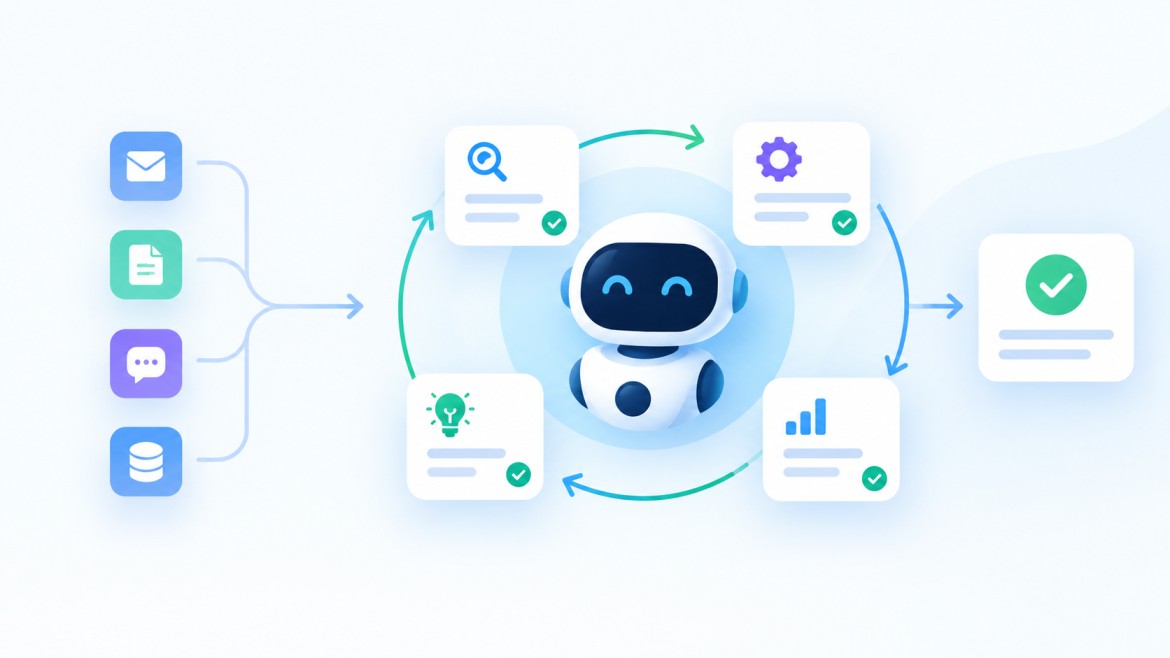
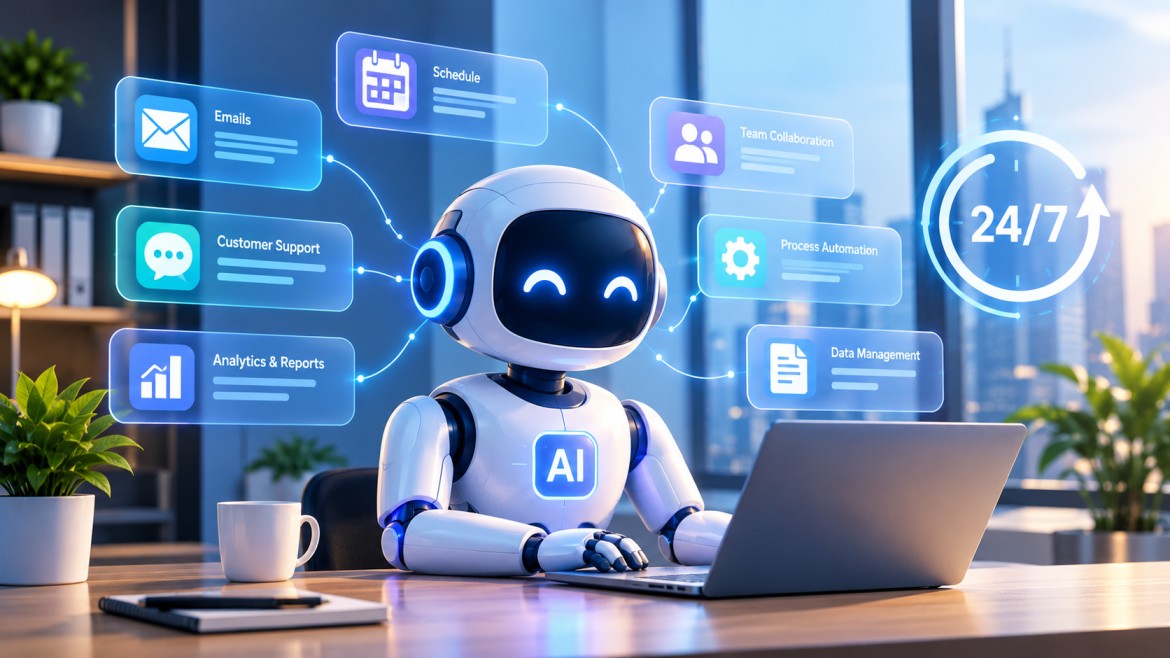
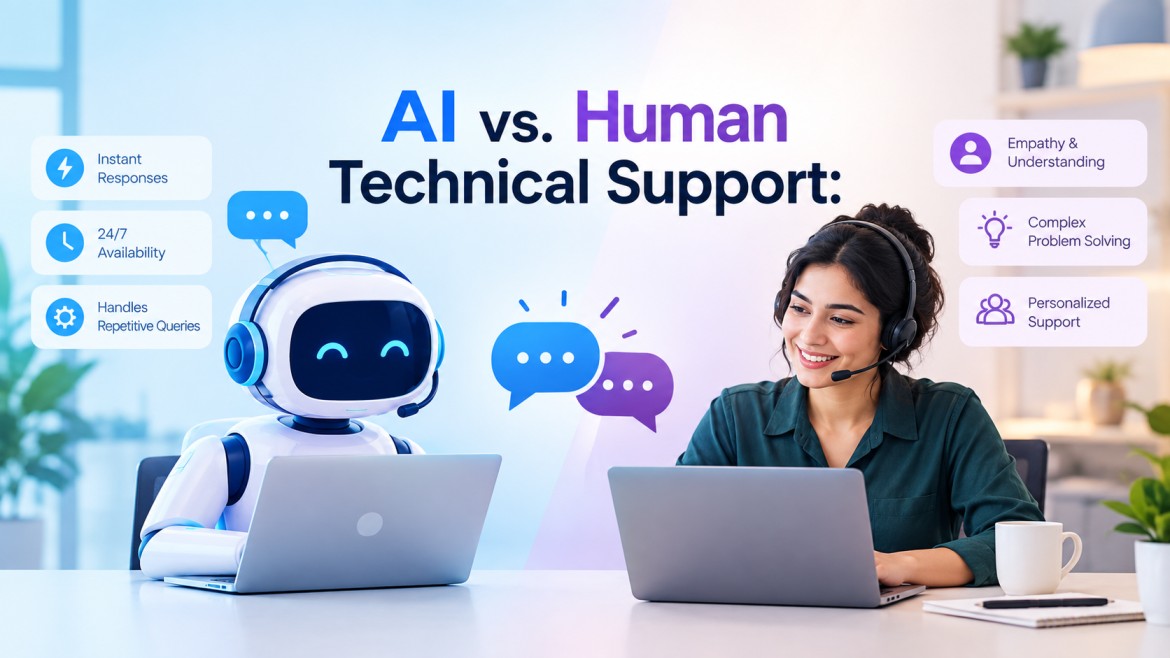
A lot of businesses aren’t choosing between VAs and AI. They’re using both. AI handles volume. VAs handle complexity. AI works 24/7. VAs provide judgment during business hours.
This combination is becoming the default for companies that figured out both tools have roles to play.
Who’s Struggling and Who’s Thriving
The picture isn’t uniform. Let me break down who’s actually affected and how.
Struggling: Entry-level VAs doing commodity work
If you’re new to VA work and competing on price for basic data entry and scheduling, it’s tough. AI can do that cheaper and faster. The bottom end of the market is being automated.
This doesn’t mean there’s no entry point anymore. It means entry-level VAs need to offer something beyond just “I can follow instructions.” Maybe it’s industry knowledge, maybe it’s excellent communication, maybe it’s technical skills.
Struggling: VAs refusing to adapt
There are VAs who won’t touch AI tools. They see them as the enemy. They’re trying to compete on doing everything manually.
This is like taxi drivers refusing to acknowledge that Uber exists. You can have principles, but the market doesn’t care about your principles.
Thriving: VAs who combine human judgment with AI efficiency
These VAs use AI to handle routine stuff fast, which gives them capacity to take on more clients or tackle more complex work. They’re positioned as people who understand both tools and business.
They’re charging more than they did three years ago because they’re delivering more value.
Thriving: Specialist VAs with deep expertise
VAs who really understand a specific industry or function are doing great. They bring knowledge and context that AI doesn’t have. Their clients value them for expertise, not just task completion.
What This Means If You’re Hiring
If you’re trying to decide between hiring a VA or using AI tools, here’s my honest take.
If you have simple, repetitive work
AI tools are probably enough. If you need someone to categorize emails, transcribe meetings, or handle basic scheduling with clear rules, AI can do that fine.
You’ll save money compared to hiring a VA. But you’ll need to set it up, monitor it, and handle exceptions yourself.
If you need actual assistance
By which I mean someone who understands your business, makes judgment calls, manages relationships, and handles the messy reality of running a company, you need a human.
Look for VAs who are comfortable with AI tools. They’ll be more efficient. But hire them for their judgment, not their typing speed.
If you’re not sure
Start with AI for the obvious stuff. When you hit the limits of what AI can handle well, that’s when you know you need a human. Those limits will show up faster than you think.
Most businesses end up with both. AI handling the volume work. A VA handling the complex stuff and managing the AI outputs.
What to look for in a VA now
Don’t just ask if they can use AI tools. Ask how they use them. What tools do they prefer for which tasks? How do they decide when to use AI versus do something manually? How do they check AI outputs for errors?
The VAs who can articulate their AI workflow are the ones who’ve actually integrated it into their work thoughtfully.
The Actual Future (Not the Hype)
Here’s what I think is actually going to happen, based on what’s already happening.
Virtual assistants aren’t going away. The role is evolving into something that combines AI fluency with human judgment. The VAs who get this are adapting and thriving. The ones who don’t are finding it harder.
The companies that figure out how to use both AI and human VAs effectively have an advantage. They get the speed and cost benefits of automation plus the judgment and relationship management that humans provide.
What’s disappearing is the purely task-based VA work. What’s growing is strategic, relationship-focused, judgment-intensive support. That work is more valuable, commands higher rates, and requires experience that AI can’t replicate.
If you’re a VA worried about AI, stop competing with it. Learn to use it. Move into work that requires the things humans are actually good at. Specialize in something. Build deep client relationships. The market for that is strong.
If you’re a business owner trying to decide, understand that AI and VAs solve different problems. AI handles volume and speed. VAs handle complexity and relationships. Most businesses need both, just in different proportions depending on what you do.
The binary choice between “human or AI” is a false one. The real question is how to combine them effectively. Figure that out and you’re ahead of most people still arguing about which one is better.
If you’re looking for virtual assistant support that understands how to use AI tools effectively while providing the human judgment and relationship management that actually moves your business forward, Voxtend’s virtual assistants are already doing this. We’re not fighting AI. We’re using it to deliver better support faster while focusing our human expertise where it actually matters. That’s the real 2026 picture.
 More News