
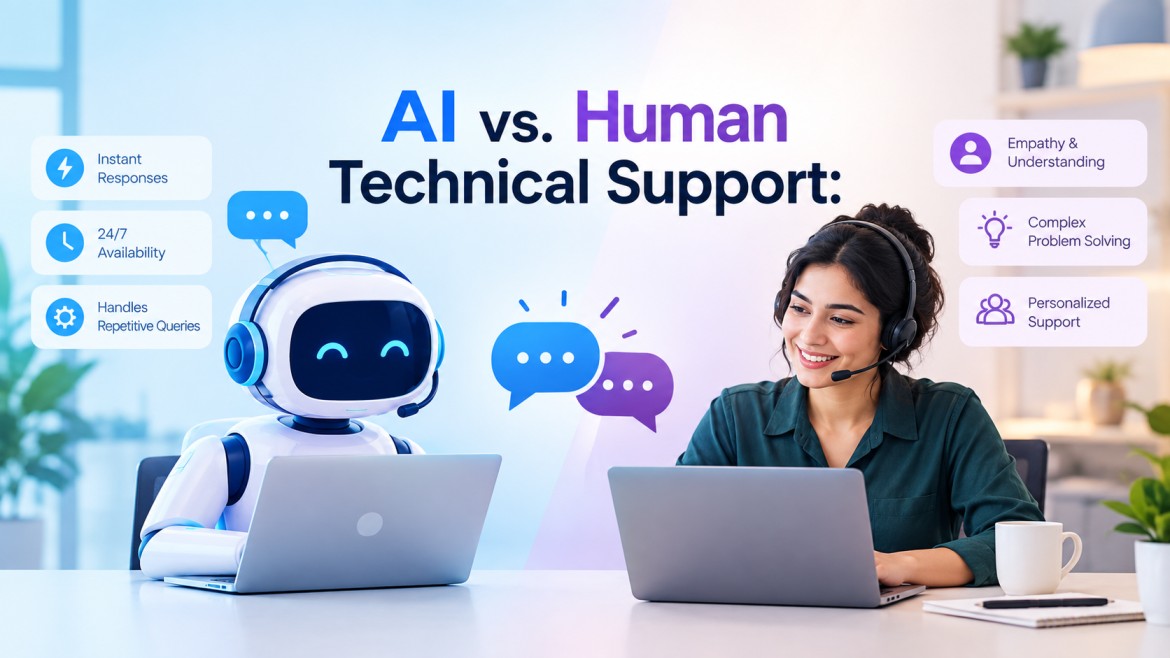
AI vs. Human Technical Support: Finding the Right Balance
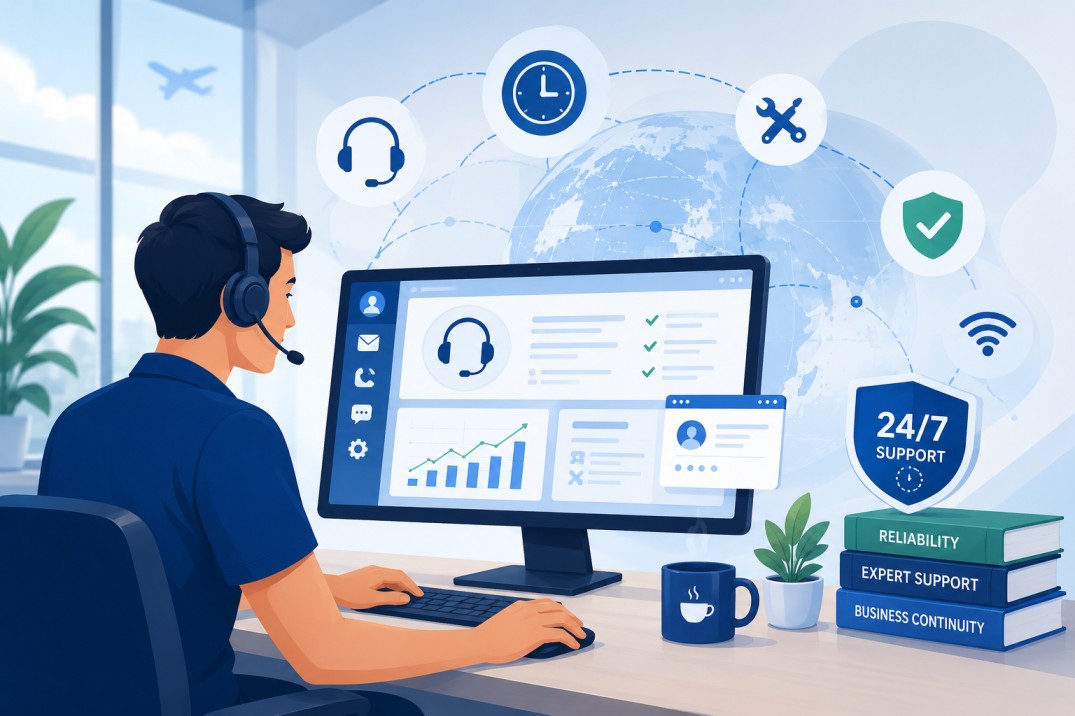
Your internet drops at 11 PM on a Sunday, right before a deadline you can’t move. Do you want a chatbot walking you through the same three router resets, or a person who can actually tell a dying modem from a bad cable? That’s the question underneath a debate a lot of support teams still haven’t settled. Companies keep weighing AI technical support against the traditional human help desk, but it’s rarely either-or. Figure out where AI vs. human technical support earns its keep, and honestly, most of the rest of the strategy falls into place.
AI vs. Human Technical Support: What’s the Difference?
AI technical support runs on pattern recognition. Feed a chatbot enough old tickets and it starts recognizing the obvious stuff: a forgotten password, an app stuck mid-update, a billing question with just one right answer. It doesn’t care what time it is. Three in the morning gets the same response as three in the afternoon. It’ll juggle a hundred conversations at once and still ask you to restart the device, never once sounding annoyed.
Human technical support runs on judgment. A good engineer picks up on the fact that a customer’s short, clipped answers mean something the ticket never says outright. Sometimes that means going off-script, or asking a question no flowchart accounts for. Other times it’s a judgment call made because nothing on file matches what’s happening. Chatbots still can’t do that, and not for lack of trying.
Forget speed versus quality. That’s not really where AI vs. human technical support splits. It’s breadth versus depth. AI covers more ground faster, while humans go deeper once the ground gets uneven. A password reset rarely needs a person. A recurring server crash tied to a client’s custom integration almost always does.
Get this wrong in one direction and customers get stuck with a bot that can’t escalate. Get it wrong the other way and your best engineers spend the afternoon resetting passwords instead of solving problems only they can solve.
The Benefits of a Hybrid AI and Human Support Model
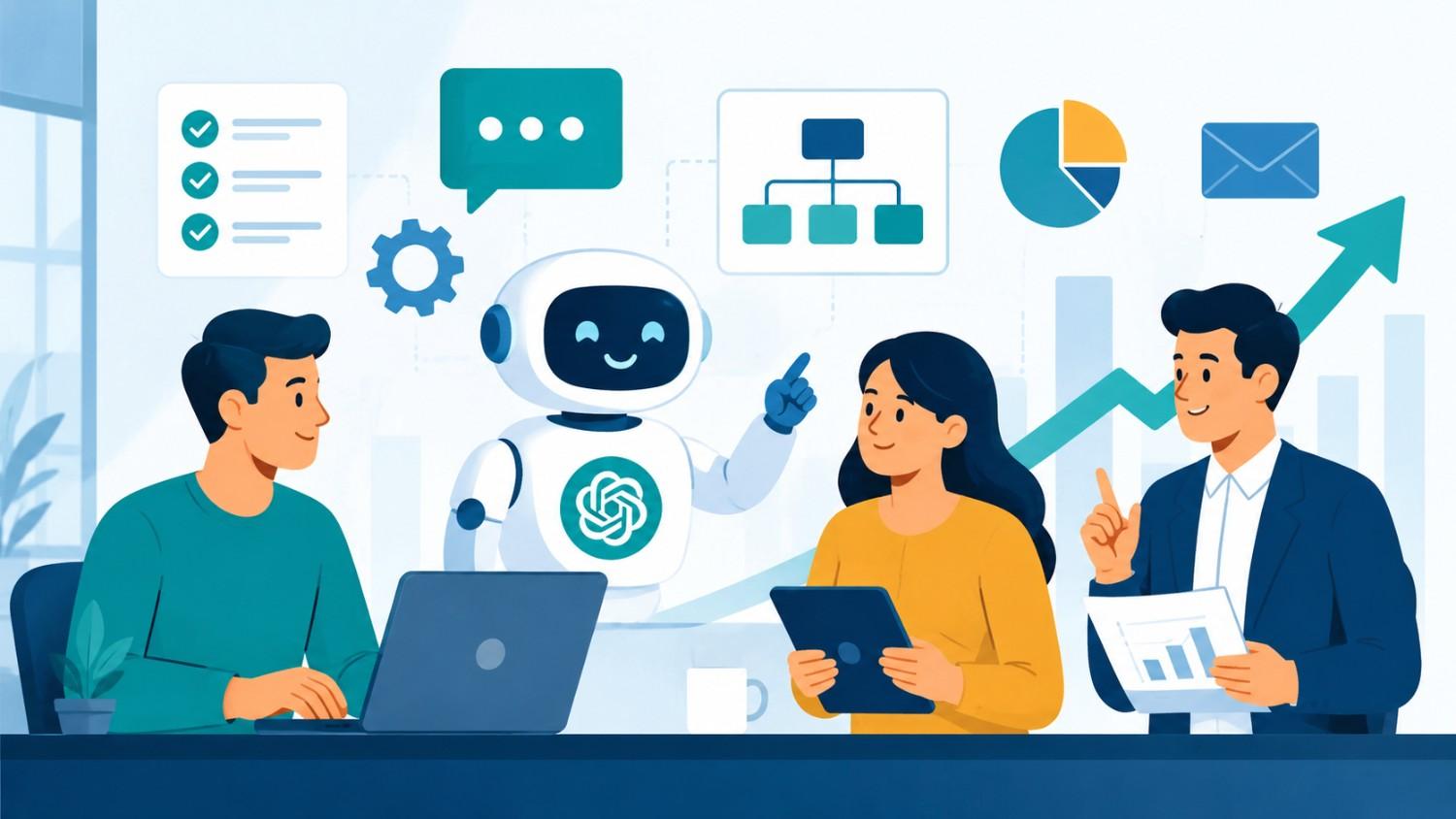
The best support desks let AI technical support take the first swing at every ticket, and bring in a person the moment a case needs actual problem-solving instead of a script.
Response times are the easy win. A ticket gets acknowledged the second it’s filed, routine problems close out in minutes, and anything that needs a person lands on the right desk without the customer repeating themselves.
Capacity is the less obvious win. Automation soaks up the repetitive stuff most help desks deal with daily, freeing engineers to spend their time on the complex cases nobody else can touch.
Hybrid models improve consistency too. Run the same troubleshooting steps a thousand times and you get a thousand identical outcomes, not different ones depending on the agent. Then a person takes over where it counts.
This is also where AI strategy for businesses starts to matter beyond the support desk itself. What to automate, what to escalate, and how the handoff actually works, that’s a decision for leadership, not a checkbox in an IT ticket.
The Future of AI-Powered Technical Support
Scripted chatbots are already old news. The systems coming next read server logs, cross-check known issues, and hand a human agent a suggested fix before the agent finishes reading the ticket, more of a second pair of eyes than a stand-in. A few tools now catch a pattern in performance data and flag a hardware failure before the customer notices anything’s wrong.
Phone support is catching up too. The kind of voice AI that sounded robotic five years back now holds a conversation you’d barely clock as artificial. There’s quieter work happening behind the scenes too: AI combing through thousands of old tickets in an afternoon, catching a trend that would take a human analyst weeks to notice, then nudging engineers toward whatever’s causing the problem rather than the symptom customers keep complaining about.
Put it all together and you still don’t get AI running a support desk by itself. It points toward AI becoming a more capable partner to the people who still make the final call on hard problems. For businesses shaping an AI strategy for businesses in this space, the near-term opportunity isn’t full automation. It comes down to wiring predictive tools more tightly into the humans who still handle the escalations, so problems get caught early and get solved fast once a person needs to step in.
No two businesses land on the same formula here. A desk fielding mostly software bugs looks nothing like one fielding hardware failures, and the right split reflects that. What matters more than the ratio is whether a company chose it on purpose, not because a vendor’s demo made it look good. Start by mapping your ticket volume, then figure out which tickets need a human and which don’t.
Final Thoughts
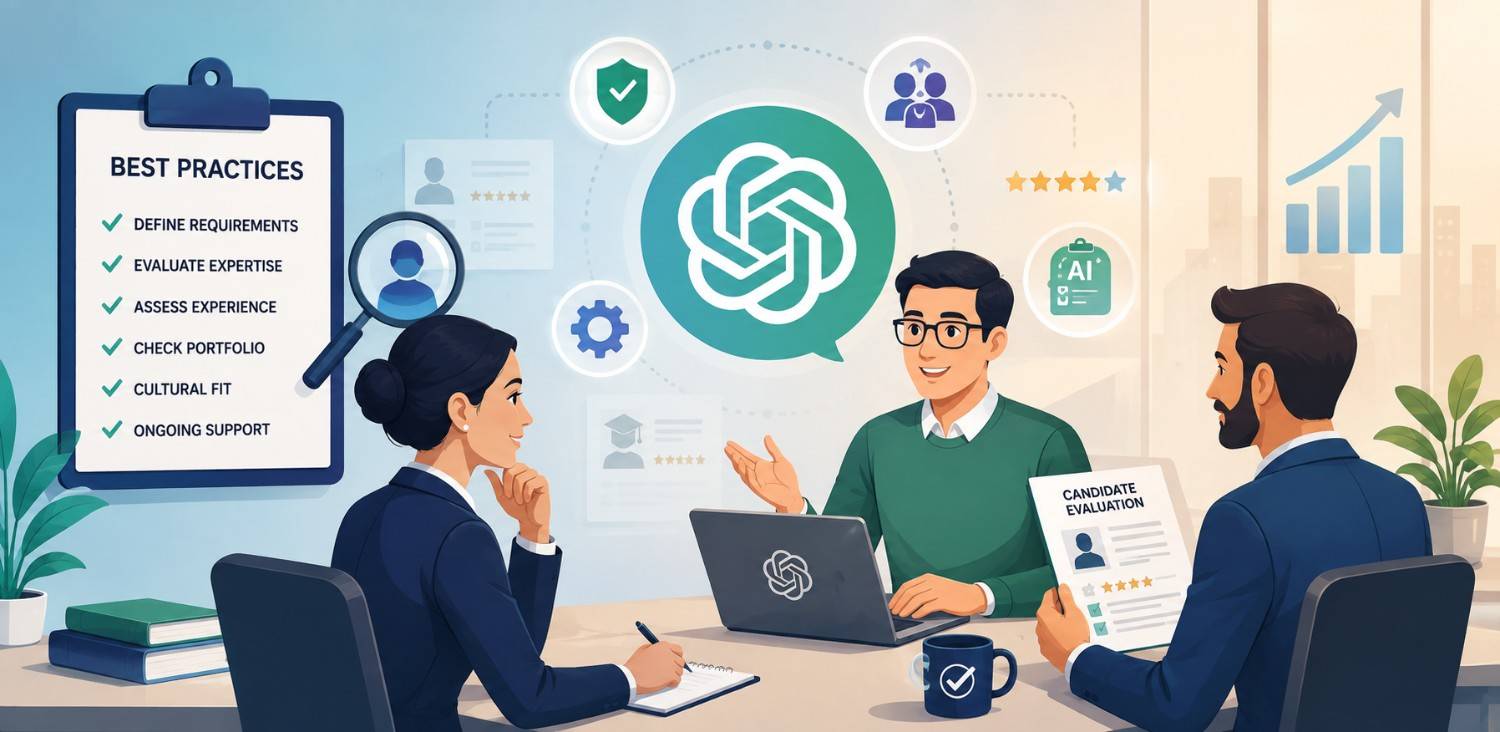
This is usually the exact work an AI strategy consulting services partner gets brought in for, since companies are often too close to their own blind spots to see them clearly. Voxtend has watched this play out more than once: support desks that wanted the speed of AI without giving up the human touch their customers still expect.
Call-To-Action
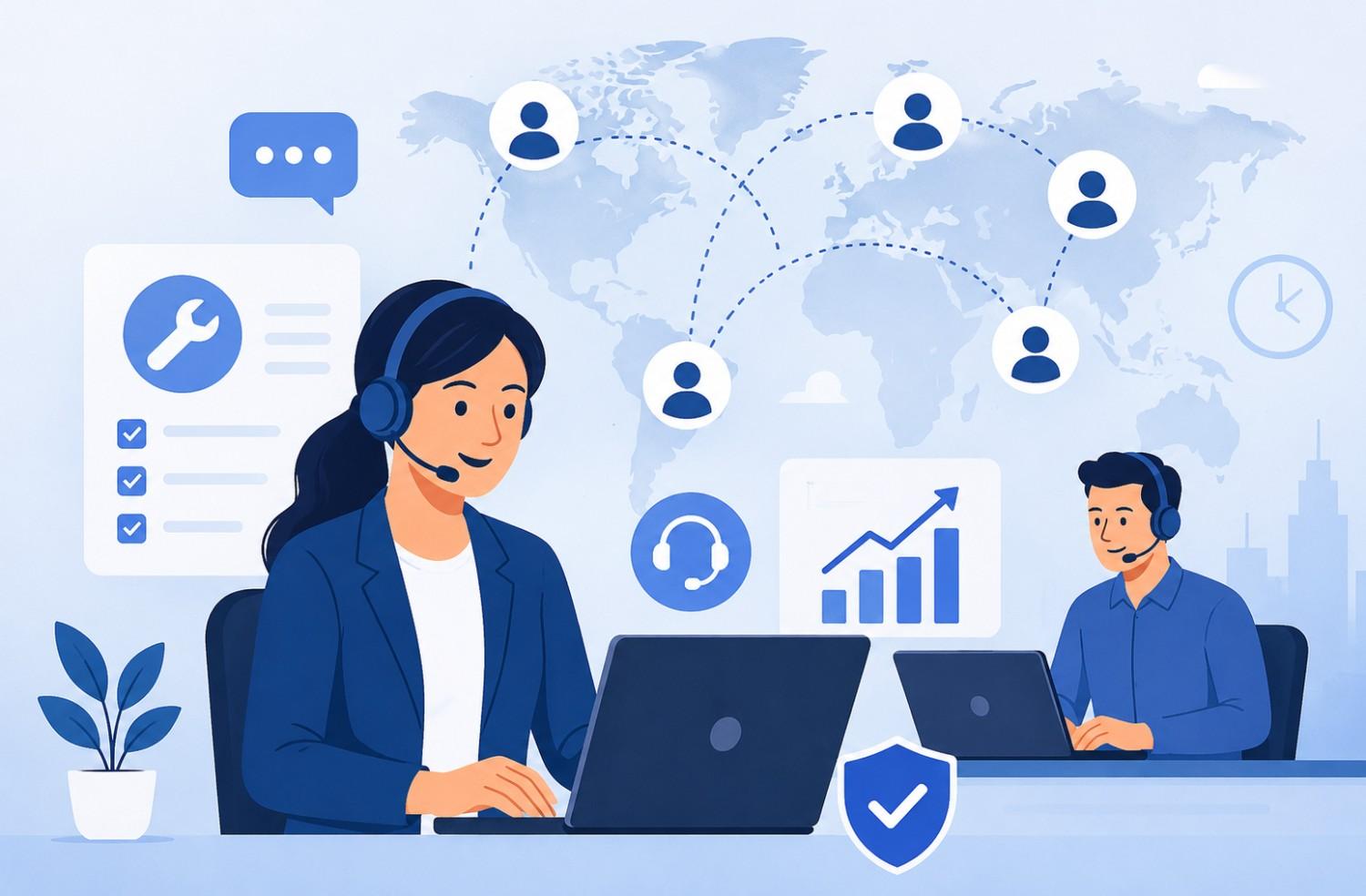
Regardless of the size of the business you represent, if you’re considering hiring technical support experts for your projects, VoxtenD is here to help. Our suite of VA services covers all aspects of technical support and beyond, ensuring that your business gets the help it needs, no matter the size or needs of your business. With round the clock availability, VoxtenD is your partner in achieving business success. Contact us today to explore how our services can benefit your business.
Frequently Asked Questions
Q1: Is AI better than human technical support?
A: Neither wins outright. AI technical support is faster and always available for routine issues, but humans win once judgment and emotion enter the picture. The setups that work best don’t pick one. They just match the tool to the ticket, instead of forcing every case through the same channel.
Q2: What are the benefits of AI in technical support?
A: It closes out simple tickets instantly, never clocks out, and cuts wait times. That frees engineers for harder cases, and it hands support teams a clearer picture of which issues keep coming back, which used to take weeks to spot manually.
Q3: When should a technical support issue be transferred to a human?
A: Hand it off the moment a problem stops matching anything in the system, or when it’s tangled up in something account-specific. Same goes for when the customer’s patience is clearly gone. A well-designed hybrid setup catches those signals on its own, so nobody has to ask twice for a real person.
Q4: Can AI replace technical support engineers?
A: Not fully, and not anytime soon. AI handles the repetitive, high-volume stuff fine. What it still can’t do is make a judgment call, improvise a fix that’s not in any manual, or work through a genuine edge case, and those still need a person. Most industries are heading toward augmentation, not replacement, whatever the marketing decks say.
Q5: What is the best approach to combining AI and human technical support?
A: Map your ticket volume and complexity first, automate the routine layer, then build clear rules for escalating everything else. A lot of businesses bring in AI strategy consulting services to get that split right from day one, because fixing it after customers are frustrated costs more than planning ahead.

 More News