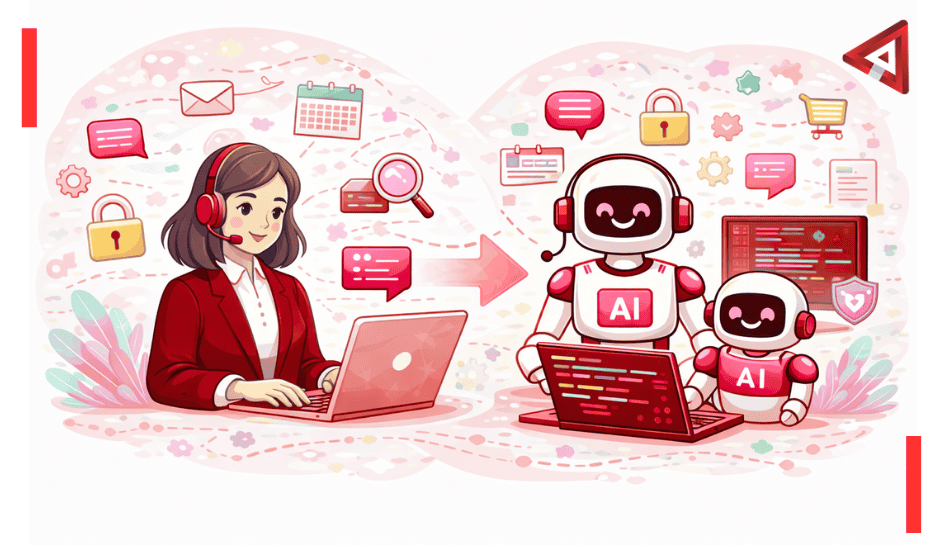


Midnight. A customer stares at their phone, genuinely furious about a missing package. No support agent in sight. A few years ago, that anger would’ve landed in a voicemail box and sat there until morning. Now, an AI chatbot steps in — calm, fast, and surprisingly useful — and sorts the issue before anyone’s even had their first coffee.
That’s not a hypothetical anymore. That’s Tuesday night for thousands of businesses running AI-powered customer service tools. The question isn’t whether these bots work. Most of them do, in some capacity. The real question is which one works for your setup — your size, your tools, your customers.
I’ve been through enough of these comparisons to know one thing: anyone who tells you there’s a single best AI chatbot for customer service is either selling one or hasn’t looked closely enough. What actually matters is fit. So instead of ranking by hype, here’s an honest look at five tools that consistently deliver when the pressure’s on.
What We’ll Cover
- Salesforce Agentforce — Built for enterprises with complex CRM needs
- Tidio — Small budget, fast setup, real results
- Zendesk AI — Depth that grows with your team
- Intercom Fin — When accuracy isn’t optional
- HubSpot Chatbot — Where support meets the full customer journey
- How to actually choose the right one
- Frequently asked questions
Salesforce Agentforce: Built for Enterprises with Complex CRM Needs
If your support team lives inside Salesforce already, Agentforce doesn’t feel like a new tool — it feels like the tool finally catching up to what you needed. The core strength here is that it taps into live CRM data before it even types a single reply. Past purchases, open cases, membership tier, previous conversations — all of it is available upfront, not retrieved mid-chat as an afterthought.
That head start changes everything. When someone asks about a refund, the system isn’t reciting a policy — it’s looking at the actual order, the actual status, and responding accordingly. That’s a different level of answer. Customers notice it, even if they can’t explain why it feels different.
Agentforce also stays consistent across channels. Whether the conversation starts on email, moves to live chat, or continues on social messaging, the context travels with it. No retelling the story from scratch. That alone removes a frustration that quietly kills customer loyalty.
What often gets overlooked is what happens after the conversation ends. Records update automatically. Follow-up messages go out on their own. Urgent cases get escalated without anyone manually flagging them. For large support teams processing thousands of daily interactions, that back-end automation is where the real efficiency lives.
Best suited for:
- Large companies already running Salesforce CRM
- Teams where customer history directly shapes support decisions
- Operations that need automation extending beyond the chat window
It’s not ideal for small teams without complex data needs. The setup expects a lot — and gives a lot in return. Go in with realistic expectations about implementation time, and it pays off well.
Tidio: Small Budget, Fast Setup, Real Results
Twenty minutes. That’s genuinely how long it takes to get Tidio running on a website. I’ve seen teams overthink the choice for weeks, finally pick Tidio, and have it live before the end of the same afternoon. For small businesses and e-commerce stores, that kind of speed matters.
The engine behind it is Lyro, an AI model built specifically for customer service conversations rather than general-purpose chat. Tidio claims around 70 percent of typical questions get resolved without any human involvement. In practice, that holds up reasonably well — especially for the queries that dominate e-commerce support: delivery status, return policies, product availability, order changes.
Shopify integration is smooth. Pricing stays accessible, provided your volume isn’t at enterprise scale. And the bot-to-human handoff, which is genuinely tricky to get right, feels more natural here than you’d expect at this price point. The conversation doesn’t hit a wall when it passes to a real person — it continues.
Where Tidio starts to show its limits is on complex, multi-step account issues that need consistent automation from start to finish. When a situation requires several back-and-forth exchanges and account-level judgment calls, control shifts to a human relatively quickly. That’s not necessarily a flaw — just a boundary worth knowing about upfront.
Best suited for:
- Small to mid-sized e-commerce businesses
- Teams that need to get something live fast without a long implementation cycle
- Shopify stores looking for tight, affordable integration
Zendesk AI: Depth That Grows With Your Team
Zendesk has been in the support game long enough to know what actual customer service work looks like — and that experience shows up in how their AI behaves. This isn’t a system trained purely on theoretical conversations. It’s been shaped by the patterns of real support operations, which gives it a practical intuition that newer entrants don’t always have yet.
Tickets don’t just get sorted — they get sorted well, with some closing automatically before a human ever touches them. Agents working alongside the AI get reply suggestions in real time. The system picks up the repeatable volume so people can focus on the cases that genuinely need human judgment.
The sentiment detection piece is one of those features that sounds minor until you see it working. A customer typing in all caps about a billing error and a customer asking a calm question about a delivery date are two entirely different emotional situations. Responding identically to both is a miss. Zendesk AI catches that difference and adjusts the tone of suggested responses accordingly. When software notices the feeling behind a message, support starts to feel less like a ticket system and more like actual help.
The learning loop is also worth mentioning. Each resolved ticket feeds back into the system. The more your team uses it, the sharper it gets — not as a dramatic leap, but as a steady accumulation of accuracy that pays off over months. Long-term, that means less manual correction and lower support costs without any additional setup.
The analytics go beyond basic dashboards too. Where a lot of AI helpdesk tools just display numbers, Zendesk AI points toward actionable conclusions — where gaps are, which issue types are growing, what’s slowing down resolution. Clarity over noise.
Best suited for:
- Mid-sized to large companies already in the Zendesk ecosystem
- Teams that want AI improving over time without constant retraining
- Operations where understanding performance trends matters as much as handling volume
Intercom Fin: When Accuracy Isn’t Optional
Here’s something that doesn’t get said enough about AI support tools: hallucination is a real problem. Some bots, when they don’t know the answer, make something up anyway — confidently, fluently, and completely wrong. A customer asks about a return window, the bot invents a number, and now you have a service failure that a human has to spend 20 minutes cleaning up.
Fin doesn’t do that. It pulls responses directly from your existing knowledge base and documentation. If the answer isn’t in there, it says so rather than improvising. That constraint sounds limiting until you realize how much damage a confident wrong answer causes downstream.
Because responses are grounded in actual company content, they’re also consistent. Every customer asking the same question gets the same accurate answer, not a variation based on how confidently the model happened to be feeling that day. Over time, that consistency quietly builds trust — the kind users don’t consciously notice until they compare it to an experience with a less reliable bot.
The resolution rate dashboard is unusually transparent. Right upfront, it shows how often Fin closes conversations without any human help. Some tools bury this number or present it in a way that requires interpretation. Fin surfaces it clearly, which is either confident or honest — probably both.
One thing that rarely makes it into comparison reviews: Fin handles multiple languages reasonably well. For businesses serving international customers, automated support that doesn’t fall apart outside of English is a practical advantage worth weighing.
The tradeoff is that Intercom is built around product and engineering workflows. It’s flexible, but the learning curve is steeper for support teams without technical confidence. The platform rewards investment — it just requires a bit more of it upfront.
Best suited for:
- Tech-forward companies where accurate, documentation-grounded responses matter most
- Teams that maintain detailed, up-to-date knowledge bases
- Businesses serving multilingual customer bases
HubSpot Chatbot: Where Support Meets the Full Customer Journey
Most support tools see a customer as a ticket. HubSpot sees them as a contact with a history — and that difference matters more than it sounds.
The moment someone messages, HubSpot pulls their full record: past purchases, recent site activity, open deals, previous support interactions. That context shapes every response. Instead of “how can I help you today?” the system already has a sense of who it’s talking to. Answers feel considered rather than generic. Many bots still operate completely blind to this kind of context, and customers pick up on that gap quickly.
Where HubSpot genuinely shines is in situations where a person is simultaneously a sales prospect and a support case. A customer in the middle of evaluating an upgrade while also dealing with a billing question — that scenario plays out differently when one platform sees both sides of it. Siloed tools miss those moments. HubSpot doesn’t.
The free entry point is also worth noting. Most enterprise-adjacent tools charge for everything from day one. HubSpot lets smaller teams start without a financial commitment and layer in more capability as their needs grow. That’s a rare setup at this level.
Best suited for:
- Growing businesses already using HubSpot for marketing or sales
- Companies where the line between support and sales blurs regularly
- Teams that want one platform instead of three loosely connected ones
How to Actually Choose the Right One
There’s no perfect answer here — and anyone who hands you a clean ranking without knowing your setup is probably optimizing for clicks rather than outcomes. That said, a few honest guidelines hold up across most situations.
Start with your existing tools. The chatbot that integrates cleanly with your CRM, help desk, or e-commerce platform will outperform the “better” one that fights your stack at every turn. Fit matters more than features.
Think about the handoff. Every AI chatbot eventually passes a conversation to a human. How that transition feels to the customer — whether it’s smooth or jarring — often matters more than how clever the bot is during the automated portion.
Be honest about your knowledge base. Tools like Intercom Fin that ground responses in documentation only work as well as that documentation is maintained. If your internal guides are outdated or incomplete, accuracy-first approaches will surface that problem quickly.
Consider volume versus complexity. High-volume, low-complexity queries (delivery status, return policies, account lookups) are where AI chatbots perform best. If your support queue is dominated by nuanced, emotionally sensitive issues, AI handles less of the load well — and the human layer needs to be stronger.
Match the tool to the problem you actually have, not the one that sounds most impressive in a demo.
Need more than a chatbot? Real people make a real difference.
AI handles the volume. But some conversations still need a human — someone with judgment, context, and the ability to actually care. At Voxtend, we provide virtual assistant services built specifically for customer service, available around the clock, and matched to the real needs of your business — whether you’re a small startup or scaling fast.
Let’s talk about where AI ends and where your team needs real support.Explore Voxtend’s VA services and find out how we can fill the gaps.
Frequently asked questions
What is the best AI chatbot for customer service automation?
There’s no single answer — it depends on your business size and existing tools. Salesforce Agentforce suits large enterprises with complex CRM data. Tidio works well for small e-commerce businesses needing quick setup. Zendesk AI fits mid-to-large companies wanting depth and scalability. Intercom Fin is ideal for tech teams prioritizing accuracy. HubSpot’s chatbot makes the most sense when marketing, sales, and support all need to share one platform.
Can AI chatbots fully replace human customer service agents?
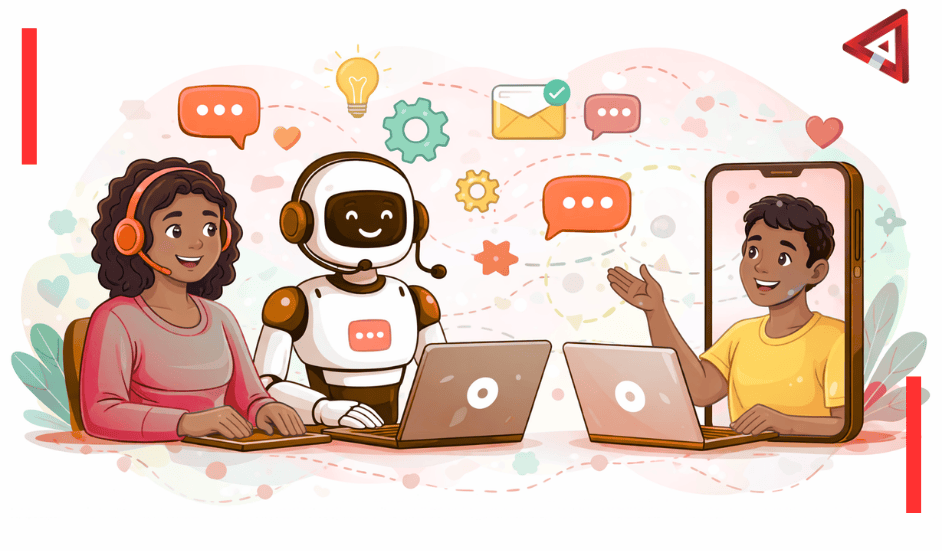
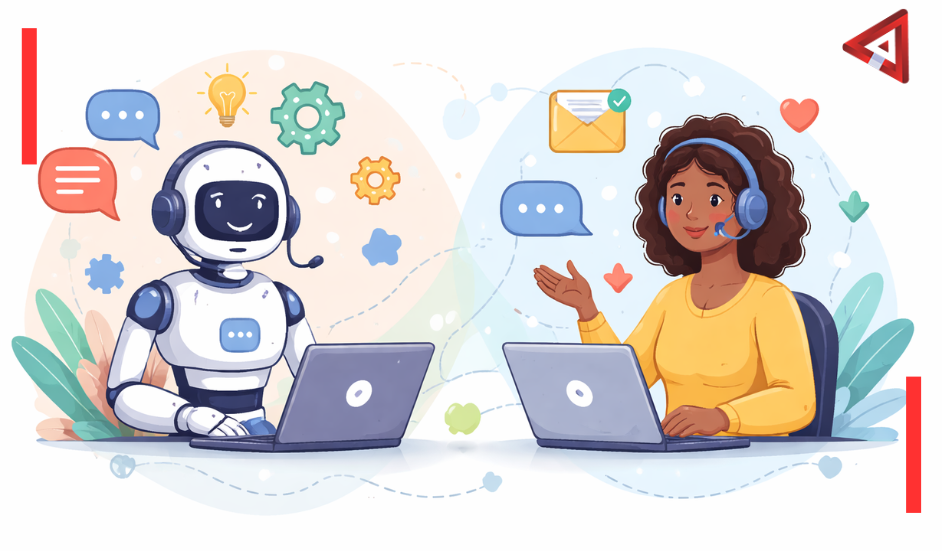
Not fully — and that’s actually fine. AI chatbots handle repetitive, high-volume queries well, often resolving 60 to 70 percent of common questions without human involvement. But complex, emotionally charged, or highly nuanced issues still benefit from a real person. The best-performing setups use both: bots for speed and scale, humans for judgment and genuine empathy.
How long does it take to set up an AI chatbot for customer service?
It varies significantly. Tidio can go live on a website in around 20 minutes. More complex platforms like Salesforce Agentforce or Zendesk AI require more setup time — often days or weeks — particularly when integrating with existing CRM data and support workflows. The tradeoff is that deeper integrations generally produce better long-term results, so the setup investment tends to be worth it.
Which AI chatbot is best for small businesses?
Tidio is widely considered the most accessible option for small businesses, especially those running Shopify or similar e-commerce stores. It’s affordable, fast to deploy, and handles common customer questions reliably. HubSpot’s free tier is also worth considering if your business already uses HubSpot for marketing or sales and wants everything in one place.
What should I look for when choosing an AI chatbot for customer service?
Start with integration — how well does it connect with your existing tools? Then consider how it handles handoffs to human agents, which channels it supports (chat, email, social), how it performs on complex queries, and what the reporting looks like. Accuracy and a smooth human handoff consistently matter more than flashy feature lists.
Does Intercom Fin support multiple languages?
Yes — Intercom Fin handles multiple languages reasonably well, which is something often glossed over in standard comparison reviews. For companies serving international customers, automated support that performs reliably beyond English is a real practical advantage worth factoring into the decision.
Is Zendesk AI good for customer service?
Yes, particularly for mid-sized to large companies already using Zendesk. Its AI layer adds automatic ticket sorting, sentiment detection, real-time agent suggestions, and continuous learning from resolved cases. It’s one of the more mature AI customer service platforms available and gets measurably better over time with consistent use.
Final thoughts
Resist anyone who hands you a single “best” option without asking a single question about your business first. The tool that transformed support for a 500-person SaaS company might be complete overkill for a 10-person e-commerce store. And the budget option that gets a small team live in an afternoon isn’t a compromise — for the right situation, it’s exactly right.
What these five tools share is that they solve real problems for real operations, not just check boxes in a feature comparison. Agentforce connects live data to live conversations. Tidio gets you moving without a weeks-long implementation. Zendesk AI earns its value slowly and steadily. Intercom Fin refuses to guess when it doesn’t know. HubSpot sees the customer, not just the ticket.
Pick the one that fits where you are right now — not where you hope to be in three years. You can always upgrade. You can’t easily undo a six-month implementation of the wrong tool.
And if you find that automation handles the volume but the harder conversations still need a real person — that’s not a failure of the technology. That’s just how good support actually works.

 More News