

What If Your Next Review Started With an AI Agent?
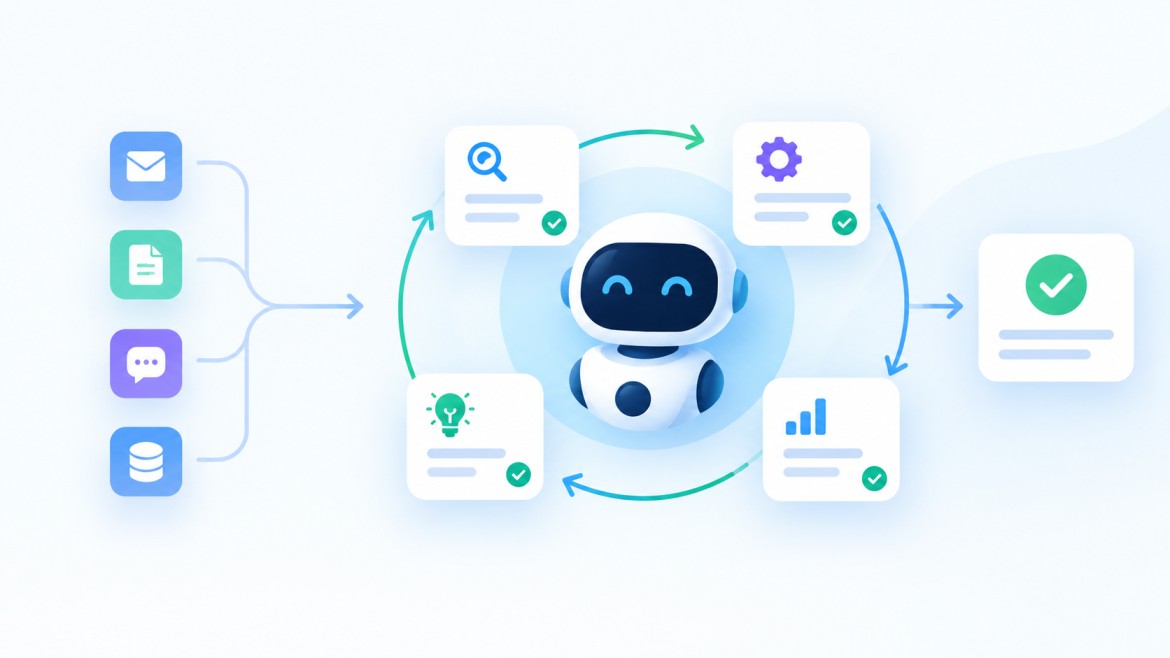
Most reviews start the same way: someone opens a spreadsheet, scrolls through months of scattered notes, and makes a call that’s part data, part memory. An AI agent for business reviews skips that step. It pulls the records, spots the patterns, flags what looks off, all before the meeting even starts.
Reviews don’t fail from lack of effort. They fail from lack of time. Managers running reviews for eight people are triaging, not analyzing. Sales leads prepping a Quarterly Business Review (QRB) are doing the same thing with twenty accounts and one afternoon. Agents don’t replace the judgment call. They remove the grunt work that used to eat the time you needed for it. This is not a new thing in the work culture. Teams are already running AI agents quietly in the background of review cycles, pulling data overnight, building drafts before anyone logs in. The interesting part isn’t that it’s automated. It’s what that frees people up to actually do.
How AI Agents Are Changing the Review Process
The review process used to run on whatever a person could remember and whatever they had time to pull up manually. Now it runs on whatever the system already gathered overnight. The real change is not just about forming smarter opinions. It is basically having faster and wider access to facts before the conversation even starts. An AI agent for business reviews makes this possible in a more structured and efficient way.
Three changes are driving this:
- Reviews used to be backward looking by necessity. Pulling last quarter’s numbers took long enough that nobody had bandwidth to also check this week’s trend line. Agents remove that tradeoff. A reviewer can now see both the historical baseline and the most recent shift in the same document.
- The prep work used to fall on whoever had the least time. Ironically, the busiest people such as the team leads, account managers, department heads, did the most manual data gathering, because nobody else had context on what to extract from each file. Agents flip that. The person with the least time now gets the most complete brief, because the agent did the basic groundwork.
- Reviews used to be siloed by source. HR data lived in one system, project data in another, financials in a third. Nobody cross-referenced them because it took too long. Agents don’t care how many systems they’re pulling from. Cross referencing five sources costs the same as cross referencing one.
None of this changes what a good review is supposed to do. It still needs a human making a call and standing behind it. What changes is how much time the human has to spend sorting through information to get there.
Using AI Agents to Collect and Analyze Review Data
Assembling review data eats most of the time. Deciding what it means takes the rest. That ratio is backwards, and it’s the first thing agents fix.
Here’s what changes with an AI agents for business reviews.
- They check more sources than a person will. A manager checks the project tracker and maybe skims the project management tool. An agent cross-references the tracker, calendar data, ticket resolution times, and peer feedback before the workday begins. It’s not doing anything a person couldn’t do. It’s doing everything a person wouldn’t have time to do.
- They catch contradictions humans skim past. A self review claims someone led a project. The project tool shows someone else as a lead. A vendor claims faster response times this quarter; the ticket data shows the opposite trend. These aren’t dramatic discoveries. They’re the quiet mismatches that get missed when someone’s reading fast under deadline pressure but get caught when a system is reading literally, line by line, with no fatigue.
- They clean up messy inputs. Reviews get pulled from a CRM, a manually updated spreadsheet, a survey tool, an email thread, none of which speak the same format or run on the same timeframe. Part of what makes AI agents for performance reviews genuinely useful is the unglamorous work of reconciling all of that before a human ever looks at the numbers. Nobody wants to spend twenty minutes figuring out why one system says “Q3” and another says “July to September.” The agent already sorted that out.
- They keep a running history, not just a snapshot. A single review document is a moment in time. An agent that’s been quietly logging data across every cycle builds something closer to a timeline, which becomes far more useful the second or third time around, because now there’s a pattern to check the current numbers against.
The output is not just a decision. It’s a clean, cross referenced starting point, the part that used to take three hours and now takes ten minutes. What a reviewer does with those ten extra minutes is the part that actually matters.
AI-Powered Insights for Better Review Decisions
Collecting data is step one. What an AI agent for business reviews does with that data is where the real impact comes from.
- Trend direction matters more than snapshots. Not “40 tickets closed last quarter” but “tickets closed have dropped three quarters running.” A single number tells you where things stand. A trend tells you where they’re headed, which is usually the more urgent question in a review.
- Comparative context turns a number into information. Forty tickets means nothing without a baseline: team average, prior period, stated goal. A good agent attaches that baseline automatically instead of leaving the reviewer to go find it, which is usually the step that gets skipped when time is short.
- Contradiction flags keep the agent honest. When self assessment and system data disagree, the agent surfaces both and lets the reviewer ask why. It doesn’t quietly pick a side. That distinction matters. An agent that resolves disagreements on its own is making a call it shouldn’t be making.
- Risk surfacing catches problems early. In a QBR, this looks like flagging a client whose usage dropped 30 percent eight months before renewal, the kind of early signal that gets buried in a spreadsheet nobody reopens until it’s already too late to act on it.
- Weight is more important than volume. Not every data point carries the same importance. A missed deadline on a low priority task isn’t the same as a missed deadline on a client facing deliverable. AI Agents that rank findings by actual impact, instead of just listing everything they found, save reviewers from digging through noise to find the two things that matter.
This is where AI agents for decision making earn trust or lose it. An agent that just outputs “promote this person” or “cut this vendor” with no reasoning shown is a black box, and nobody should stake a real decision on a black box. The better pattern is simple: Show the data, show the pattern, show why it’s worth a second look, and leave the actual call to the person accountable for it.
Conclusion
None of this makes reviews easier in the sense of requiring less thought. If anything, a good AI agent hands the reviewer more to think about, because it surfaces things that would have stayed buried before. What it removes is the wasted hour spent just getting to a starting point.
The businesses getting real value out of AI agent for business reviews aren’t the ones treating agents as a replacement for judgment. They’re the ones treating agents as a research assistant that never gets tired, never skips a source, and never forgets what happened last quarter. The review still comes down to a person deciding what the numbers mean and what to do next. That person just walks in better prepared than they used to.
If your next review starts with an AI agent instead of a blank spreadsheet, the meeting doesn’t get shorter. It gets sharper. That’s the actual upside, and it’s a lot less dramatic than the headlines make it sound, which is probably why it’s already happening quietly inside teams that never announced it.
FAQs
- What is an AI agent in the review process?
It’s software that goes out and gathers review relevant information on its own, pulling information from tools like project trackers, CRMs, or survey platforms, instead of waiting for someone to ask it a question one at a time. The difference between this and a basic chatbot comes down to initiative. A chatbot answers what you type. An AI agent fetches the update itself, on a schedule or trigger, before anyone thinks to ask.
2. How can AI agents improve business reviews?
AI agents improve business mainly by taking prep time from hours down to minutes. That freed up time doesn’t disappear. It goes straight into actually interpreting the data instead of hunting for it. AI Agents also catch the small inconsistencies that slip through when someone’s reading fast under deadline pressure, a metric that doesn’t match a claim, or a trend that’s been quietly declining for months without anyone noticing.
3. Can AI agents replace human decision-making during reviews?
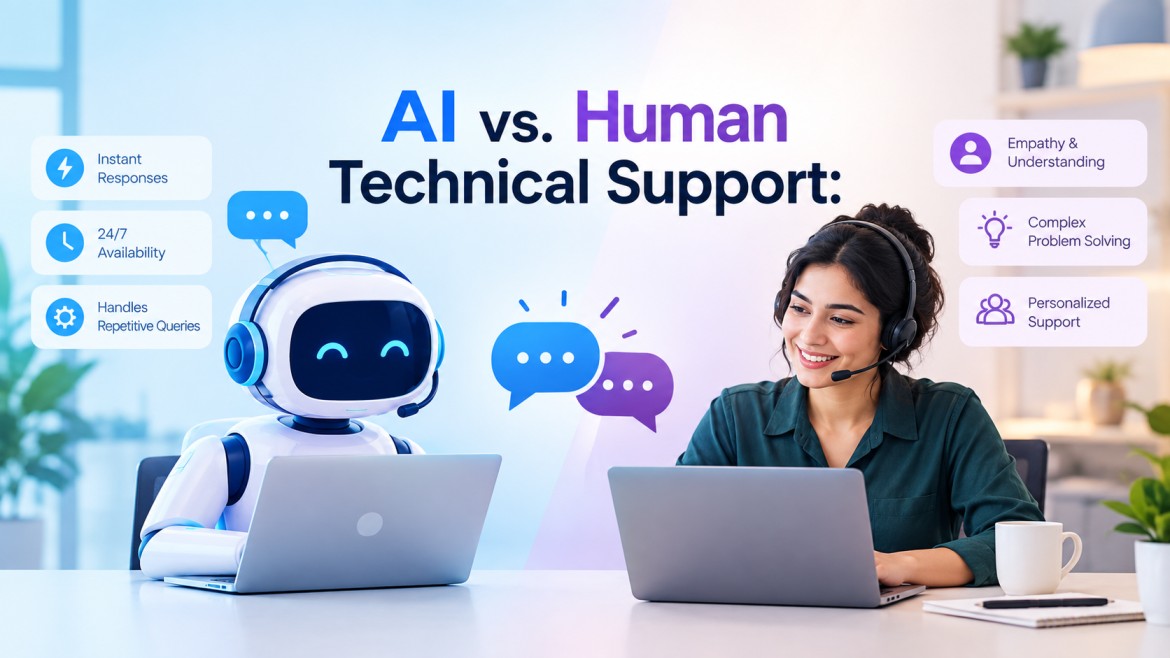
No. Human are integral part of the decision making especially during a review process. Agents are strong at pattern recognition across large, messy datasets, exactly where humans are slowest and most error prone. But reviews usually hinge on context an agent doesn’t have access to. Why a project actually slipped. What a client relationship feels like beyond the usage numbers. Whether someone’s rough quarter was a real problem or a one off. Agents handle the data. Humans handle the judgment. Swapping that order is where things go wrong.
4. What information can an AI agent analyze during a review?
An AI agent can work on numerous information during a review. It depends entirely on what’s connected, but the common sources include project management data, CRM and sales activity, support ticket volume and resolution time, calendar and meeting patterns, survey or feedback responses, and prior review history for tracking trends over time. The more sources an agent can reach, the more it can cross reference, and that’s usually where the sharpest insights show up, in the gap between two sources rather than inside either one on its own.
5. How can a business start using AI agents for reviews?
Start narrow. Pick one review type, one team’s quarterly reviews, or QBRs for a handful of accounts, and connect two or three data sources that already exist rather than trying to wire up everything on day one. Run it alongside the existing manual process for a single cycle so reviewers can compare the agent’s output against what they would have put together themselves. That side by side comparison is usually what builds real trust in the system, and it’s a far cheaper way to find the gaps than rolling it out company wide before anyone’s tested it.

 More News