
What Is Agentic Workflow Automation? The Complete Guide for Modern Enterprises
Ask a finance manager what drains the week and you rarely hear “big projects.” Instead, you hear about the small stuff like an issue where the supplier says a payment came in short. To resolve this, someone has to find the purchase order, dig out the delivery note, message procurement team, wait for an answer, and fix a spreadsheet. Each case takes twenty minutes of work and two days of waiting. Multiply that by a few hundred a month and you have a full time job that appears on no organizational chart.
Older automation never solved this because it runs on scripts, and these cases never follow one. Agentic Workflow Automation takes a different route. You give the software a goal and access to your systems, and it decides the steps. This guide explains how that works, why companies are investing in Agentic AI Development, and what businesses should understand before thinking about the AI adoption.
What Is Agentic Workflow Automation?
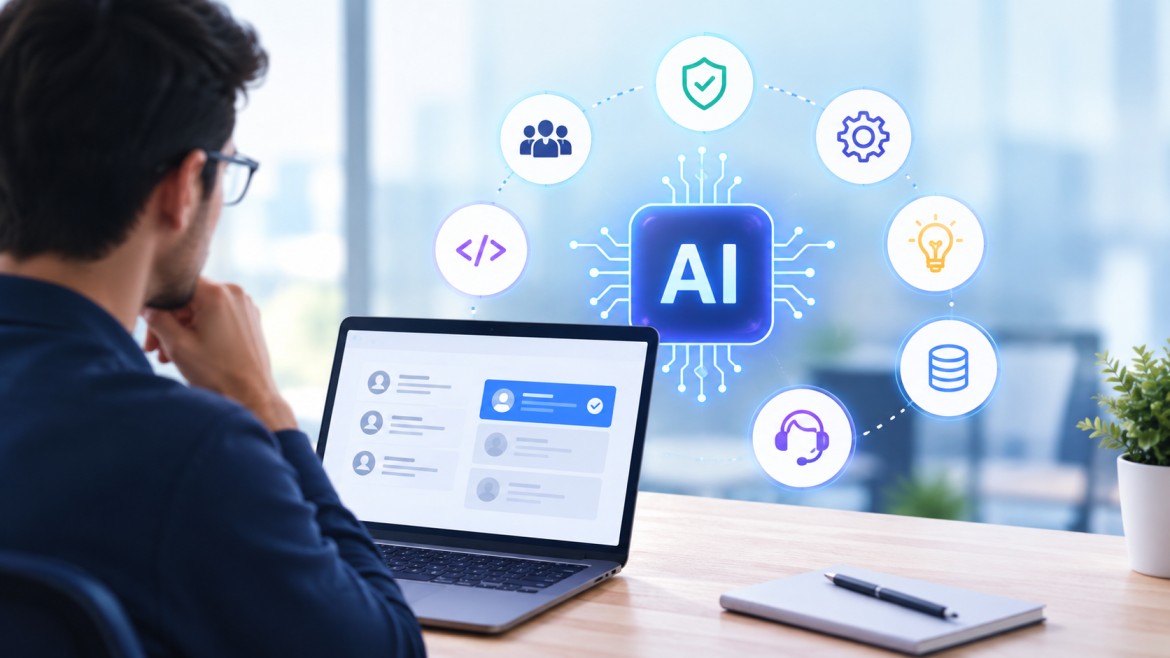
Agentic workflow automation utilizes AI agents to plan, carry out and complete complex multi-step processes without much human intervention. It’s more like you give the AI agent an objective, for example “solve or figure out this invoice mismatch”. Instead of relying on a human for instructions via prompts, the AI agent works out the path itself. It can easily go through documents, query systems, draft messages, and ask for human support when a decision falls outside its given permissions or needs human judgement.
The most significant difference from the older system is the judgment. Older bots rely heavily on fixed standards; it breaks when a field is renamed, or a particular screen is redesigned. Modern agents are more flexible and capable enough to understand the task irrespective of the file format. For example, suppose a delivery note arrives as an image instead of a PDF format; the agents can simply read the photo, understand the information, and resume the task.
An agentic system typically has three defining traits:
- Autonomy: The liberty to act and take decisions for a particular task with minimal human involvement.
- Adaptability: Adjusting and aligning to changing situations, processes and new information.
- Goal Orientation: Working toward a defined goal and determining the steps to achieve it.
Agentic AI Development is the process of building, testing, and governing these agents so that they perform maximum in a real business environment without unnecessary complications. It is usually included in the Agentic AI services. The work covers everything from model selection, system design, tool access, safety controls, and continuous monitoring.
How Agentic Systems Operate
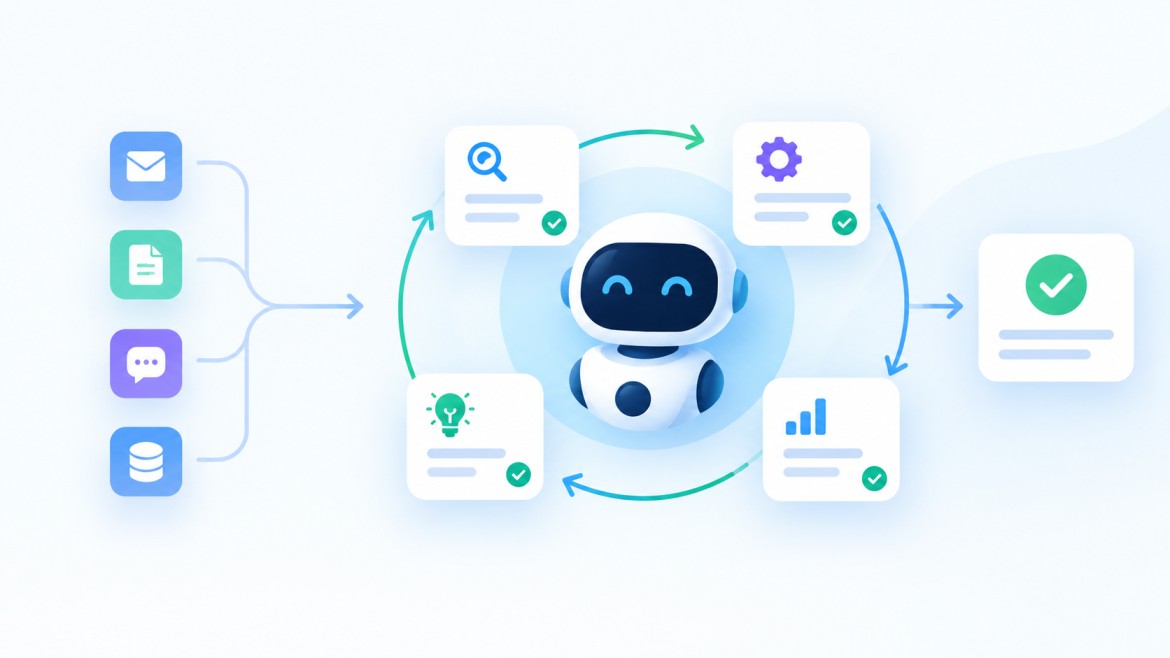
Most agentic AI systems in enterprise settings run on a simple loop: perceive, reason, act, and review. The agent first gathers the information and context it needs from sources such as emails, documents, tickets, or live system data. It then breaks the task or goal into smaller steps and selects the right tools to complete them. Next, it takes action by updating a record, sending a request, or routing a case to a human specialist. Finally, it reviews the outcome and adjusts its approach if something goes wrong.
In most enterprise settings, an agent’s workflow depends on several core components.
- Reasoning model: Plans the task, evaluates the situation, and decides what to do next.
- Memory: Keeps relevant information and context across different steps of a task.
- Integrations: Connects the agent with business systems so it can read data, update records, and take action.
- Orchestration layer: Coordinates tasks, manages the workflow, and handles handoffs between agents or people.
- Guardrails: Set boundaries around what the agent can access, decide, and do.
Agentic AI development brings all these components to create an intelligent agent that can function in dynamic business environments. In practice, companies often use multiple specialized AI agents or custom-build AI agents rather than relying on a particular agent for everything. Other than the listed components, an agent’s behavior and workflow depend on several factors like the task, available data, business rules, and the level of human involvement required.
Each agent can handle a specific part of the workflow, similar to how people with different roles work together on a larger task.
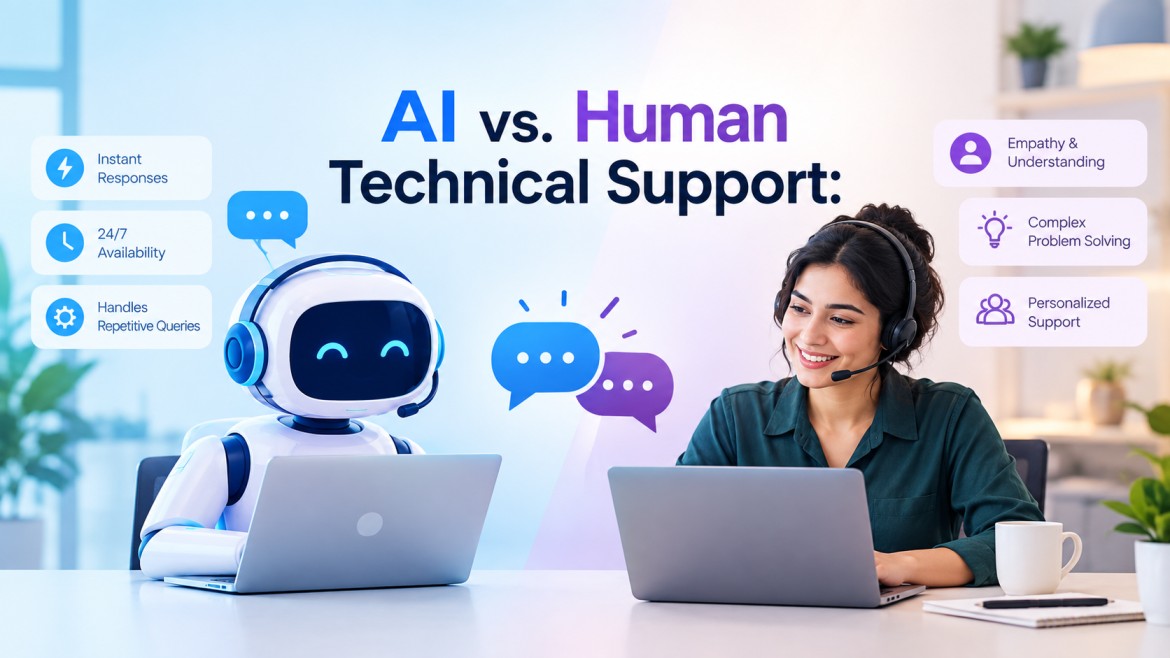
Human oversight is still an important part of the organizational setup, with approval thresholds, review queues, and audit trails. This allows people to step whenever there is an emergency like a situation where an agent needs approval or encounters something that’s beyond its capability.
Why Modern Enterprises Are Making the Transition
Modern enterprises have already automated majority of their daily easy works with AI, but what remains are processes with full of expectations, unstructured data or judgement calls. Traditional bots weren’t capable enough to take over those tasks while adding more headcounts wasn’t an option or scalable solution.
Agentic AI is built specifically to resolve this hidden gap, and that’s exactly why even firms that were relucted to adopt AI in that past are moving in favor of it. And services like Agentic AI development make it possible to tailor these advanced systems for more complex and real business needs. Some of the reasons for the massive transition are:
- Takes care of issues that fall outside normal workflows.
- Speeds up claims, onboarding, procurement, and similar processes.
- Reduces time spent on research, calls, and follow ups.
- Finds information and completes tasks across different systems.
- Keeps working when processes or systems change.
- Brings in people when human judgement is needed.
- Handles growing workloads without adding the same number of people.
- Gives early adopters hands on experience with agentic AI.
Final Thought
Going with a technology trend may not help you in the long run. To achieve success and build a strong name in the industry, the partner you choose matters just as much. A trusted Agentic AI Development company can help you identify the right opportunities, define a practical strategy, and set realistic goals for adoption. They can then turn those opportunities into solutions that actually fit your business. So, look for a team that understands your workflows, knows where agents can add value, and can build with the right level of human oversight. Before you start, know the common pitfalls that can make an agentic AI implementation harder than it needs to be.
FAQs
1. How does agentic workflow automation differ from traditional RPA?
Traditional RPA followed fixed rules and recorded steps. It used to work well on stable tasks but breaks completely whenever screens or formats change. On the other hand, agentic workflow automation, every task is done around goals. Agents interpret the given inputs irrespective of whether it is structured or unstructured, choose their own actions, and handle exceptions without a new script.
2. What does a “human-in-the-loop” (HITL) model look like in an agentic setup?
Even though the AI agent handles routine work and pauses at defined boundaries, such as a payment above a set amount or a low-confidence decision. It sends the case to a person with a summary and a recommendation. The reviewer approves, edits, or rejects, and the agent continues. Teams adjust thresholds over time based on performance.
3. Can agentic workflows integrate with legacy enterprise software?
Yes. Agents can be easily integrated through APIs, database access, and middleware. When a legacy system or existing business system or tool has no modern interface, secure connectors can bridge the gap. Legacy software rarely blocks adoption, though it can add integration time.
4. How do enterprises address security and compliance with autonomous agents?
Modern enterprises treat AI agents exactly like their employees but with extra control. Each agent gets least-privilege access; every action is logged, monitored and sensitive data stays in approved environments. High-risk steps need human approval, and outputs are tested against compliance requirements like GDPR, HIPAA, or SOC 2 before the scope widens.
5. What is the best starting point for implementing agentic automation in an enterprise?
The better way is to choose a process with high volume, frequent exceptions, and a clear success metric, such as invoice reconciliation or support triage. Define what the agent may decide alone, set out review points for the rest, and run a pilot on real data. A focused first win builds trust across the organization.

 More News