
The Future of Real Estate: Virtual Assistants and AI-Powered Support

The real estate industry has always relied on human connections, local expertise, and market knowledge. But now, technology is changing the game. Virtual assistants (VAs) and artificial intelligence (AI) are reshaping how real estate agents work, how buyers and sellers interact, and how the entire industry operates. This shift brings exciting opportunities and a glimpse into a future where real estate is more efficient, personalized, and customer-focused.

In this blog, we’ll explore how virtual assistants and AI-powered support are transforming real estate, the benefits they offer, and how they can shape the future of the industry.

The Rise of Virtual Assistants in Real Estate

Real estate agents and brokers handle a lot of tasks daily—from managing client inquiries and scheduling viewings to handling paperwork and marketing properties. All these responsibilities can be time-consuming, especially for small agencies or independent agents. Virtual assistants are stepping in to help with these tasks, allowing agents to focus more on building relationships and closing deals.

What Real Estate VAs Do:

  • Virtual assistants in real estate can handle a wide range of tasks, including:
  • Client communication: Responding to calls, emails, and messages.
  • Appointment scheduling: Organizing property viewings, meetings, and follow-ups.
  • Data management: Keeping track of listings, client information, and transactions.
  • Social media and marketing: Posting property updates and engaging with followers online.
  • Administrative work: Managing paperwork, contracts, and CRM (Customer Relationship Management) tools.

These tasks are crucial but can take up hours of an agent’s day. By assigning them to VAs, agents can spend more time doing what they do best—interacting with clients and selling properties.

Benefits of Using VAs in Real Estate:

Here’s why real estate agents are increasingly relying on virtual assistants:

  • Cost-effective: VAs are usually more affordable than full-time employees. They’re often paid by the hour or on a project basis, helping agents manage costs.
  • Flexibility: VAs work remotely, and their hours can be adjusted to fit busy periods or specific projects.
  • Time-saving: With a VA handling repetitive tasks, agents can focus on high-impact activities like negotiating and networking.
  • Scalability: VAs allow agents to grow their businesses without needing to hire full-time employees.

AI-Powered Support in Real Estate

Artificial intelligence has made leaps and bounds in recent years, and it’s becoming more common in the real estate world. AI-powered tools can analyze data, predict trends, and provide insights that help agents and clients make better decisions.

1. AI for Property Recommendations and Matching:

AI algorithms can analyze a buyer’s preferences and match them with properties that fit their criteria. This means buyers receive personalized listings faster, without having to browse through hundreds of irrelevant options. AI tools can recommend homes based on factors like budget, location, and even lifestyle preferences, making it easier for clients to find their dream homes.

2. Chatbots and 24/7 Customer Support:

AI chatbots are another game-changer. These virtual helpers can provide answers to common questions 24/7. Whether it’s questions about property listings, financing, or booking a viewing, chatbots are ready to help at any time of day. For agencies, this means better customer service without the need for an agent to be available round-the-clock.

3. AI-Driven Market Insights:

AI tools can analyze massive amounts of market data to identify trends. They can predict pricing changes, hot neighborhoods, and investment opportunities. This information is valuable for agents and buyers alike, as it offers insights that were previously difficult to obtain quickly. For example, an AI tool might suggest areas where property values are expected to rise, helping investors make informed choices.

The Benefits of AI and Virtual Assistants for Buyers, Sellers, and Agents

AI-powered support and virtual assistants offer advantages for everyone involved in real estate:

For Buyers:

  • Better property recommendations: AI provides personalized property suggestions, saving buyers time.
  • Faster communication: With chatbots, buyers can get information instantly, anytime.
  • Market insights: AI can offer data-driven advice on investment opportunities, neighborhoods, and pricing trends.

For Sellers:

  • Enhanced marketing: AI can help with targeted advertising, ensuring listings reach the right audience.
  • Pricing guidance: AI-powered tools analyze market data to recommend competitive pricing.
  • Increased efficiency: Virtual assistants help agents process seller requests and manage paperwork, ensuring quicker responses and smoother transactions.

For Agents:

  • Time-saving: VAs handle administrative tasks, while AI tools analyze data and provide valuable insights.
  • Improved customer service: With chatbots and virtual assistants, agents can offer around-the-clock support.
  • Data-driven decision-making: AI can provide information on market trends, pricing, and client preferences, helping agents close deals faster.

Challenges and Considerations

While the benefits are clear, integrating VAs and AI into real estate does come with challenges:

Training and Setup: Setting up a virtual assistant or AI tool requires some initial effort. Agents need to train VAs on their processes and ensure AI tools are properly integrated with their CRM systems.

Data Security: Real estate transactions involve sensitive data. Agents must ensure their AI and VA systems are secure and compliant with data protection regulations.

Human Touch: Real estate is a personal industry. While AI and VAs are great for handling repetitive tasks, clients may still prefer human interaction for important discussions and negotiations.

Cost of Advanced AI: While many AI tools are affordable, advanced analytics and AI-powered market insights can come with high costs. Agencies need to weigh these expenses against the benefits.

The Future: A Blend of Human Expertise and AI Support

Looking ahead, the future of real estate will likely see a blend of human expertise and AI-driven efficiency. Real estate Virtual assistants and AI will handle more of the back-end work, allowing agents to dedicate their time to building relationships, negotiating deals, and understanding client needs on a personal level.

As AI technology advances, we may see even more sophisticated tools in real estate, such as:

  • Virtual property tours using augmented reality (AR), allow buyers to “walk through” homes from their devices.
  • Predictive analytics that forecast long-term property values based on environmental and economic factors.
  • Voice-activated tools that let agents access property details, schedule 
  • viewings, and interact with clients hands-free. Real estate agents who embrace these tools will likely find they can provide better service, reach more clients, and remain competitive in an evolving market.

Final Thoughts

The future of real estate will be shaped by virtual assistants and AI-powered support. These technologies provide more efficiency, better customer service, and data-driven insights that empower agents, buyers, and sellers alike. Virtual assistants free up time for agents, allowing them to focus on client relationships, while AI provides a level of data analysis and insight that enhances decision-making.

For real estate professionals, embracing this technology means staying ahead of the curve in a competitive industry. With virtual assistants and AI, the real estate world is moving towards a more streamlined, personalized, and efficient future. By combining human expertise with AI-driven tools, the industry is set to offer a seamless and rewarding experience for everyone involved.


Top 5 BPO Trends to Watch in 2025: From AI Integration to Remote Work Models

As we move into 2025, the Business Process Outsourcing (BPO) industry is experiencing a transformation. With new technology, changing customer expectations, and flexible work environments, BPOs are adapting quickly to stay competitive and effective. Here, we’ll cover the top five trends in BPO that are reshaping the industry in 2025, focusing on everything from AI integration to remote work models. Let’s dive in!

BPO Trends to Watch in 2025

1. AI and Automation Integration

In 2025, artificial intelligence (AI) and automation continue to be game-changers for BPOs. Many BPO providers now rely on AI-driven tools to handle repetitive and time-consuming tasks. Automation helps streamline processes, reduce human error, and improve overall efficiency. Here’s how AI is making a difference:

  • Improved Customer Service: AI-powered chatbots and virtual assistants provide 24/7 support, answering basic queries without needing a human agent. The result speeds up response times and helps human agents focus on more complex customer issues.
  • Data Processing and Analysis: AI tools can quickly sift through large amounts of data, identifying trends and generating insights. BPOs use this data to provide better customer service, create new offerings, and make smarter decisions.
  • Cost Efficiency: By automating repetitive tasks, companies reduce labor costs while boosting productivity. This helps BPOs offer competitive rates to their clients, making AI a valuable investment.

With AI and automation, BPOs can deliver high-quality services more efficiently, allowing them to handle larger volumes of work with fewer resources.

2. Rise of Remote Work Models

The shift toward remote work began in 2020, and by 2025, it’s become an industry standard. Remote work has transformed the BPO landscape, bringing flexibility and cost savings. Here’s what the trend looks like today:

  • Global Talent Pool: Remote work allows BPOs to hire the best talent regardless of location. This widens the pool of qualified candidates and ensures clients get high-quality services from skilled professionals.
  • Cost Savings: Operating virtually reduces overhead costs for office space, utilities, and on-site equipment. Many BPOs pass these savings to clients, making outsourcing more affordable.
  • Employee Satisfaction: Remote work offers a better work-life balance, reducing burnout and turnover. Satisfied employees tend to be more productive and provide better service to clients.

However, BPOs must address challenges like time-zone differences, security risks, and employee monitoring. Advanced communication tools, secure networks, and strong management are key to overcoming these obstacles and ensuring remote work runs smoothly.

3. Focus on Cybersecurity

With more remote work and digital transformation, cybersecurity is a top priority for BPOs in 2025. Clients trust BPOs with sensitive data, so maintaining security is critical. Cybersecurity in BPOs focuses on three main areas:

  • Data Privacy: BPOs handle large amounts of customer information, from payment details to personal data. Strict policies and advanced encryption methods help protect this information from breaches.
  • Network Security: BPOs invest in secure virtual networks and firewalls to prevent unauthorized access. For remote workers, VPNs (Virtual Private Networks) and multi-factor authentication are often required.
  • Compliance with Standards: BPOs follow international security standards like ISO 27001 and GDPR (General Data Protection Regulation). Compliance assures clients that their data is safe and handled according to global regulations.

Investing in cybersecurity protects BPOs from breaches and builds trust with clients, positioning them as reliable partners in a digital world.

4. Personalized Customer Experience

In 2025, customer experience is more than just a support call or chat; it’s about creating a personalized journey for each customer. BPOs are using data analytics and customer insights to deliver tailored solutions and anticipate customer needs. Here’s how personalization is shaping BPO services:

  • Data-Driven Insights: BPOs analyze customer data to understand preferences, behaviors, and buying patterns. Such analysis helps agents offer more relevant solutions and build stronger customer relationships.
  • Omnichannel Support: BPOs provide seamless support across multiple channels—phone, email, social media, and chat. This feature allows customers to interact with brands through their preferred platforms and switch channels without disruption.
  • Proactive Engagement: Predictive analytics help BPOs identify issues before they become problems. By addressing potential concerns early, BPOs can enhance customer satisfaction and loyalty.

This focus on personalization increases customer satisfaction and helps companies gain an edge over competitors by building lasting relationships with their clients.

5. Enhanced Use of Data Analytics

Data analytics is becoming a cornerstone in the BPO industry. In 2025, BPO providers use advanced data analytics tools to gain insights that drive decision-making, improve service quality, and increase efficiency. Here’s how data analytics is transforming the BPO sector:

  • Performance Tracking: BPOs use data analytics to measure agent productivity, service quality, and customer satisfaction. This technique allows companies to identify areas for improvement and reward high-performing employees.
  • Process Optimization: Analytics reveal bottlenecks and inefficiencies in workflows. By addressing these, BPOs can reduce wait times, enhance customer experiences, and increase the speed of service.
  • Forecasting and Planning: Predictive analytics allow BPOs to anticipate call volumes, staffing needs, and seasonal trends. This prepares them to handle fluctuations in demand without compromising service quality.

Data analytics also helps BPOs make strategic decisions, allowing them to deliver better, more informed services that meet client expectations.

Final Thoughts

The BPO industry is evolving quickly, driven by technology and changing work environments. As we look ahead to 2025, the trends of AI integration, remote work, cybersecurity, personalized customer experience, and data analytics will reshape the industry, enabling BPOs to offer more efficient, secure, and tailored services.

These trends highlight the industry’s adaptability, as BPOs continue to innovate to meet client needs. The future of business process outsourcing is bright, with more opportunities to streamline processes, improve security, and deliver personalized experiences that keep customers satisfied and loyal. BPOs embracing these trends will likely remain competitive, ensuring long-term success in a rapidly evolving market.

Virtual Assistant Services in 2025: What Skills Are in High Demand?

In 2025, the landscape for virtual assistant services continues to expand rapidly, driven by advancements in technology, shifts in business demands, and the increasing globalization of talent. The role of virtual assistants (VAs) has transformed from traditional administrative tasks to highly specialized and strategic functions. As remote work remains a staple for many companies, the demand for virtual assistant skills is evolving. Businesses are now seeking virtual assistants with a range of specialized skills that can enhance efficiency, support digital transformation, and drive growth. This article explores the skills in high demand for virtual assistants in 2025, highlighting why they are essential and how they benefit companies seeking to stay competitive in a fast-changing digital environment.

In-Demand Virtual Assistant Services in 2025

  • Administrative and Organizational Skills

Administrative and organizational skills remain the foundation of virtual assistant services. In 2025, administrative support goes beyond mere scheduling and email management. Companies are looking for VAs who excel in handling complex schedules, organizing virtual meetings across time zones, and managing digital filing systems. Additionally, strong time management skills are essential for VAs to juggle multiple tasks and meet tight deadlines.

Administrative support often involves coordinating with various team members remotely, requiring virtual assistants to maintain seamless communication and strong task prioritization. With businesses looking for remote task coordination, VAs with advanced organizational skills can reduce the load on executives, allowing them to focus on higher-level decision-making. Proficiency with tools like Microsoft Office, Google Workspace, and specialized scheduling software is also critical.

  • Project Management Skills

Project management skills are increasingly in demand for virtual assistants in 2025, as many organizations aim to improve productivity through effective task delegation. Virtual assistants with project management expertise can oversee workflows, assign tasks, monitor project timelines, and ensure deadlines are met. These VAs are crucial for virtual team support, where remote teams may struggle to keep track of progress without a dedicated project coordinator.

Knowledge of project management software such as Asana, Trello, or Monday.com enables virtual assistants to provide hands-on support in managing projects, from conception to completion. Virtual assistants with the ability to prioritize tasks and coordinate efforts across teams ensure smoother collaboration, leading to successful project outcomes.

  • Digital Marketing and Social Media Management

Digital marketing and social media management are among the most sought-after skills in virtual assistant services. As businesses prioritize online presence, virtual assistants with a background in digital marketing can drive brand visibility and engagement. Virtual assistants skilled in content creation, social media strategy, and search engine optimization (SEO) are invaluable to companies that wish to expand their digital footprint without the cost of a full-time marketing team.

Social media management involves creating and scheduling posts, interacting with followers, and tracking engagement across platforms like Facebook, Instagram, LinkedIn, and Twitter. VAs with an understanding of audience targeting, analytics, and content creation tools can craft compelling social media campaigns that resonate with potential customers. Additionally, SEO expertise helps improve website ranking on search engines, driving organic traffic and increasing brand exposure.

  • Customer Service and Client Relationship Management

In 2025, businesses increasingly outsource customer service to virtual assistants, valuing those with client relationship management and customer service skills. Customer service virtual assistants can manage customer inquiries, troubleshoot issues, and provide ongoing support. With a strong emphasis on customer satisfaction, virtual assistants handle communication through email, chat, or social media, ensuring a consistent and responsive service experience.

Client relationship management (CRM) tools like Salesforce, HubSpot, and Zoho have become essential for tracking customer interactions and preferences. Virtual assistants proficient in CRM software can maintain detailed records of customer interactions, personalize outreach efforts, and help nurture long-term relationships, enhancing customer loyalty and retention.

  • Content Writing and Copywriting

Content writing and copywriting skills are highly valued within virtual assistant services. Businesses with limited marketing budgets frequently rely on VAs to produce high-quality written content, including blog posts, newsletters, and social media updates. Virtual assistants skilled in content writing can drive inbound marketing efforts, educate audiences, and establish thought leadership within an industry.

Copywriting extends to creating persuasive and sales-driven text for landing pages, advertisements, and email marketing campaigns. With digital communication at the forefront of brand interaction, VAs with a knack for copywriting play a crucial role in shaping brand messaging. Familiarity with SEO principles, as well as tools like Grammarly or Hemingway for editing, enhances a VA’s effectiveness in producing optimized and compelling content.

  • eCommerce Support and Product Management

As e-commerce continues to thrive, virtual assistants with skills in e-commerce support and product management are in high demand. These VAs help manage online stores by handling tasks such as product listing management, inventory control, order processing, and customer inquiries related to products. By outsourcing these tasks, businesses can focus on growth strategies while virtual assistants maintain efficient e-commerce operations.

Familiarity with e-commerce platforms like Shopify, WooCommerce, and Amazon Seller Central is crucial. Virtual assistants with experience in these platforms can efficiently handle virtual sales support, ensuring that product listings are optimized, inventory levels are updated, and orders are processed on time. E-commerce VAs may also assist in creating product descriptions and managing reviews to enhance customer trust and increase sales.

  • Technical Support and IT Assistance

With the increased reliance on digital tools, the demand for virtual assistants with technical support and IT assistance skills is growing. Virtual assistants capable of providing technical support can handle software installation, troubleshoot common technical issues, and assist with system maintenance. Their role is vital for businesses without a dedicated IT team, as they ensure that remote work environments operate smoothly.

Technical support VAs typically have knowledge of commonly used software and platforms, and can guide employees through resolving technical issues. Familiarity with remote support tools, such as TeamViewer and AnyDesk, allows VAs to assist with more complex technical problems, improving productivity and reducing downtime for businesses.

  • Bookkeeping and Financial Management

Financial management is another area where virtual assistant services are increasingly in demand. Virtual assistants skilled in bookkeeping and financial management help businesses maintain accurate records, process invoices, and handle payroll. Small businesses, in particular, benefit from the affordability and flexibility of a virtual financial assistant compared to a full-time employee.

Proficiency in accounting software like QuickBooks, Xero, or FreshBooks is essential for VAs handling financial tasks. Virtual assistants can assist with budget tracking, tax preparation, and financial reporting, enabling business owners to make informed financial decisions. As financial accuracy is paramount, VAs with a keen eye for detail are particularly valued.

  • Data Analysis and Reporting

In an age of data-driven decision-making, data analysis and reporting skills are highly desirable for virtual assistants. Businesses increasingly rely on virtual assistants to interpret data, provide data-driven insights, and create reports that aid strategic planning. VAs with analytical skills can analyze trends, monitor KPIs, and help businesses make informed decisions based on data.

Using business intelligence tools such as Google Analytics, Microsoft Power BI, and Tableau, virtual assistants can provide visualizations and summaries of complex data. Data analysis VAs support better resource allocation and strategic planning, particularly for companies looking to optimize operations and enhance growth through evidence-based decisions.

  • AI and Automation Tools

The integration of AI and automation tools into business workflows is revolutionizing virtual assistant services. In 2025, virtual assistants with knowledge of AI tools and automation skills are in high demand. These VAs can create and manage automated workflows, set up chatbot support, and handle basic machine-learning tasks that simplify repetitive processes.

AI-driven tools like Zapier, IFTTT, and ChatGPT enable virtual assistants to automate routine tasks such as lead generation, appointment reminders, and email responses. For businesses, this translates into reduced labor costs and enhanced productivity, as AI-empowered VAs handle multiple tasks simultaneously with minimal supervision.

Final Thoughts

Virtual assistance is expanding its scope, with new services and specializations being added to the growing list of offerings. Administrative and organizational skills – as well as project management skills – are proving to be effective in the hands of VAs for everyday operations. Digital marketers and social media managers are relying more and more on VAs to perform deep work. Businesses use VAs to interact with their clients and service the needs of their customers. Content writing and copywriting VAs have found their niche in most fields and enterprises. eCommerce is being facilitated much better with the help of VAs. The same is the case for product management. Virtual assistants well-versed in IT can provide technical support for a wide array of queries and needs. Accounting is made much more efficient with the employment of VAs keeping the books, and financial management is also more streamlined. Big Data, AI and automation experts are also offering services through the VA model, leading to more attractive options for prospective businesses.

Regardless of the size of the business you represent, If you’re considering hiring virtual assistance for your projects, VoxtenD is here to help. Our suite of VA services covers all aspects of virtual assistance and beyond, ensuring that your business gets the help it needs, no matter the size or needs of your business. With round-the-clock availability, VoxtenD is your partner in achieving business success. Contact us today to explore how our services can benefit your business.

10 Signs Your Business Needs a Virtual Assistant Today

As your business grows, so do your responsibilities, and managing everything can become overwhelming. Virtual assistants (VAs) offer an invaluable solution for business owners looking to streamline their operations, save time, and improve productivity. But how do you know if your business is ready to hire a virtual assistant? Here are 10 clear signs that indicate it’s time to take the leap and hire a virtual assistant today. If any of the signs mentioned resonate with you, it’s a strong indication that your business is ready to hire a virtual assistant today.

  • You’re Spending Too Much Time on Administrative Tasks

If you find yourself bogged down by mundane, repetitive tasks like scheduling meetings, replying to emails, and handling paperwork, it’s time to consider outsourcing these duties to a virtual assistant. Administrative tasks are essential, but they can consume hours that could be better spent growing your business. A virtual assistant can take over tasks like:

– Calendar management

– Email filtering and response

– Data entry and record keeping

– Travel arrangements and bookings

– Document formatting and report preparation

Hiring a virtual assistant for administrative tasks allows you to focus on high-level activities like strategy, sales, and customer relationships, all while ensuring that day-to-day operations run smoothly.

  • You’re Missing Out on Opportunities Due to Time Constraints

As a business owner, your time is your most valuable asset. However, if you’re spending your days juggling various low-priority tasks, you’re likely missing out on valuable opportunities. Whether it’s attending networking events, chasing new leads, or improving customer engagement, these opportunities are essential for business growth.

A virtual assistant can help free up your schedule, allowing you to take advantage of these growth opportunities. By delegating tasks like research, social media management, and customer inquiries to a VA, you can focus on seizing every chance that comes your way. In fact, the more you delegate to your virtual assistant, the more opportunities you’ll be able to pursue without feeling overwhelmed.

  • You’re Struggling to Keep Up with Customer Support

Customer service is the backbone of any successful business. If you’re unable to provide timely and efficient customer support due to time constraints, your business may suffer. Delayed responses, missed inquiries, or incomplete resolutions can lead to dissatisfied customers, negative reviews, and a tarnished reputation.

A virtual assistant for customer support can handle tasks such as:

– Responding to emails and chat inquiries

– Answering frequently asked questions (FAQs)

– Resolving basic customer complaints

– Managing returns or refund requests

– Forwarding complex issues to the appropriate departments

With a virtual assistant dedicated to customer support, your response times will improve, leading to happier clients and increased loyalty. Plus, you’ll have more time to work on your business, knowing that your customers are in good hands.

  • Your Social Media Presence is Inconsistent

In today’s digital world, having a strong social media presence is crucial for businesses of all sizes. However, managing social media accounts can be time-consuming, especially if you’re trying to maintain consistency across multiple platforms like Facebook, Instagram, Twitter, and LinkedIn. If you find that your social media posts are irregular, or you’re simply too busy to engage with followers, a virtual assistant can step in and help.

A social media virtual assistant can take over tasks like:

– Content creation and curation

– Scheduling posts using tools like Hootsuite or Buffer

– Engaging with followers, replying to comments and messages

– Analyzing engagement metrics to optimize future content

– Creating marketing campaigns and tracking their performance

  • You’re Overwhelmed by Project Management

As your business expands, so does the complexity of managing various projects. Whether it’s launching a new product, collaborating with a team, or coordinating with contractors, handling multiple projects at once can become chaotic. If you’re constantly scrambling to keep track of deadlines, tasks, and progress, it might be time to hire a virtual assistant for project management.

A virtual assistant skilled in project management can:

– Create and maintain project timelines

– Track milestones and ensure deadlines are met

– Delegate tasks to team members

– Set up and manage project management tools like Trello, Asana, or Monday.com

– Provide regular updates and reports on project progress

  • You Have a Growing To-Do List That Never Seems to End

A never-ending to-do list can leave you feeling overwhelmed and stressed, which can negatively impact your productivity and focus. If you have more tasks than you can realistically handle on your own, a personal virtual assistant can be a game-changer.

Whether it’s personal errands or business-related tasks, a virtual assistant can take care of your to-do list. Examples of tasks a VA can handle include:

– Scheduling appointments and meetings

– Setting up reminders and alerts

– Researching specific topics or services

– Ordering supplies or managing inventory

– Conducting competitor analysis

  • You Need Specialized Skills but Can’t Justify a Full-Time Hire

Many growing businesses need specialized skills, such as graphic design, content writing, SEO optimization, or bookkeeping. However, hiring a full-time employee for these tasks may not be cost-effective, especially if the work is project-based or requires only a few hours per week.

In this case, a virtual assistant with specialized skills can be the perfect solution. VAs often come with a range of expertise, allowing you to hire someone who can meet your exact needs without committing to a full-time salary. Whether you need a:

– Content writer for blog posts and articles

– Graphic designer for branding and marketing materials

– SEO specialist to improve your website ranking

– Bookkeeper to manage your financial records

By hiring a virtual assistant with the specific skills your business requires, you can ensure that tasks are completed to a high standard without breaking the bank.

  • You’re Struggling to Scale Your Business

Scaling a business requires more than just working harder—it requires working smarter. If your business has grown but you find yourself struggling to keep up with the demands of that growth, it’s a clear sign that you need additional support. Trying to manage everything on your own can lead to burnout, inefficiency, and missed opportunities for further growth.

A virtual assistant can help scale your business by taking on tasks that would otherwise prevent you from focusing on expansion. Whether it’s managing your marketing efforts, handling customer inquiries, or setting up systems to automate processes, a VA can provide the extra support you need to grow your business efficiently.

By outsourcing tasks to a virtual assistant, you’ll have more time to focus on strategic activities that can drive growth, such as developing new products, entering new markets, or improving customer retention.

  • You Want to Cut Costs Without Sacrificing Quality

Hiring full-time employees comes with significant costs—salaries, benefits, office space, equipment, and training. For small businesses or startups, these costs can be a major financial burden. However, outsourcing tasks to a virtual assistant allows you to cut costs without sacrificing quality.

Virtual assistants work remotely, meaning you don’t have to provide office space or equipment. Additionally, you can hire them on a flexible, project-based basis, which means you only pay for the work that needs to be done. Many VAs also work in different time zones, offering the advantage of round-the-clock productivity.

By hiring a virtual assistant, you can reduce overhead costs while still maintaining a high level of professionalism and efficiency. This allows you to invest more in areas that directly contribute to business growth, such as marketing, product development, or customer acquisition.

  • You Need Better Work-Life Balance

As a business owner, it’s easy to get caught up in work and neglect your personal life. However, maintaining a healthy work-life balance is crucial for your long-term success. Burnout, stress, and exhaustion can take a toll on both your health and your business.

If you find yourself working late nights, missing out on family time, or constantly feeling stressed, hiring a virtual assistant can help you regain control. By delegating non-essential tasks to a VA, you can reclaim your personal time and focus on what truly matters.

A virtual assistant can:

– Handle routine business tasks during off-hours

– Manage communication and emails, allowing you to disconnect

– Take care of personal errands, such as booking appointments or organizing travel plans

– Help maintain a work schedule that prioritizes both business and personal time

Final Thoughts

Hiring a virtual assistant is no longer a luxury reserved for large corporations. In today’s digital age, businesses of all sizes can benefit from the flexibility, efficiency, and cost savings that a virtual assistant provides. From administrative tasks and customer support to social media management and project oversight, virtual assistants can help alleviate your workload and allow you to focus on the core aspects of your business. Whether you’re looking to cut costs, scale your operations, or achieve a better work-life balance, a virtual assistant could be the key to unlocking your business’s full potential.

Regardless of the size of the business you represent, if you’re considering hiring virtual assistants for your projects, VoxtenD is here to help. Our suite of expert services covers all aspects of virtual assistance and beyond, ensuring that your business gets the help it needs, no matter the size or needs of your business. With round-the-clock availability, VoxtenD is your partner in achieving business success. Contact us today to explore how our services can benefit your business.

What Is Level 1, Level 2, And Level 3 IT Support?

Technology plays a huge role in our daily lives, both personally and professionally. With this dependence on technology comes the need for reliable IT support. Businesses often encounter technical issues that require assistance, and IT support is essential for keeping operations running smoothly. In this blog, we will explore the three levels of IT support: Level 1, Level 2, and Level 3. Understanding these levels can help you identify the right support for your needs and ensure that technical issues are resolved effectively.

What Is IT Support?

IT support refers to the services provided to help users with technical problems related to computer systems, software, hardware, and networks. Support teams help troubleshoot issues, answer questions, and provide guidance to ensure that technology works efficiently. IT support can be divided into three levels, each with specific responsibilities, expertise, and escalation processes.

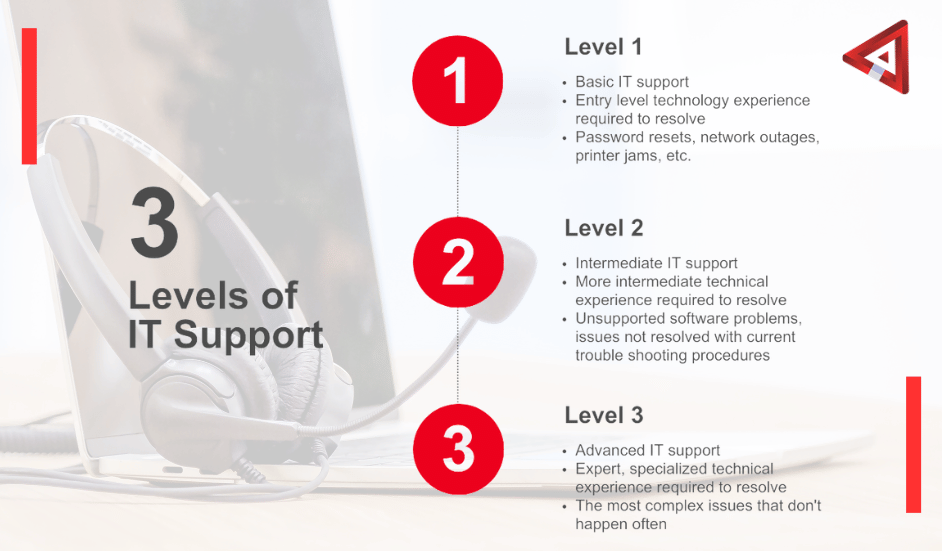
IT Support: L1 vs L2 vs L3

Levels of It Support

Level 1 IT Support: The First Line of Defense

Overview

Level 1 IT support, also known as help desk support, is the first point of contact for users experiencing technical issues. This level of support typically involves basic troubleshooting and customer service. Level 1 technicians are trained to handle common issues that users may face, such as password resets, software installation, and simple hardware problems.

Responsibilities

  • Answering Support Tickets: Level 1 technicians respond to support requests submitted through help desk systems, emails, or phone calls. They prioritize these requests based on urgency and impact on the business.
  • Troubleshooting Basic Issues: They follow scripts and checklists to help users troubleshoot common problems. This might include checking network connectivity, software settings, and user accounts.
  • Providing Guidance: Level 1 technicians often provide step-by-step instructions to help users resolve their issues. This could include guiding users on how to reset their passwords or how to set up a printer.
  • Escalating Complex Issues: If a Level 1 technician cannot resolve the issue, they escalate it to Level 2 support. This ensures that more complex problems are handled by technicians with greater expertise.

Skills and Qualifications

Level 1 technicians typically have the following skills:

  • Understanding of Networking Fundamentals:
  • Excellent communication and customer service skills
  • Problem-solving abilities
  • Familiarity with common software applications

Level 1 support is often an entry-level position, and technicians may have certifications such as CompTIA A+ or ITIL Foundation.

Level 2 IT Support: The Specialists

Overview

Level 2 IT support handles more complex technical issues that Level 1 technicians cannot resolve. This level of support requires a deeper understanding of systems, networks, and software. Level 2 technicians often have specialized knowledge and experience in specific areas of IT.

Responsibilities

  • Handling Escalated Issues: Level 2 technicians work on problems escalated from Level 1 support. They analyze the issues in greater detail, utilizing their advanced knowledge to troubleshoot and resolve problems.
  • Performing Diagnostics: Level 2 support may involve running diagnostic tests and using specialized tools to identify and fix technical issues. This may include checking server performance, investigating network outages, or analyzing application errors.
  • Installing and Configuring Software: Level 2 technicians may assist with the installation and configuration of software applications, ensuring they work properly on users’ devices.
  • Documenting Solutions: They keep records of issues and their solutions in knowledge bases or ticketing systems, helping to build a library of solutions for future reference.
  • Training Level 1 Technicians: Level 2 technicians may provide guidance and training to Level 1 staff, sharing their knowledge and helping to develop their skills.

Skills and Qualifications

Level 2 technicians generally possess:

  • In-depth knowledge of operating systems, networking, and hardware
  • Strong analytical and troubleshooting skills
  • Experience with various software applications and tools
  • Certifications like CompTIA Network+, Microsoft Certified Solutions Expert (MCSE), or Cisco Certified Network Associate (CCNA)

Level 3 IT Support: The Experts

Overview

Level 3 IT support is the highest level of technical support, dealing with the most complex issues that require expert knowledge. This level is typically staffed by experienced IT professionals, such as system architects, software developers, or network engineers. Level 3 support often focuses on resolving significant technical problems and implementing solutions that require specialized skills.

Responsibilities

  • Resolving Critical Issues: Level 3 technicians tackle high-priority and complex problems that other levels cannot resolve. This may include dealing with system outages, security breaches, or critical application failures.
  • Developing Solutions: They may develop new tools, scripts, or applications to address recurring issues or improve system performance. This might involve coding, system integration, or custom software development.
  • Researching and Analyzing Problems: Level 3 technicians spend time researching potential solutions, analyzing system logs, and collaborating with vendors or other experts to find the root cause of issues.
  • Implementing Changes: They may be responsible for implementing changes to systems or processes to prevent future problems. This could include applying patches, updating software, or reconfiguring hardware.
  • Mentoring Level 1 and Level 2 Technicians: Level 3 technicians often provide mentorship and training for technicians at lower levels, sharing their expertise and helping to improve the overall support team’s knowledge.

Skills and Qualifications

Level 3 technicians typically have:

  • Extensive knowledge of IT systems, networks, and software development
  • Strong analytical and problem-solving skills
  • Experience in project management and system design

Advanced certifications, such as Certified Information Systems Security Professional (CISSP), Certified Information Systems Auditor (CISA), or vendor-specific certifications.

Final Thoughts

Understanding the different levels of IT support—Level 1, Level 2, and Level 3—can help you navigate the world of technology more effectively. Each level has its unique responsibilities, expertise, and escalation processes, ensuring that technical issues are addressed efficiently and effectively.

Level 1 support focuses on basic troubleshooting and customer service, while Level 2 support deals with more complex issues that require specialized knowledge. Level 3 support handles the most critical problems and implements advanced solutions, often mentoring the lower levels of support.

By recognizing the value of each level, businesses can ensure that they have the right tech support in place to address their IT challenges. Whether you are a small business or a large corporation, having a well-structured IT support system can make a significant difference in keeping your technology running smoothly and efficiently.

What Is Bookkeeping? 

Bookkeeping is one of the most important tasks for any business. It involves keeping track of all financial transactions, such as sales, purchases, payments, and receipts. Simply put, bookkeeping is about recording every financial movement in your business in an organized way. This helps companies to understand their financial health, plan for the future, and make informed decisions.

In this blog, we’ll explore bookkeeping, why it’s important, and how it works in everyday business operations.

What Is Bookkeeping?

At its core, bookkeeping is tracking and recording a company’s financial transactions. It involves organizing these transactions into categories like income, expenses, assets, liabilities, and equity.

The main goal of bookkeeping is to ensure that a company’s financial records are accurate and up-to-date. This provides a clear picture of the company’s financial position, allowing owners or managers to make informed decisions.

Why Is Bookkeeping Important?

For any business, big or small, bookkeeping is essential. Here’s why:

  • Tracking Financial Performance: Bookkeeping helps you monitor the performance of your business. By keeping track of all your income and expenses, you can see if your business is making a profit or loss.
  • Budgeting: Bookkeeping allows businesses to create accurate budgets. When you have a clear record of past financial transactions, you can predict future spending and set financial goals.
  • Tax Compliance: Having detailed financial records makes it easier to file taxes. With organized records, you can ensure that you’re paying the right amount of tax and taking advantage of any tax deductions.
  • Legal Requirement: Many countries require businesses to keep financial records by law. Proper bookkeeping ensures that businesses comply with legal requirements and are prepared in case of audits.
  • Informed Decision-Making: Bookkeeping provides the data needed to make important business decisions. Without clear financial information, it’s hard to know if you can afford to invest in new equipment, hire more staff, or expand your business.
  • Attracting Investors: If you want to bring in investors or apply for a loan, you’ll need to show them accurate financial statements. A good bookkeeping system allows you to generate these statements easily, showing the financial health of your business.

How Does Bookkeeping Work?

Bookkeeping may sound complicated, but it can be broken down into simple steps. Let’s go over the basic elements of bookkeeping.

1. Recording Transactions

The first step in bookkeeping is recording all financial transactions. This includes every sale, purchase, payment, and receipt. Bookkeepers usually categorize these transactions into different accounts. For example:

  • Sales: Money earned from selling products or services.
  • Expenses: Money spent on items like rent, utilities, supplies, or employee wages.
  • Assets: Things the company owns, such as cash, inventory, or equipment.
  • Liabilities: Money the business owes, such as loans or unpaid bills.
  • Equity: The owner’s financial interest in the company, which includes any investments or retained earnings.

There are two methods of recording transactions: single-entry and double-entry bookkeeping.

  • Every transaction is only entered once in single-entry bookkeeping. It’s similar to keeping a personal checkbook, where you simply record money going in or out of your account. This method is often used by small businesses with simple financial structures.
  • Double-entry bookkeeping requires recording each transaction twice: once as a debit and once as a credit. This ensures that the company’s books always balance. Most businesses use double-entry bookkeeping because it’s more accurate and provides a clearer picture of the financial situation.

2. Managing the General Ledger

The general ledger is where all of the recorded transactions are stored. It’s like a master list of everything that happens financially in the business. Bookkeepers record each transaction in the ledger by using accounts, such as “Sales Revenue” for income or “Utilities Expenses” for bills.

For every transaction recorded in the ledger, there must be an equal entry in another account. This is known as the double-entry system. For example, if a company sells a product for $100, the bookkeeper will record $100 in the sales revenue account and $100 in the cash account, reflecting the money coming in from the sale.

3. Categorizing Transactions

Once transactions are recorded, they need to be categorized. This helps organize financial data and makes it easier to generate financial reports. Common categories in bookkeeping include:

  • Revenue: Money earned from selling goods or services.
  • Expenses: Costs incurred to operate the business, such as rent, salaries, or office supplies.
  • Assets: Anything valuable the company owns, like inventory or real estate.
  • Liabilities: Debts or financial obligations, such as loans or outstanding invoices.
  • Equity: The net value of the company, calculated as assets minus liabilities.

Properly categorizing transactions helps ensure that financial records are clear and easy to understand.

4. Reconciling Accounts

Reconciliation is the process of comparing your records with external statements to ensure everything matches up. For example, bookkeepers will often reconcile the company’s bank account with its general ledger to ensure that the amounts recorded match the bank’s statements.

Reconciliation is important because it helps catch mistakes, such as missing transactions or incorrect amounts. Regular reconciliation ensures that the business’s books are accurate and up-to-date.

5. Creating Accounting Reports

At the end of each accounting period, bookkeepers generate financial statements that summarize the company’s financial activities. The most common financial statements are:

  • Income Statement: Shows the company’s revenue and expenses over a specific period, indicating whether the business made a profit or loss.
  • Balance Sheet: Provides a snapshot of the company’s financial position by listing assets, liabilities, and equity.
  • Cash Flow Statement: Tracks the flow of cash into and out of the business, showing how well the company is managing its cash.

These financial statements are crucial for business owners, investors, and tax authorities to understand the company’s financial health.

6. Keeping Records Organized

Proper bookkeeping also involves keeping financial records organized and secure. This includes receipts, invoices, bank statements, and other documents related to financial transactions. Businesses are often required to keep these records for a certain number of years in case of audits or disputes.

Using bookkeeping software like QuickBooks, Xero, or FreshBooks can help keep everything organized and reduce the risk of errors. Many of these programs can automatically categorize transactions, reconcile accounts, and generate financial reports, making bookkeeping easier and more efficient.

Types of Bookkeepers

There are different types of bookkeepers that businesses can hire, depending on their needs:

  • In-House Bookkeepers: These are employees who work full-time or part-time within the company to manage its finances. They are usually responsible for the day-to-day bookkeeping tasks.
  • Freelance Bookkeepers: These are independent professionals who work remotely to handle bookkeeping tasks for multiple businesses. They provide flexibility for smaller businesses that don’t need a full-time bookkeeper.
  • Bookkeeping Firms: These are companies that offer bookkeeping services to businesses on a contract basis. They often have a team of bookkeepers to handle various financial tasks.
  • Virtual Bookkeepers: These are bookkeepers who work entirely online, using cloud-based software to manage the company’s financial records. Virtual bookkeepers offer convenience and are often more affordable than hiring in-house staff.

Final Thoughts

Bookkeeping is a vital part of running a business. It helps keep track of every financial transaction, from sales to expenses and ensures that all records are accurate and organized. By following proper bookkeeping practices, businesses can improve their financial health, stay compliant with tax laws, and make informed decisions.

Whether you’re a small business owner or managing a larger company, investing in proper bookkeeping can save you time, reduce stress, and give you the financial insights you need to grow your business. With the right tools and support, bookkeeping doesn’t have to be complicated—it can be a simple and effective way to keep your business on track.

Who are Administrative Virtual Assistants?

Managing an office can be a challenging task. Many businesses are turning to Administrative Virtual Assistants (AVAs) to help streamline their operations and make their work lives easier. But what exactly is an AVA, and how can they help your business? In this blog, we’ll explore what administrative virtual assistants do, their benefits, and how to integrate them into your office management.

What is an Administrative Virtual Assistant?

An Administrative Virtual Assistant is a professional who provides administrative support from a remote location. They can handle various tasks such as scheduling appointments, managing emails, data entry, bookkeeping, and more. AVAs work independently and can adapt to the needs of your business, providing flexibility and efficiency.

How Do Administrative Virtual Assistants Work?

Administrative Virtual Assistants use technology to communicate and complete tasks. This is a brief explanation of how they function:

  • Communication: You can contact your AVA through email, phone, or messaging apps. Regular meetings can help keep everyone on the same page.
  • Task Management: You assign tasks based on your needs. AVAs often use project management tools to track progress and deadlines.
  • Remote Access: AVAs may need access to certain software or files to complete their tasks. This is usually done securely through shared drives or remote desktop applications.
  • Feedback and Adjustment: As tasks are completed, you can provide feedback to ensure the AVA understands your preferences and can adjust their work accordingly.

Benefits of Using Administrative Virtual Assistants

1. Cost Savings

Hiring a full-time employee comes with costs like salaries, benefits, and office space. With an AVA, you pay for the work you need without the extra expenses. This can significantly reduce overhead costs for your business.

2. Increased Efficiency

AVAs are skilled in managing various administrative tasks, allowing your team to focus on more critical work. This can lead to increased productivity and better use of resources.

3. Flexibility

One of the best aspects of hiring an Admin VA is flexibility. You can hire them for specific projects, a few hours a week, or full-time, depending on your needs. This allows you to scale your support as your business changes.

4. Access to a Wide Range of Skills

Many AVAs come with diverse backgrounds and skills. Whether you need help with social media management, customer service, or bookkeeping, there’s likely an AVA with the expertise you need.

5. 24/7 Availability

Depending on the time zone of your AVA, you might be able to get support outside regular business hours. This can be especially useful for businesses that operate in multiple time zones or have urgent tasks that need immediate attention.

6. Reduced Stress

With an AVA handling administrative tasks, you and your team can concentrate on what matters most. This can improve overall job satisfaction.

Tasks Administrative Virtual Assistants Can Handle

Administrative Virtual Assistants can take on a wide variety of tasks. Here are some common responsibilities they can manage:

1. Calendar Management

AVAs can schedule meetings, send reminders, and ensure that your calendar stays organized. This helps you avoid double bookings and ensures you’re always on time for appointments.

2. Email Management

They can help sort through emails, respond to routine inquiries, and flag important messages. This can keep your inbox organized and reduce the time spent on email management.

3. Data Entry and Management

AVAs can handle data entry tasks, updating databases, and organizing information. This ensures that your records are accurate and easily accessible.

4. Research

If you need information on a specific topic or industry trends, an AVA can conduct research and present you with the findings. This saves you time and provides valuable insights.

5. Customer Support

Many AVAs can handle customer inquiries, manage social media accounts, or assist with online chat support. This can improve customer satisfaction and allow you to focus on core business activities.

6. Bookkeeping and Invoicing

If you need help with basic bookkeeping, invoicing, or expense tracking, an AVA can assist with these tasks, ensuring your financial records are organized and up to date.

How to Find the Right Administrative Virtual Assistant?

1. Identify Your Needs

Before searching for an AVA, identify the specific tasks you need help with. This will help you find someone with the right skills and experience.

2. Look for Experience and Skills

When considering candidates, look for those with relevant experience in the tasks you need assistance with. Check their portfolios and client testimonials to gauge their expertise.

3. Conduct Interviews

Once you have a shortlist of potential AVAs, conduct interviews to get a better sense of their communication skills and how they fit with your team. Ask about their previous experience and how they handle specific tasks.

4. Start with a Trial Period

Consider starting with a trial period to see how well the AVA fits into your workflow. This allows you to assess their skills and determine if they meet your needs.

5. Establish Clear Expectations

Once you hire an AVA, set clear expectations regarding tasks, deadlines, and communication methods. This helps ensure that both parties are on the same page from the start.

Tips for Working Effectively with an Administrative Virtual Assistant

1. Communicate Regularly

Keep lines of communication open. Regular check-ins can help you stay updated on progress and provide feedback.

2. Use Project Management Tools

Consider using project management tools like Trello, Asana, or Monday.com. These tools can help both you and your AVA track tasks, deadlines, and project progress.

3. Be Clear and Specific

When assigning tasks, be as clear and specific as possible. This helps your AVA understand exactly what you expect and reduces the chances of misunderstandings.

4. Provide Resources

If your AVA needs specific tools or resources to complete their tasks, ensure they have access. This can include software, documents, or guidelines.

5. Offer Feedback

Provide constructive feedback on the work your AVA completes. This helps them improve and better meet your expectations.

Final Thoughts

Administrative Virtual Assistants can be a valuable asset for any business looking to improve office management. By handling various administrative tasks, they allow you and your team to focus on what really matters—growing your business.

With their flexibility, expertise, and cost-effectiveness, AVAs can help reduce stress and increase efficiency. To get the most out of this partnership, communicate regularly, set clear expectations, and provide the necessary resources.

By integrating an Administrative Virtual Assistant into your office management, you can create a more organized, productive, and successful work environment.

Streamlining Property Management With Real Estate Virtual Assistants

Property management is an essential, yet often demanding, task within the real estate industry. From overseeing maintenance issues to handling tenant queries, the sheer amount of responsibilities can be overwhelming, particularly for real estate agents, property managers, and landlords with extensive portfolios. In recent years, the rise of real estate virtual assistants (VAs) has provided a valuable solution for streamlining the complexities of property management. By outsourcing administrative and operational tasks to qualified virtual assistants, real estate professionals can save time, reduce operational costs, and improve overall productivity.

In this article, we will explore the growing importance of virtual assistants in real estate, their potential to revolutionize property management, and how they can benefit real estate professionals. We will also discuss the types of tasks that real estate virtual assistants can handle, the key advantages of hiring them, and best practices for integrating virtual assistants into property management workflows.

The Growing Role of Virtual Assistants in Real Estate

The concept of virtual assistance has transformed multiple industries, including real estate. A real estate VA is a professional who works remotely to support real estate agents, property managers, or brokers in handling various administrative, marketing, and customer service tasks. These assistants often have experience in the real estate industry and are equipped with the skills needed to help with specific tasks like tenant management, data entry, market research, and more.

For many years, property managers and real estate agents relied on in-house staff to handle administrative tasks, which increased operational costs and consumed valuable time. However, with the advent of modern communication tools, cloud-based systems, and real estate-specific software, virtual assistants can now seamlessly integrate into daily operations, offering both flexibility and efficiency.

The increasing reliance on virtual assistants in the real estate sector is driven by multiple factors, including:

  • Technological advancements: Tools such as CRMs (Customer Relationship Management systems), cloud-based document management systems, and property management software enable virtual assistants to collaborate remotely with ease.
  • Cost-effectiveness: By hiring virtual assistants, real estate businesses save on overhead costs, such as office space, utilities, and employee benefits, while still receiving high-quality support.
  • Scalability: Real estate virtual assistants allow businesses to scale operations quickly without the need to hire full-time employees.

Key Tasks Handled by Real Estate Virtual Assistants

  • Tenant Communication & Management: Tenant management is a crucial aspect of property management that can take up a considerable amount of time. Real estate virtual assistants can handle communication with tenants by responding to inquiries, scheduling property viewings, collecting tenant applications, and processing rental agreements. Additionally, they can manage regular updates such as rent payment reminders and coordinate maintenance requests. Real estate VAs can also be trained to handle tenant complaints and follow up on late rent payments, ensuring a smooth and efficient rental process.
  • Lease Agreement & Documentation Management: Proper documentation is essential in property management, especially when it comes to lease agreements and legal contracts. A real estate virtual assistant can assist with preparing, organizing, and managing lease agreements, as well as ensuring compliance with local regulations. This includes drafting contracts, sending electronic copies for signatures, and updating digital filing systems for easy retrieval of documents when needed. Virtual assistants are also skilled in maintaining up-to-date tenant records, rent rolls, and insurance certificates. 
  • Marketing & Property Listings: Effective marketing is essential for attracting tenants or buyers to properties, but it can be time-consuming for real estate professionals who are juggling multiple tasks. Real estate virtual assistants can take charge of creating and managing property listings across various platforms, such as real estate websites, social media, and MLS (Multiple Listing Service). A virtual assistant can help create compelling descriptions for properties, upload high-quality photos and videos, and monitor listing performance. Additionally, they can update listings as needed and ensure that they are optimized for search engines to attract potential clients. 
  • Lead Generation & CRM Management: Lead generation is another critical component of a successful real estate business. Virtual assistants can assist with identifying potential leads by conducting market research, cold calling, or reaching out to prospective buyers or tenants. They can also nurture leads through email campaigns or follow-up calls. Moreover, real estate virtual assistants can manage CRM systems by entering new leads, updating client details, and tracking interactions. By keeping the CRM database up to date, VAs enable real estate agents to have better visibility into client preferences, history, and upcoming opportunities.
  • Scheduling & Calendar Management: Time management is crucial for property managers and real estate agents who need to coordinate property showings, client meetings, inspections, and other appointments. A real estate virtual assistant can take over the responsibility of managing the calendar, scheduling appointments, and sending reminders to ensure that no important tasks are overlooked. Additionally, virtual assistants can handle appointment confirmations, rescheduling requests, and other administrative tasks related to scheduling.
  • Property Maintenance Coordination: Property maintenance is an ongoing concern for landlords and property managers. Coordinating repairs, inspections, and maintenance requests can be a hassle, particularly when managing multiple properties. A real estate virtual assistant can help by liaising with contractors, scheduling repairs, and following up on maintenance tasks to ensure they are completed on time. In some cases, virtual assistants can also create and maintain maintenance schedules to prevent issues from becoming emergencies. 

The Benefits of Hiring a Real Estate Virtual Assistant

  • Time Efficiency: Time is one of the most valuable resources for real estate professionals, and the delegation of administrative tasks to a virtual assistant frees up time for more strategic activities. Instead of spending hours on repetitive tasks like data entry or email management, property managers can focus on higher-level responsibilities such as client acquisition, relationship building, and growing their business.
  • Cost-Effective Solution: Hiring a full-time in-house assistant can be costly due to salary expectations, benefits, and office overhead. A real estate virtual assistant, however, offers a more cost-effective alternative. Virtual assistants typically work on a contractual or part-time basis, meaning that businesses only pay for the services they need, without additional expenses such as employee benefits or office space. Furthermore, the ability to hire VAs from different locations, including regions with lower labor costs, allows real estate businesses to save even more money without compromising on the quality of the work.
  • Scalability & Flexibility: A significant advantage of hiring virtual assistants is the flexibility and scalability they provide. As the demands of property management fluctuate, real estate professionals can easily adjust the workload assigned to their virtual assistants. This means that during peak periods, additional virtual assistants can be hired to handle the increased demand, and during slower periods, businesses can reduce their reliance on VAs without the need to lay off employees.
  • Access to a Wide Range of Skills: Real estate virtual assistants come with a variety of skill sets, from administrative expertise to marketing knowledge and property management experience. By hiring a virtual assistant with specialized skills, real estate professionals can tap into a wealth of knowledge and expertise that may not be available in-house.
  • Improved Work-Life Balance: The demanding nature of real estate can lead to burnout, particularly for property managers who are constantly dealing with tenant issues, maintenance requests, and administrative tasks. By outsourcing a portion of the workload to a real estate virtual assistant, professionals can achieve a better work-life balance, reducing stress and preventing burnout.

Best Practices for Integrating Real Estate Virtual Assistants

  • Clearly Define Roles and Expectations: Before hiring a virtual assistant, it is important to clearly define the tasks and responsibilities that the assistant will be handling. Create a detailed job description and communicate your expectations regarding deadlines, quality of work, and reporting procedures.
  • Utilize the Right Tools and Technology: Collaboration is key when working with virtual assistants, so it is important to use the right tools and technology to stay connected. Cloud-based project management tools like Asana or Trello can help track progress, while communication tools such as Slack or Zoom enable real-time collaboration. Integrating property management software and CRM systems ensures that virtual assistants have access to the information they need to perform their tasks efficiently.
  • Provide Training & Support: Even though real estate virtual assistants often come with experience, providing training specific to your business is essential. This includes onboarding them on your company’s processes, tools, and communication style. Regular check-ins and feedback sessions can also help ensure that tasks are being completed to your satisfaction.
  • Establish Clear Communication Channels: Since virtual assistants work remotely, establishing clear and consistent communication is crucial. Set expectations for response times, preferred methods of communication, and regular reporting schedules. Transparent communication ensures that the assistant stays aligned with your business goals and objectives.

Final Thoughts

The rise of real estate virtual assistants has provided a powerful solution for streamlining property management. By delegating tasks such as tenant communication, lease management, marketing, and maintenance coordination to virtual assistants, real estate professionals can save time, reduce operational costs, and focus on scaling their businesses. With the right approach, real estate virtual assistants can become invaluable assets in simplifying and optimizing property management workflows, ultimately leading to improved business outcomes and a better work-life balance for real estate professionals.

Regardless of the size of the business you represent, If you’re considering hiring real estate virtual assistants for your projects, VoxtenD is here to help. Our suite of expert services covers all aspects of real estate management and beyond, ensuring that your business gets the help it needs, no matter the size or needs of your business. With round-the-clock availability, VoxtenD is your partner in achieving business success. Contact us today to explore how our services can benefit your business.

Top 5 AI Features in MS Office and How They Can Help You

Productivity tools are constantly evolving to help us work smarter and faster. One of the leaders in this transformation is Microsoft Office, which has integrated powerful artificial intelligence (AI) features to enhance user experience and efficiency. In this blog, we will explore the top five AI features in MS Office that are making waves and changing the way we work. These features are user-friendly and designed to make our tasks easier, whether we are writing a report, analyzing data, or preparing a presentation.

Top 5 AI Features in MS Office

1. Microsoft Editor: Your Writing Assistant

What is Microsoft Editor?

Microsoft Editor is an AI-powered writing assistant available in Word and Outlook. It helps users improve their writing by providing suggestions on grammar, spelling, and style. Whether you are drafting an email or writing a long document, Microsoft Editor ensures your text is clear, concise, and error-free.

Key Features

  • Grammar and Spelling Check: Microsoft Editor detects and corrects grammar and spelling errors. It goes beyond basic corrections to provide advanced suggestions, ensuring your writing is polished.
  • Style Suggestions: The AI analyzes your writing style and offers suggestions to make your text more readable and engaging. This includes recommendations for clarity, conciseness, and formality.
  • Plagiarism Check: Microsoft Editor can compare your text against a vast database to identify potential plagiarism, ensuring your work is original and properly cited.

How It Helps

Microsoft Editor saves time by catching errors that might be missed during manual proofreading. It helps users improve their writing skills by providing real-time feedback and suggestions. This feature is especially useful for professionals, students, and anyone who wants to produce high-quality written content.

2. Excel Insights: Making Data Analysis Easy

What is Excel Insights?

Excel Insights is an AI feature in Microsoft Excel that simplifies data analysis. It automatically analyzes your data and provides insights, trends, and patterns without the need for complex formulas or manual calculations.

Key Features

  • Automated Analysis: Excel Insights scans your data and highlights key trends, patterns, and outliers. It provides visual summaries, charts, and pivot tables to help you understand your data better.
  • Natural Language Queries: You can ask Excel questions about your data in plain English. For example, you can type, “What are the top sales regions?” and Excel will generate the answer with relevant charts.
  • Anomaly Detection: The AI identifies anomalies in your data, such as sudden changes or unusual patterns, helping you spot potential issues quickly.

How It Helps

Excel Insights empowers users to make data-driven decisions without needing advanced analytical skills. It saves time by automating the analysis process and providing clear, actionable insights. This feature is particularly beneficial for business professionals, analysts, and anyone working with large datasets.

3. PowerPoint Designer: Creating Stunning Presentations

What is PowerPoint Designer?

PowerPoint Designer is an AI tool in Microsoft PowerPoint that helps users create visually appealing presentations. It provides design suggestions and layout options based on the content of your slides.

Key Features

  • Design Suggestions: PowerPoint Designer analyzes the content on your slides and offers design suggestions to enhance the visual appeal. It recommends layouts, graphics, and color schemes that match your content.
  • Automatic Formatting: The AI adjusts the formatting of your slides to ensure consistency and professionalism. This includes aligning text, resizing images, and applying themes.
  • Image Recognition: PowerPoint Designer can recognize the content of your images and suggest relevant design elements, such as icons and infographics, to complement your visuals.

How It Helps

PowerPoint Designer saves time and effort by providing instant design ideas, allowing users to focus on the content rather than the layout. It helps create professional-looking presentations with minimal design skills, making it ideal for students, educators, and business professionals.

4. Cortana Integration: Your Personal Assistant

What is Cortana?

Cortana is Microsoft’s AI-powered virtual assistant integrated into various Office applications. It helps users manage their schedules, set reminders, and perform tasks using voice commands.

Key Features

  • Calendar Management: Cortana can schedule meetings, set reminders, and send notifications about upcoming events. It integrates with Outlook to provide a seamless experience.
  • Task Automation: You can use Cortana to automate routine tasks, such as sending emails, updating to-do lists, and managing contacts.
  • Voice Commands: Cortana allows you to perform tasks using voice commands, making it easy to operate Office applications hands-free.

How It Helps

Cortana enhances productivity by streamlining routine tasks and providing timely reminders. It helps users stay organized and manage their time effectively. This feature is particularly useful for busy professionals, executives, and anyone who wants to optimize their workflow.

5. Microsoft Search: Finding Information Quickly

What is Microsoft Search?

Microsoft Search is an AI-powered search engine integrated into Office 365 applications. It helps users find information quickly and efficiently, whether it’s a document, an email, or a piece of data.

Key Features

  • Unified Search: Microsoft Search provides a unified search experience across all Office 365 applications, including Word, Excel, PowerPoint, and Outlook. You can search for files, emails, contacts, and more from a single interface.
  • Intelligent Suggestions: The AI offers intelligent suggestions based on your search queries, making it easier to find relevant information. It also learns from your search history to provide personalized results.
  • Contextual Search: Microsoft Search understands the context of your queries and provides relevant results. For example, if you search for a project name, it will show related documents, emails, and calendar events.

How It Helps

Microsoft Search saves time by providing quick and accurate search results. It helps users find information across multiple applications without having to switch between them. This feature is especially useful for large organizations, teams, and individuals managing extensive data and communication.

Final Thoughts

The integration of AI features in MS Office has revolutionized the way we work, making our tasks more efficient, accurate, and enjoyable. From improving our writing with Microsoft Editor to analyzing data with Excel Insights, creating stunning presentations with PowerPoint Designer, managing our schedules with Cortana, and finding information quickly with Microsoft Search, these AI-powered tools are designed to enhance productivity and simplify our daily tasks.

As AI technology continues to evolve, we can expect even more innovative features and improvements in Microsoft Office, further transforming our work experiences and helping us achieve more with less effort. Whether you are a student, a professional, or simply someone who uses Office applications regularly, these AI features are sure to make your work life easier and more productive.

How Virtual Assistants Can Help You Save Money

Managing your time and resources effectively is crucial for personal and business success. One innovative solution that has been gaining popularity is the use of virtual assistants (VAs). A virtual assistant is a remote worker who can handle a variety of tasks, from administrative duties to specialized services. By integrating VAs into your workflow, you can significantly reduce costs and enhance productivity. This blog will explore how virtual assistants can help you save money and optimize your operations.

1. Reduced Overhead Costs

One of the most significant financial benefits of hiring virtual assistants is the reduction in overhead costs. Traditional employees require office space, utilities, equipment, and other amenities. These expenses can add up quickly, especially if you operate in a high-rent area. Virtual assistants, on the other hand, work remotely, eliminating the need for physical office space and related expenses. This can result in substantial savings for your business.

2. Lower Salary and Benefit Expenses

Hiring full-time employees comes with the added cost of salaries and benefits. Health insurance, retirement plans, paid leave, and other perks can significantly increase your payroll expenses. Virtual assistants are often hired on a contractual basis, meaning you only pay for the hours they work or the tasks they complete. This flexibility allows you to control costs more effectively and avoid the financial burden of full-time employment benefits.

3. Increased Efficiency and Productivity

Virtual assistants can help streamline your operations, leading to increased efficiency and productivity. By delegating routine tasks to VAs, you and your core team can focus on higher-priority projects that directly impact your bottom line. This improved focus can lead to better business outcomes and, ultimately, increased revenue. Additionally, VAs can work around the clock, ensuring that your business operations continue smoothly even outside of regular office hours.

4. Access to Specialized Skills

Finding the right talent for specific tasks can be challenging and expensive. Virtual assistants often come with specialized skills in areas such as digital marketing, graphic design, content creation, and more. Instead of hiring full-time employees for these roles, you can engage VAs on a project-by-project basis. This approach not only saves money but also gives you access to a diverse talent pool without the long-term commitment.

5. Flexibility and Scalability

Business needs can fluctuate throughout the year, and staffing requirements often change accordingly. Virtual assistants offer the flexibility to scale your workforce up or down as needed. During peak seasons, you can hire additional VAs to manage the increased workload. Conversely, during slower periods, you can reduce the number of VAs without the complications of layoffs or severance packages. This adaptability helps you maintain cost efficiency throughout the year.

6. Reduced Training Costs

Training new employees can be a time-consuming and expensive process. Virtual assistants, however, are typically already skilled in their areas of expertise. When you hire a VA, you can often skip the extensive training period required for full-time employees. This not only saves money but also ensures that tasks are completed efficiently from the outset. Furthermore, many VAs continuously update their skills, ensuring they remain proficient in the latest tools and technologies.

7. Lower Turnover Rates

Employee turnover can be costly, with expenses related to recruiting, training, and lost productivity. Virtual assistants generally work on a contractual basis, which can reduce the impact of turnover. If a VA decides to move on, you can quickly find a replacement without the lengthy hiring process associated with traditional employees. This continuity helps maintain productivity and minimizes the costs associated with employee turnover.

8. Time Savings

Time is money, and virtual assistants can help you save both. By handling routine and time-consuming tasks, VAs free up your schedule, allowing you to focus on strategic activities that drive growth. Whether it’s managing emails, scheduling appointments, or conducting research, VAs can take care of the details, giving you more time to concentrate on what matters most.

9. Enhanced Work-Life Balance

For small business owners and entrepreneurs, maintaining a healthy work-life balance can be challenging. The pressure to handle every aspect of the business often leads to burnout and decreased productivity. Virtual assistants can help alleviate this burden by managing administrative tasks and other responsibilities. By delegating these duties, you can achieve a better work-life balance, which ultimately contributes to long-term success and well-being.

10. Geographic Independence

Virtual assistants can work from anywhere in the world, providing you with access to a global talent pool. This geographic independence means you can find highly skilled VAs in regions with lower living costs, translating to lower hourly rates. By leveraging this advantage, you can secure top-tier talent at a fraction of the cost you might pay for local employees.

11. Focus on Core Competencies

Every business has core competencies that drive its success. However, managing non-core activities can divert attention and resources away from these crucial areas. Virtual assistants can handle peripheral tasks, allowing you to concentrate on your core competencies. This focus can lead to better business performance and more efficient use of resources, ultimately saving money.

12. Improved Customer Service

Excellent customer service is essential for retaining clients and growing your business. Virtual assistants can help you provide timely and effective customer support, ensuring that inquiries and issues are addressed promptly. This improved service can enhance customer satisfaction and loyalty, leading to repeat business and positive word-of-mouth referrals. In the long run, this can result in increased revenue and reduced marketing costs.

13. Competitive Advantage

In a competitive market, businesses must find ways to stand out and operate efficiently. Utilizing virtual assistants can give you a competitive edge by allowing you to run a leaner, more agile operation. The cost savings and increased productivity gained from using VAs can be reinvested into other areas of your business, such as product development, marketing, or expansion. This strategic advantage can help you stay ahead of the competition and achieve long-term success.

14. Availability of Cutting-Edge Tools and Technologies

Many virtual assistants use advanced tools and technologies to manage their tasks effectively. By hiring VAs, you can benefit from their expertise with these tools without having to invest in expensive software or training. This access can improve the efficiency of your operations and provide you with valuable insights and analytics, helping you make informed business decisions.

15. Cost-Effective Marketing Solutions

Marketing is a critical component of business growth, but it can also be one of the most expensive. Virtual assistants with expertise in digital marketing can help you implement cost-effective strategies to promote your business. From social media management to email marketing and SEO, VAs can execute targeted campaigns that generate leads and drive sales without the high costs associated with traditional marketing methods.

Final Thoughts

The benefits of hiring virtual assistants extend beyond just cost savings. They offer a flexible, scalable, and efficient solution for managing various business tasks, allowing you to focus on what truly matters. By reducing overhead costs, lowering salary and benefit expenses, and increasing productivity, virtual assistants can help you achieve significant financial savings. Moreover, their specialized skills, flexibility, and ability to work independently make them a valuable asset for any business looking to optimize operations and stay competitive in today’s market.

Incorporating virtual assistants into your business model is a smart move that can lead to long-term success. Whether you’re a small business owner, entrepreneur, or manager of a large organization, the cost savings and efficiency gains provided by VAs can help you achieve your goals and drive your business forward. So, consider hiring a virtual assistant today and experience the financial and operational benefits they bring.