

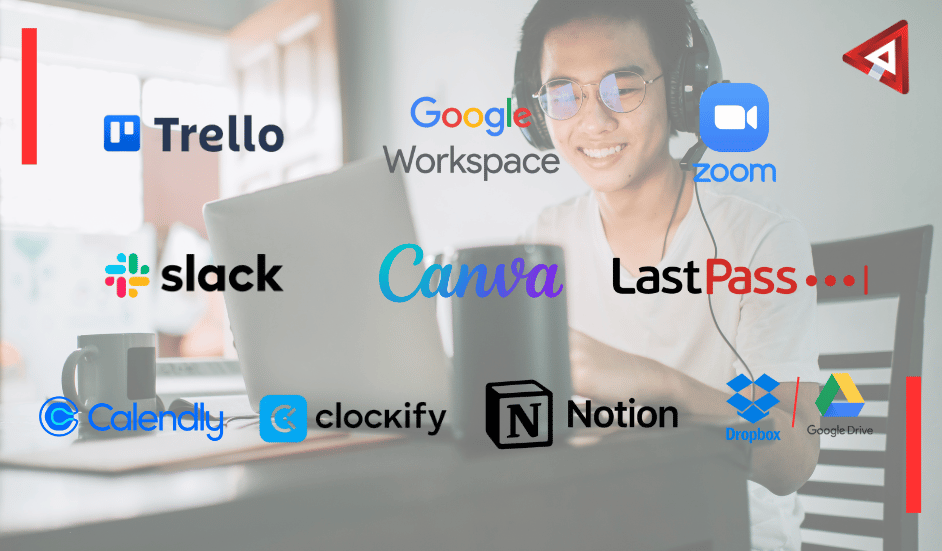
Top 10 Tools Every Virtual Assistant Uses to Stay Productive

Being a Virtual Assistant (VA) means juggling tasks, handling different clients, and staying organized, all while working from home or anywhere in the world. To do all of this smoothly, VAs rely on helpful tools that save time, boost productivity, and reduce stress.

Top 10 Tools Every Virtual Assistant Uses to Stay Productive

In this blog, we’ll go over the top 10 tools that most virtual assistants use daily. These tools help with everything from task management to communication, file sharing, scheduling, and more.

1. Trello (For Task & Project Management)

Trello is one of the easiest tools for organizing your work. It uses a board and card system, which looks a lot like sticky notes on a whiteboard. You can create boards for each client or project, then add tasks (called “cards”) and move them as you make progress.

Why VAs love it:

  • Very visual and easy to use
  • You can set deadlines, add checklists, and attach files
  • Great for both solo work and team collaboration

Example: A VA managing a social media calendar can create cards for each post with deadlines and content ideas.

2. Google Workspace (For Documents, Sheets, Emails & Meetings)

Google Workspace includes tools like:

  • Gmail (for emails)
  • Google Docs (for writing)
  • Google Sheets (for tracking data)
  • Google Calendar (for scheduling)
  • Google Meet (for video calls)

This suite is like a one-stop shop for all admin needs.

Why VAs love it:

  • Easy to share and collaborate on files
  • All work is saved in the cloud
  • You can access your work from anywhere

Example: A VA can draft blog posts in Docs, create a content calendar in Sheets, and share everything with a client using just one link.

3. Zoom (For Video Calls & Meetings)

Zoom has become one of the most popular tools for virtual meetings. It’s simple, reliable, and widely used by clients and companies.

Why VAs love it:

  • Clear video and audio quality
  • Easy to schedule and join meetings
  • You can record meetings for later

Example: A VA can set up a weekly client check-in via Zoom to discuss progress, questions, or changes in tasks.

4. Slack (For Instant Team Communication)

Slack is like WhatsApp, but for work. It helps VAs chat with clients or teams instantly, without long email threads.

Why VAs love it:

  • Real-time messaging with groups or individuals
  • You can create different channels for different topics
  • You can share files and even integrate other tools

Example: A VA working with a startup might have Slack channels for marketing, content, and customer support.

5. Canva (For Creating Designs)

Many virtual assistants handle simple graphic tasks, like creating social media posts, newsletters, or presentations. Canva makes this super easy, even for beginners.

Why VAs love it:

  • Drag-and-drop design system
  • Thousands of free templates
  • Great for making Instagram posts, logos, flyers, and more

Example: A VA can create a month’s worth of Instagram content for a client using Canva templates in just a few hours.

6. LastPass (For Password Management)

VAs often work with several tools and accounts that require logins. Managing passwords safely is a must, and that’s where LastPass comes in.

Why VAs love it:

  • Stores all passwords in one secure place
  • You only need to remember one master password
  • You can safely share access with clients

Example: A client can share their Instagram account login with their VA through LastPass without actually giving the password.

7. Calendly (For Scheduling Meetings)

Calendly removes the headache of back-and-forth emails when trying to set up a meeting. You just send a link, and others can book a time based on your availability.

Why VAs love it:

  • Automatically syncs with Google Calendar
  • Saves time and avoids double bookings
  • Great for client onboarding or calls

Example: A VA can send their Calendly link to new clients to let them choose a suitable time for the first call.

8. Clockify (For Time Tracking)

Time tracking is important when you charge by the hour or need to show how time was spent on a task. Clockify is a free, simple tool for this.

Why VAs love it:

  • Tracks how much time you spend on each task
  • You can generate reports to show clients
  • Helps manage multiple projects at once

Example: A VA can track time spent on email management, graphic design, and research separately, then share a weekly report.

9. Notion (For Note-Taking & Databases)

Notion is like a digital notebook—but more powerful. You can use it for almost anything: taking notes, creating a knowledge base, tracking habits, or even building a mini-CRM.

Why VAs love it:

  • Very customizable
  • Great for organizing information and ideas
  • Can replace several other tools if used smartly

Example: A VA can create a personal dashboard in Notion to track all tasks, goals, client details, and content ideas.

10. Dropbox or Google Drive (For File Storage & Sharing)

VAs often work with large files like videos, presentations, and photos. Storing and sharing these files safely is key.

Why VAs love it:

  • Cloud storage saves space on your computer
  • Easy to share files with anyone, anytime
  • Good backup in case of device failure

Example: A VA editing video content can upload the final files to Dropbox and share the download link with the client.

Bonus Tools VAs Often Use

Depending on their job, VAs might also use:

  • Grammarly: To check grammar and spelling in emails and documents.
  • Asana: Another great project management tool like Trello.
  • Hubstaff: For time tracking with screenshots (used by some clients for remote monitoring).
  • Mailchimp: For creating and sending email newsletters.

Final Thoughts

Every VA is different. Some work more with social media, others with data entry or customer service. But one thing is common—they all need tools to help manage time, communicate better, stay organized, and keep clients happy.

The good news is, most of these tools are free or have a free version to get started. As you grow and handle more clients, you can upgrade when needed.

If you’re a new VA or planning to become one, these tools will save you hours of time, reduce confusion, and make your work feel more under control.

Start with just a few, learn how they work, and build your own toolkit as you go. Productivity is not just about doing more; it’s about doing the right things, at the right time, with the right tools.

The ROI of Hiring a Virtual Assistant: Time & Cost Savings Explained

Time is money, and how you spend it matters. Entrepreneurs, small business owners, and even executives at larger companies are constantly juggling responsibilities, often pulled away from their core strengths by administrative or repetitive tasks. That’s where virtual assistants (VAs) come in.

Hiring a virtual assistant isn’t just about outsourcing work; it’s a strategic move to reclaim time, reduce overhead, and operate more efficiently. But how exactly does hiring a VA deliver measurable return on investment (ROI)? Let’s break it down.

1. Time Savings: The Most Valuable ROI

Perhaps the most immediate benefit of working with a VA is the time you get back in your day. Think about all the non-core tasks you handle: inbox management, calendar coordination, data entry, research, customer responses, social media posting, and more. These activities, while necessary, don’t necessarily grow your business.

How much time can a VA save you?

If you spend 2-4 hours a day on admin tasks, that adds up to 10-20 hours per week. Hiring a VA to handle those responsibilities gives you that time back to focus on strategy, sales, product development, or even personal rest and recovery. Over a year, this could mean more than 1,000 hours redirected toward high-impact activities.

ROI perspective:

Time is a finite resource. By offloading low-value work to a VA, you essentially “buy” back time that can be invested in activities that directly contribute to revenue and growth.

2. Financial Savings: Lower Labor Costs

Hiring a full-time employee means salary, benefits, equipment, taxes, and office space. With a virtual assistant, you bypass most of these expenses.

Cost comparison:

  • Full-time employee in the U.S.: $50,000–70,000/year + benefits
  • Experienced VA from countries like the Philippines or India: $8–20/hour (or even less for entry-level roles)
  • Even hiring a VA in the same country can result in cost savings if they work part-time or on a per-project basis.

ROI perspective:

Let’s say you pay a VA $15/hour for 20 hours a week. That’s $1,200/month compared to a full-time employee costing $4,000+/month. You’re saving over 70% on labor while still getting high-quality work.

3. Scalability Without Commitment

Hiring a VA gives you flexibility. You can scale up or down based on your needs, without the long-term commitment of a full-time hire. This is especially valuable for startups or small businesses with fluctuating workloads.

  • Need help launching a product? Hire a VA for a 3-month sprint.
  • Want ongoing support for daily admin? Set up a weekly retainer.
  • Need someone only for seasonal tasks? Bring them in when needed.

ROI perspective:

You pay only for the hours or tasks completed. This model allows you to stay lean while still expanding your capacity during crunch times.

4. Increased Productivity and Focus

Delegating to a VA helps reduce mental clutter. When your calendar, inbox, and repetitive workflows are handled efficiently, you’re free to focus on what truly matters.

This focus translates into:

  • Better decision-making
  • Faster execution on strategic goals
  • Improved creativity and innovation

ROI perspective:

Many entrepreneurs report a sharp increase in productivity after hiring a VA. That boost alone can lead to quicker project turnarounds, better customer service, and ultimately, increased revenue.

5. Access to Global Talent

Virtual assistants come with a range of specialized skills: bookkeeping, content creation, social media management, CRM updates, email marketing, lead generation, and more. Instead of hiring multiple full-time employees, you can work with a team of skilled VAs across different functions.

ROI perspective:

You get access to a diverse skill set at a fraction of the cost of hiring individual experts in-house. Plus, different time zones can mean 24/7 business coverage.

6. Reduced Burnout and Improved Work-Life Balance

Delegating to a VA doesn’t just benefit your business—it benefits you. Entrepreneurs often suffer from burnout due to long hours and task overload. Hiring a VA can free up your evenings, weekends, or even just your mental energy.

ROI perspective:

Better mental health and work-life balance often translate to better performance, stronger leadership, and more sustainable business practices.

7. Operational Efficiency

VAs are not just task-doers. Many bring their own systems, tools, and suggestions to help streamline operations. They might automate routine processes, create SOPs (standard operating procedures), or implement more efficient workflows.

ROI perspective:

A more efficient business runs smoother, serves customers faster, and generates higher margins. The initial cost of hiring a VA often pays off through ongoing efficiency improvements.

8. Opportunity Cost Savings

Every hour you spend on a task that can be outsourced is an hour not spent on growing your business. Whether that means closing a deal, creating a new offer, or building relationships, the lost potential can be significant.

ROI perspective:

Hiring a VA isn’t just about saving money; it’s about protecting your most valuable resource: your time and attention. That makes the return on investment far greater than what shows up on a spreadsheet.

How to Maximize ROI When Hiring a VA?

To truly reap the benefits of hiring a virtual assistant, you need to approach it strategically:

  • Identify tasks to delegate: Start by listing all your recurring tasks. Determine which ones don’t require your direct involvement.
  • Set clear expectations: Define deliverables, timelines, and communication channels upfront.
  • Choose the right VA: Match their skills and availability to your needs. Don’t just look at cost—consider experience, reliability, and communication.
  • Onboard properly: Give your VA the tools, access, and context they need to succeed. This short-term investment leads to long-term efficiency.
  • Track performance: Use KPIs or task management tools to ensure accountability and measure impact.

Final Thoughts

Hiring a virtual assistant is more than a cost-cutting tactic—it’s a growth strategy. Whether you’re a solopreneur looking to get out of the weeds or a growing team trying to stay agile, a VA can help you do more with less.

By saving time, reducing costs, increasing efficiency, and preserving your focus, the ROI of a virtual assistant is not just financial. It’s operational, strategic, and personal. In a world where every hour and dollar counts, that return is hard to ignore.

Top 10 Tasks You Can Outsource to a Legal Virtual Assistant

As law firms grow and legal work becomes more complex, many attorneys are turning to legal virtual assistants (LVAs) to help with everyday tasks. They work online, often from different parts of the world, and are trained to handle both administrative and legal-related duties.

Hiring a legal virtual assistant is a smart move for lawyers who want to save time, cut costs, and focus more on client work or court-related activities. If you’re wondering what kind of work you can outsource to a legal VA, here are the top 10 tasks they can help you with.

Tasks You Can Assign to a Legal Virtual Assistant

1. Legal Research

Researching the law is one of the most time-consuming tasks for any legal specialist.  To aid you in developing your case or getting ready for a hearing, a legal virtual assistant can research legislation, court decisions, and legal publications.

They can:

  • Use online legal databases
  • Summarize court decisions
  • Find legal precedents
  • Prepare case law comparisons

This enables lawyers to obtain crucial information more quickly and make informed decisions without spending hours reviewing documents.

2. Drafting Legal Documents

Legal virtual assistants can assist in creating basic legal documents and templates. While they won’t provide legal advice, they can prepare the initial drafts for you to review and finalize.

Examples of documents they can draft:

  • Contracts
  • Non-disclosure agreements (NDAs)
  • Client intake forms
  • Legal letters
  • Simple wills and trusts

By handling the first drafts, a VA can help you save several hours a week.

3. Calendar and Schedule Management

Missing a meeting or court date can be a disaster in the legal world. Legal VAs can help you remember crucial dates by managing your calendar, setting up appointments, and sending reminders.

They can also:

  • Set up calls with clients
  • Book meetings with co-counsel or paralegals
  • Organize deposition and hearing dates
  • Send follow-up reminders

This keeps your day organized and stress-free.

4. Email Management

A cluttered inbox can hide urgent emails or important client messages. A legal virtual assistant can organize your inbox, flag priority messages, and even draft email responses on your behalf.

They can:

  • Filter spam
  • Respond to routine inquiries
  • Organize emails into folders
  • Set up autoresponders

This ensures your communication stays professional and timely.

5. Client Intake and Onboarding

Bringing in new clients involves collecting information, explaining services, and getting documents signed. A legal VA can help streamline this process.

They can:

  • Send and collect intake forms
  • Set up client files
  • Explain basic procedures
  • Follow-up for missing documents

With their help, clients get a smooth and professional first impression.

6. Billing and Invoicing

Getting paid on time is critical, but billing can be time-consuming. Legal virtual assistants can help create and send invoices, track payments, and send payment reminders.

Tasks they can handle include:

  • Creating detailed invoices
  • Sending bills to clients
  • Tracking overdue payments
  • Reconciling payments with services rendered

With accurate billing, you reduce payment delays and improve cash flow.

7. Case File Management

Organizing case files is key to staying on top of your workload. A legal VA can help you keep everything sorted and easy to find.

They can:

  • Create digital folders for each client
  • Upload and label important documents
  • Maintain version control
  • Back up files securely

This saves time when you need to find documents quickly during client meetings or hearings.

8. Transcription Services

Legal professionals often record meetings, interviews, or hearings. A VA can transcribe audio files into clear, written documents.

They can:

  • Transcribe dictations
  • Prepare interview transcripts
  • Format notes from court hearings
  • Ensure confidentiality and accuracy

Having transcribed records makes it easier to review conversations and build strong cases.

9. Social Media and Online Presence

While not strictly legal work, building an online presence helps law firms attract new clients. A legal VA can manage your social media or website content.

They can:

  • Schedule posts on LinkedIn or Twitter
  • Write blogs about legal topics
  • Respond to online reviews
  • Keep your website updated

This helps you market your services without spending extra hours on digital tasks.

10. Court Filing and Document Submission

Some jurisdictions allow online document filing. A legal virtual assistant can take care of these tasks under your direction.

They can:

  • Submit court documents electronically
  • Check local court deadlines and requirements
  • Track filing confirmations
  • Update clients once documents are filed

This keeps your practice going smoothly and avoids last-minute rushing.

Final Thoughts

Legal virtual assistants give law companies a strong means of maintaining organization, productivity, and client focus. By delegating time-consuming or repetitive work to a skilled legal VA, you can take back control of your schedule, reduce overhead costs, and improve the quality of your legal services. So, if you haven’t explored hiring a legal virtual assistant yet, now might be the perfect time to start.

Need help figuring out where to begin? Start with just one task from this list and experience the difference it makes.

Virtual Legal Assistants vs. Traditional Paralegals: What’s the Difference?

With technology enabling remote work, law firms and legal departments are now looking beyond traditional office roles to meet their administrative and research needs. One area where this shift is particularly evident is in the comparison between virtual legal assistants and traditional paralegals.

Both roles serve to support lawyers and legal teams, but their functions, employment models, and tools of operation differ significantly. In this blog, we’ll break down the key differences, benefits, and considerations to help you determine which role makes the most sense for your firm.

Understanding the Roles

Traditional Paralegals

Paralegals are skilled legal professionals who assist attorneys with a range of essential tasks, all under the attorney’s supervision. They are often employed in law firms, corporations, government agencies, or legal departments and typically perform duties such as:

  • Conducting legal research
  • Drafting legal documents
  • Managing case files
  • Interviewing clients and witnesses
  • Filing court documents

They usually work on-site, are subject to internal policies, and are integrated into the daily operations of the legal team.

Virtual Legal Assistants (VLAs)

Virtual legal assistants perform many of the same tasks as paralegals, but they do so remotely. Often hired on a freelance or contract basis, VLAs support law firms and solo practitioners without being physically present in the office. Their responsibilities often include:

  • Legal research
  • Document preparation
  • Calendar management
  • Email and client communication
  • Case management system updates

Many VLAs may also possess certifications or prior experience in the legal field, although not all are formally trained as paralegals.

Employment Models and Cost Structure

Traditional paralegals are typically employed on a full-time or part-time basis as part of a law firm’s in-house team

VLAs: Virtual legal assistants are usually independent contractors. Law firms pay them hourly or per project, which can be more cost-effective. Since they work remotely, there’s no overhead for office space, equipment, or employee benefits.

Flexibility and Availability

  • Paralegals: Being in the office, paralegals follow standard work hours and are available for face-to-face meetings, team collaborations, and immediate tasks. Their integration into the office makes them reliable for urgent, on-site duties like court filings or physical document management.
  • VLAs: “Virtual legal assistants tend to offer more flexibility when it comes to scheduling and workload management.”. Many are available outside traditional business hours, which can be a major advantage for firms working with tight deadlines or across time zones. However, real-time availability may vary depending on their schedule and location.

Skills and Training

  • Paralegals: Most paralegals have completed formal training programs and may hold certifications or associate degrees in paralegal studies. Their training prepares them for direct involvement in legal procedures and ensures they understand legal terminology, court procedures, and document formats.
  • VLAs: The skill level among VLAs can vary. Some may be former paralegals who shifted to remote work, while others may have administrative backgrounds with on-the-job legal experience. When hiring a VLA, it’s important to verify their qualifications, especially if they’ll be handling sensitive or complex legal tasks.

Technology and Tools

  • Paralegals: Traditional paralegals may rely more on in-house systems and databases, which are often secured within the office network. Their access to physical files and court resources can streamline specific tasks that require on-site handling.
  • VLAs: Virtual legal assistants are well-versed in cloud-based legal software, project management tools, and secure communication platforms. Tools like Clio, MyCase, and PracticePanther enable them to collaborate remotely with legal teams while maintaining confidentiality and compliance.

Confidentiality and Compliance

Confidentiality is critical in the legal field. Both paralegals and VLAs are expected to uphold strict confidentiality standards, but the execution may differ.

  • Paralegals: Working in the office allows for tighter control over access to sensitive information. Supervision is more direct, and compliance with firm policies is easier to monitor.
  • VLAs: Remote work introduces challenges in data protection. It’s important for firms to ensure that VLAs use secure devices, encrypted communication tools, and proper protocols for handling client information. Many experienced VLAs are familiar with these requirements and take proactive steps to maintain confidentiality.

When to Choose a Traditional Paralegal?

  • You require someone physically present in the office for in-person meetings, filings, or document handling.
  • Your cases involve high levels of complexity that demand close collaboration and on-site supervision.
  • You value long-term integration into your team with structured employment benefits and ongoing training.

When to Choose a Virtual Legal Assistant?

  • You need flexible, on-demand legal support for short-term or repetitive tasks.
  • You’re a solo practitioner or a small firm looking to manage costs without sacrificing efficiency.
  • Your team is comfortable with remote collaboration and already uses cloud-based legal tools.

The Hybrid Approach

Some firms find the best results by combining both models. For instance, traditional paralegals handle complex, on-site matters, while VLAs manage overflow work or routine tasks that can be done remotely. This hybrid setup offers a balance between cost savings and operational efficiency.

Future Trends in Legal Support Staffing

As legal services evolve, so do the expectations around how support roles are structured and delivered. Several trends are reshaping the way firms think about staffing:

  • AI-Powered Assistance: Both paralegals and VLAs are increasingly using AI tools for tasks like document review, contract analysis, and legal research. This is reducing turnaround times and boosting productivity.
  • Global Talent Pools: Remote work has unlocked access to international legal talent. A VLA in one country can now support attorneys halfway across the world, especially in tasks that don’t require jurisdiction-specific knowledge.
  • Niche Specialization: VLAs are starting to niche down, offering support in specific areas of law (e.g., immigration, IP, or personal injury), which allows firms to tap into highly relevant expertise on demand.
  • Security Enhancements: As concerns over data protection grow, there’s a push toward better cybersecurity practices, including VPN usage, encrypted platforms, and compliance with international privacy laws like GDPR.
  • Subscription-Based Legal Support: Some firms are moving away from traditional employment models and opting for subscription-based or retainer-style VLA services, offering flexibility and predictable costs.

These developments suggest that the divide between in-office and remote legal support will continue to blur, making it even more important for firms to assess their needs holistically.

Final Thoughts

Deciding between a legal virtual assistant and a traditional paralegal comes down to your firm’s setup, available resources, and how your day-to-day operations run.

As remote work continues to redefine the legal profession, understanding how these roles differ can help you build a legal support system that works best for your practice. Whether you opt for in-house talent, remote assistance, or a blend of both, what matters most is aligning your support strategy with your firm’s goals and client needs.

Best Countries to Hire Skilled Virtual Assistants in 2025

As businesses across the globe shift toward remote operations, virtual assistants (VAs) have become key players in driving productivity and efficiency. Whether you’re a solopreneur, startup, or growing enterprise, hiring a skilled VA can significantly reduce your workload while keeping costs manageable.

But not all virtual assistants are created equal, and the country you hire from can make a big difference in communication, time zone compatibility, skill sets, and cultural alignment. In this guide, we’ll explore the best countries to hire virtual assistants in 2025—and what makes each of them stand out in today’s outsourcing landscape.

1. The Philippines

Why It Stands Out

The Philippines is widely recognized as a top destination for outsourcing virtual assistant services. Its large English-speaking population and Western-influenced work culture make Filipino VAs a trusted choice for businesses around the globe.

The country’s BPO industry continues to expand, offering experienced professionals who understand customer service, administration, and remote work tools.

Key Strengths

  • High English proficiency with a neutral accent
  • Affordable hourly rates, typically $3–8
  • Strong background in customer support

Work Culture

Many have undergone formal training in tools like Trello, Asana, G Suite, and CRMs. They tend to communicate proactively and are comfortable working independently or as part of remote teams.

Common Services Offered

  • Email and inbox management
  • Social media scheduling
  • Calendar and appointment setting
  • Data entry and transcription
  • E-commerce support (Amazon, Shopify, etc.)

2. India

Why It Stands Out

India has one of the largest pools of skilled virtual assistant professionals offering remote support, ranging from administrative tasks to highly technical services. The country has long been a global outsourcing hub, making it easy to find both independent freelancers and agencies that can scale with your business.

English is widely spoken, and the cost-effectiveness makes India a smart option for businesses with budget constraints or large-scale tasks.

Key Strengths

  • Huge talent pool across industries
  • Affordable and scalable ($4–12/hour)
  • Excellent IT, analytics, and research capabilities
  • Strong English communication (especially written)

Work Culture

Indian VAs are usually organized and task-focused. They thrive under structure and are quick learners when it comes to new tools or systems. Many hold degrees in business, finance, or technology, and remote freelancing is a growing trend across metro cities like Bangalore, Delhi, and Mumbai.

Common Services Offered

  • Research and data analytics
  • Bookkeeping and invoicing
  • Customer and technical support
  • CRM and email marketing
  • Basic coding, WordPress, and SEO tasks

3. Mexico

Why It Stands Out

Mexico’s growing VA market makes it an excellent choice for U.S.-based companies seeking bilingual (English-Spanish) support, proximity in terms of geography, and shared time zones. The demand for remote work is increasing in Mexico, with more professionals offering VA services in areas like customer support, content creation, and scheduling.

Key Strengths

  • Bilingual capabilities (Spanish-English)
  • Similar or overlapping time zones with North America
  • Affordable mid-range pricing ($6–14/hour)
  • Good cultural understanding of U.S. business standards

Work Culture

VAs in Mexico typically have formal education and previous experience working with U.S. companies. They are professional, punctual, and reliable. Urban areas like Mexico City, Guadalajara, and Monterrey offer strong internet infrastructure and growing freelancer communities.

Common Services Offered

  • Bilingual customer service
  • Admin and scheduling support
  • Social media engagement
  • Lead generation and cold outreach
  • Travel and calendar planning

4. South Africa

Why It Stands Out

South Africa is increasingly recognized as a valuable destination for outsourcing, thanks to its high-quality education system, native English fluency, and alignment with European time zones. It’s particularly attractive to companies in the UK and Europe looking for a reliable remote workforce without significant language or cultural barriers.

Key Strengths

  • Native-level English proficiency
  • Strong interpersonal and communication skills
  • Shared business hours with the UK and EU countries
  • Professional and polite work culture

Work Culture

South African VAs are well-suited to customer-facing roles and executive support. Many have experience in corporate environments and bring a mature, proactive approach to remote work. Remote freelancing is becoming more common in cities like Cape Town, Johannesburg, and Durban.

Common Services Offered

  • Executive assistance
  • Document preparation and editing
  • Back-office coordination
  • Online research and reporting
  • Client onboarding and CRM updates

5. Eastern Europe (Ukraine, Romania, Serbia, Bulgaria)

Why It Stands Out

Eastern Europe is a go-to region for businesses seeking technically skilled VAs and remote support specialists. The education system in countries like Ukraine, Romania, Serbia, and Bulgaria is strong in both humanities and STEM fields, producing VAs with advanced skills in project management, tech, and digital marketing.

Key Strengths

  • Strong technical and language education
  • Reliable communication and autonomy
  • Solid English proficiency, especially written
  • Competitive rates ($7–15/hour, depending on specialization)

Work Culture

Professionals in Eastern Europe are generally well-organized, deadline-oriented, and capable of working independently. Their experience with European and U.S. clients makes them highly effective at understanding and adapting to various communication styles and business workflows.

Common Services Offered

  • WordPress and CMS support
  • Project and task management
  • Digital marketing and content repurposing
  • Email and funnel automation
  • Technical documentation and data analysis

Other Emerging Markets to Watch in 2025

Bangladesh and Pakistan

Both countries are experiencing a significant surge in freelance and virtual assistant opportunities.. Young, tech-savvy professionals are entering the VA space with strong skills in design, social media, and web development. Rates here are among the most affordable globally, starting as low as $2–5/hour.

Notable Strengths

  • Highly affordable services
  • Strong digital skills in design and video
  • Improving English fluency among younger professionals
  • Familiarity with platforms like Upwork and Fiverr

Potential Limitations

  • Internet connectivity can vary by region
  • Some communication and quality consistency concerns at lower price points

Colombia and Brazil

These Latin American countries are attracting attention for their talented remote workforce, cultural alignment with the U.S., and shared time zones. With increasing government and private support for remote work, Colombia and Brazil are fast becoming outsourcing hubs.

Notable Strengths

  • Spanish or Portuguese bilingual VAs
  • Aligned working hours with North America
  • Strong backgrounds in customer service and digital marketing
  • Competitive rates for mid-level professionals
  • Typical Services
  • Social media content
  • Community management
  • Customer support
  • Scheduling and CRM assistance

Key Considerations Before Hiring a VA Internationally

1. Time Zone Overlap

Think about whether you require real-time collaboration or if asynchronous communication is acceptable. If live collaboration is important, choose countries that offer working hours aligned with your time zone.

2. Language Skills

Assess the level of English fluency you need, especially for roles involving customer interaction, content writing, or phone communication. If you operate in a bilingual market, consider hiring VAs who are fluent in both languages.

3. Technical Expertise

Depending on the complexity of your business tasks, some regions may offer more specialized skill sets than others. 

4. Infrastructure and Reliability

Ensure that your VA has reliable internet access, backup systems, and the ability to use modern tools like Zoom, Slack, or project management software.

5. Budget

While cost savings are often a driver for outsourcing, focus on value over price. A slightly higher hourly rate can result in better communication, faster task completion, and fewer mistakes.

6. Payment and Legal Logistics

Platforms like Payoneer, Wise, or PayPal make it easier to pay international contractors, but it’s still important to check for any restrictions or limitations in the VA’s country. Additionally, make sure you adhere to relevant local tax regulations and formalize your arrangements through proper freelance contracts.

Final Thoughts

In 2025, hiring virtual assistants is not just about saving time—it’s about scaling your business smartly. The global VA market is richer than ever, offering specialized talent in nearly every country and time zone. Whether you need someone to manage your inbox, build a dashboard, or support your customers across continents, there’s a virtual assistant ready to help.

Choosing the right country to source your VA depends on your business priorities—cost, skill, language, availability, or culture. Use this guide as a starting point to make informed hiring decisions and build a strong, flexible, and global remote team.

Pricing Guide: How Much Should You Pay a Virtual Assistant in 2025?

As businesses and entrepreneurs continue to embrace remote work and digital tools, virtual assistants (VAs) have become indispensable partners in managing day-to-day operations. Whether it’s scheduling appointments, handling emails, managing social media, or performing specialized tasks like graphic design or bookkeeping, virtual assistants offer flexibility and efficiency that traditional in-house employees may not always provide.

If you’re considering hiring a virtual assistant in 2025, one of the most important questions you’ll face is: How much should I pay? The answer depends on many factors, including the scope of work, skill level, experience, location, and the type of contract you’re willing to offer.

In this guide, we’ll explore what influences VA pricing today, what to expect in 2025, and how to decide on a fair and effective compensation plan for your virtual assistant.

Role of a Virtual Assistant

Before discussing pricing, it’s important to understand what a virtual assistant does. The responsibilities of a VA can differ greatly based on the specific needs of the business:

  • Administrative Support: Managing emails, scheduling meetings, data entry, and travel arrangements.
  • Customer Service: Handling client inquiries, managing customer relations.
  • Creative Tasks: Content writing, graphic design, video editing.
  • Technical Support: Website maintenance, social media management, basic coding.
  • Specialized Services: Bookkeeping, marketing strategy, SEO optimization.

Because the tasks can range from simple administrative work to highly specialized services, the cost for a VA can vary greatly. Understanding the specific duties you want your VA to handle is the first step to figuring out a suitable price.

Factors Influencing Virtual Assistant Rates in 2025

1. Skill Level and Experience

As with any job, the more experienced and skilled a virtual assistant is, the higher their rates are likely to be. Entry-level VAs who can handle routine tasks such as email management or scheduling may charge less than those with specialized skills in areas like digital marketing, project management, or software development.

. A VA who has worked with multiple clients, understands different business models, and knows how to anticipate needs will generally command higher pay.

2. Location and Cost of Living

Geography remains a key factor influencing VA rates. Virtual assistants based in countries with a higher cost of living typically charge more than those in regions where expenses are lower.

For example, a VA in North America or Western Europe will usually have higher rates than someone working from Southeast Asia or Latin America. That said, the growing global competition means some VAs from traditionally lower-cost regions are increasing their rates as their expertise grows.

3. Complexity and Scope of Work

The breadth and depth of tasks assigned to a VA influence pricing. A part-time VA managing only calendar appointments may cost less than a full-time VA responsible for marketing campaigns, customer support, and content creation combined.

If you expect your VA to work independently on complex projects requiring decision-making, research, and problem-solving, expect to pay more than for straightforward, repetitive tasks.

4. Hours and Availability

How many hours a VA is expected to work per week, and their availability will also affect their rates. A VA working a few hours a week on a flexible schedule may charge less than one providing full-time support or offering availability across multiple time zones.

Some VAs offer packages for fixed hours per month, while others bill hourly or on a retainer basis. Determining your needs upfront will help you choose the most cost-effective arrangement.

5. Employment Type: Freelancer vs. Agency

Hiring a freelance virtual assistant usually involves lower costs than working with an agency.. Agencies may charge a premium for additional services such as quality assurance, training, or backup coverage when your assigned VA is unavailable.

Freelancers tend to be more flexible and may offer personalized attention, but agencies might provide more reliability and a wider pool of talent to choose from.

Virtual Assistant Rates in 2025

While actual rates can vary, here’s an overview of what you might expect to pay for virtual assistants in 2025 based on industry trends and inflation adjustments from previous years:

Virtual Assistants at the Entry Level

  • These VAs usually have less than two years of experience and handle basic administrative tasks.
  • Hourly rates: approximately $8 to $15 per hour.
  • Ideal for routine tasks such as managing emails, scheduling appointments, data entry, and basic customer support.

 Virtual Assistants at mid-level

  • Typically have two to five years of experience and offer a broader skill set.
  • Hourly rates: approximately $15 to $30 per hour.
  • Can manage social media, content creation, basic bookkeeping, and handle more complex administrative tasks.

Specialized or Expert Virtual Assistants

  • Have over five years of experience or expertise in areas such as digital marketing, SEO, project management, or technical support.
  • Hourly Rates: $30 to $75+ per hour, based on specialization.
  • Best suited for businesses that need advanced expertise and independent project management.

Monthly Retainer or Package Pricing:

Some virtual assistants provide fixed monthly packages that cover a predetermined number of hours or specific tasks. Depending on their expertise and the services offered, these packages can range from $300 to more than $3,000 per month.

Select the Best Pricing Model

1.Pay by the Hour

An hourly rate is straightforward and commonly used when the scope of work is unclear or expected to fluctuate. It offers flexibility, especially for short-term or project-based work.

However, hourly billing can sometimes lead to less predictability in costs, and managing hours worked requires some oversight.

2. Monthly fixed Retainer

A retainer offers a fixed monthly fee for a specific number of hours or deliverables. This approach is ideal if you have continuous requirements and want predictable budgeting.

It encourages a steady working relationship and can motivate the VA to prioritize your tasks.

3. Project-Based Pricing

For specific projects with clear deliverables, some VAs prefer charging a flat fee. This can be efficient for defined tasks like creating a website, managing a campaign, or producing content.

Additional Considerations for Paying Virtual Assistants in 2025

Quality vs. Cost

While it might be tempting to opt for the lowest rates, remember that quality and reliability are crucial. A less experienced or less dedicated VA might end up costing more in time and effort due to mistakes or delays.

Investing in a skilled, professional VA can save money and stress in the long run.

Communication and Time Zone Differences

If your VA is located in a different time zone, consider how this will impact communication and workflow. Some VAs may charge extra for working outside typical business hours or for urgent requests.

Clear communication and defined working hours can prevent misunderstandings.

Trial Periods and Contracts

Consider starting with a trial period to assess the VA’s skills, work ethic, and compatibility with your business. Many VAs offer a discounted rate for the first few weeks or a trial project.

A written agreement outlining responsibilities, payment terms, confidentiality, and termination policies protects both parties.

Taxes and Legal Implications

Understand the tax and legal aspects of hiring virtual assistants, especially if they are freelancers from other countries. You may need to comply with labor laws or tax reporting requirements in your jurisdiction.

Using formal contracts and consulting legal or financial advisors can help avoid complications.

Tips to Get the Best Value When Hiring a Virtual Assistant

  • Be Clear About Your Needs: Define what tasks you want to delegate. A detailed job description helps attract the right candidates and ensures accurate pricing.
  • Evaluate Experience and Skills: Review portfolios, references, and previous work samples. Sometimes, paying a bit more for experience brings better results.
  • Consider Long-Term Relationships: Building rapport with a reliable VA can improve efficiency over time. Frequent turnover can be costly and disruptive.
  • Use Platforms and Agencies Wisely: Online platforms like Upwork, Fiverr, or specialized VA agencies offer a wide range of options. Research reviews and verify credentials before hiring.
  • Communicate Expectations: Set clear deadlines, priorities, and communication channels from the start. This reduces misunderstandings and builds trust.

Looking Ahead: What to Expect in VA Pricing Beyond 2025

The landscape of virtual assistance is evolving with new technology trends like AI integration, automation, and enhanced remote collaboration tools. These changes may influence pricing in several ways:

  • Some routine tasks currently done by VAs could be partially automated, potentially lowering costs for basic support.
  • Demand for highly skilled VAs capable of managing AI tools or providing specialized digital services may increase, pushing rates higher.
  • Remote work becoming mainstream globally could continue to balance rates as markets adjust to global competition.
  • Flexibility, continuous learning, and adapting to new tools will be important for both VAs and businesses to maintain productive partnerships.

Final Thoughts

Determining how much to pay a virtual assistant in 2025 depends on a variety of factors, including skills, experience, location, and the complexity of tasks. While rates can vary widely, understanding the scope of your needs and the value a VA can provide helps in making informed decisions.

Whether you choose an entry-level VA for simple administrative duties or a specialist for advanced projects, investing in the right support can save you time, reduce stress, and contribute to your business growth.

Approach the process with clear expectations, transparent communication, and respect for the VA’s expertise. By doing so, you create a foundation for a productive and mutually rewarding partnership in the increasingly digital world of work.

Top 5 AI Virtual Assistants in 2025

AI virtual assistants are no longer a futuristic idea. In 2025, they will be an essential part of how we work, communicate, and manage time. These tools are designed to make everyday tasks easier, boost productivity, and help you stay organized. Whether you’re a business owner, a freelancer, or part of a remote team, the right AI assistant can make a big difference.

AI virtual assistants come in many forms. Some help you manage emails and schedule meetings, while others support coding, content creation, or team management. The best ones use machine learning and natural language processing to understand your needs and take action quickly and accurately.

Top 5 AI Virtual Assistants

Here’s a detailed look at five of the top AI virtual assistants making an impact in 2025:

1. Fireflies.ai

Fireflies.ai is designed to help with one of the most time-consuming parts of the workday: meetings. It automatically records, transcribes, and summarizes your calls, so you don’t have to take notes or worry about missing important details.

Key features:

  • Real-time transcription during meetings
  • Highlights and action item summaries
  • Easy integration with Zoom, Google Meet, and Microsoft Teams
  • Searchable voice and text notes
  • Collaboration features that allow teammates to comment on meeting highlights

Why people like it: Fireflies.ai is a favorite among remote teams and busy professionals. It captures everything in real-time and helps you focus on the discussion without distraction. Later, you can revisit the meeting notes, highlight key decisions, and share summaries with your team.

Use case: If you attend multiple virtual meetings daily and want to reduce the burden of note-taking, Fireflies.ai can be your second brain. It keeps everything organized and accessible.

2. ClickUp AI

ClickUp is well-known as a project management platform, but its AI-powered features have taken it to a whole new level in 2025. ClickUp AI brings structure and intelligence to your daily work.

Key features:

  • AI suggestions for task prioritization based on deadlines and workload
  • Smart summaries for meetings, tasks, and documents
  • Automated workflows to handle repetitive processes
  • Built-in chat and documentation tools
  • Integration with calendars, email, and productivity apps

Why it stands out: ClickUp AI is great for individuals and teams looking to improve productivity. It helps you see the bigger picture, track goals, and eliminate unnecessary steps in your workflow.

Use case: Whether you’re managing a marketing campaign or coordinating a product launch, ClickUp AI provides a central hub where everything connects. It helps you avoid missed deadlines and stay on top of your goals.

3. Tabnine

Tabnine is a smart AI assistant tailored for developers. Writing clean, functional code is challenging, especially when working on large projects. Tabnine uses machine learning to help developers code faster and more efficiently.

Key features:

  • Intelligent code completion based on your programming habits
  • Support for multiple languages like Python, JavaScript, Java, and more
  • Seamless integration with popular code editors (VS Code, IntelliJ, etc.)
  • Team-based training models for consistent code quality
  • Privacy-focused with options for on-premise usage

Why developers trust it: Tabnine doesn’t just autocomplete basic syntax. It understands the context of your code and suggests full lines, functions, or even entire modules. This improves both speed and accuracy.

Use case: If you’re a software engineer working with large codebases or switching between projects, Tabnine reduces friction and helps you write high-quality code with less effort.

4. Alexa for Work

Amazon’s Alexa has become more than just a smart home device. In 2025, Alexa for Work brings voice-powered convenience to professional settings.

Key features:

  • Voice-activated scheduling and meeting reminders
  • Integration with calendars, email, and smart office devices
  • Custom routines and commands for different teams or departments
  • Hands-free control for lights, temperature, and AV equipment
  • Ability to manage to-do lists, calls, and emails

Why it’s effective: Alexa for Work adds speed and ease to everyday tasks. Instead of opening your laptop to schedule a meeting, you can just ask Alexa. It’s also ideal for hybrid offices with shared spaces or conference rooms.

Use case: If you’re managing multiple tools and need a more intuitive, voice-based assistant, Alexa for Work helps you streamline your workspace without lifting a finger.

5. Jasper

Jasper is one of the most advanced AI content assistants available today. It’s a go-to tool for marketers, content writers, and businesses looking to create quality content quickly.

Key features:

  • Generates articles, social media posts, product descriptions, and more
  • Customizes tone and writing style based on your input
  • Provides content outlines, SEO suggestions, and grammar checks
  • Includes templates for emails, landing pages, and ads
  • Supports over 25 languages

Why it’s popular: Jasper is more than a writing tool—it’s like having a content strategist on your team. It helps you create engaging content that’s tailored to your brand and audience.

Use case: Whether you’re writing blog posts, emails, or ad copy, Jasper can help you produce polished, professional content in a fraction of the time.

How to Choose the Right AI Assistant?

Choosing an AI assistant depends on your work style, responsibilities, and goals. Here are a few tips to help you decide:

  • If you’re overwhelmed with meetings, Fireflies.ai can save hours by summarizing conversations.
  • If your work involves juggling multiple tasks and deadlines, ClickUp AI keeps your projects on track.
  • If you write code, Tabnine can increase your output and catch mistakes early.
  • If you use voice commands and smart tech, Alexa for Work is a natural extension of your workflow.
  • If you’re in marketing or content creation, Jasper helps you create content faster and with better results.

Make a list of your daily challenges and match them to the assistant that solves them best. Most of these tools also offer free trials or demos, so you can explore them before making a commitment.

Why AI Virtual Assistants Matter More Than Ever?

The role of AI assistants is expanding quickly. They are no longer limited to simple tasks like setting reminders. Today, they analyze data, anticipate needs, generate creative content, and support collaboration. In a world where time is a limited resource, these tools give you a competitive edge.

In 2025, businesses that use AI assistants efficiently are more agile and productive. Professionals who embrace AI tools save time, reduce burnout, and focus on what they do best. Whether you’re trying to scale a business or simply manage a busy schedule, the right assistant can be a game-changer.

We’ve reached a point where using an AI assistant is not a luxury—it’s a smart strategy.

The Future of AI Assistants

As we move forward, AI virtual assistants are expected to grow more advanced. Anticipated developments include:

  • More personalized experiences based on user behavior and preferences
  • Deeper integration across platforms and devices
  • Enhanced security and privacy controls
  • Better understanding of human emotion and context
  • Multilingual capabilities that support global teams

As these tools grow more intuitive, they’ll feel less like software and more like a trusted partner in your workflow.

Final Thoughts

AI virtual assistants have become a lasting and essential part of modern work life. They simplify tasks, reduce manual work, and make our professional lives easier. From transcription and task management to content creation and voice control, these tools are helping individuals and teams work smarter, not harder.

By choosing the assistant that fits your needs, you unlock more time and energy to focus on meaningful work. If you haven’t explored AI virtual assistants yet, 2025 is the perfect time to start.

The future of work is intelligent, and AI assistants are leading the way.

Claude vs ChatGPT: What’s the Difference?

AI chatbots are changing the way we live, work, and communicate. They can write essays, answer questions, help with emails, and even hold conversations like real people. Two of the biggest names in this space right now are Claude and ChatGPT. But what are they, and how are they different from each other? In this blog, we’ll explain both in simple terms and help you decide which one might be better for you.

What is ChatGPT?

ChatGPT is an AI chatbot created by OpenAI. It’s based on a language model called GPT, which stands for “Generative Pre-trained Transformer.” The latest version is ChatGPT-4 (also known as GPT-4-turbo). It’s used by millions of people around the world for writing, researching, coding, learning new things, and more.

ChatGPT works like a smart assistant. You can ask it almost anything, and it will try to respond with a helpful answer. For example, you can ask it to help you write a story, solve a math problem, create a business plan, or explain something you don’t understand.

You can use ChatGPT for free, which gives you access to GPT-3.5. If you want better performance and more features, you can upgrade to the Pro version for $20/month. This gives you access to GPT-4-turbo, which is faster, smarter, and more capable.

ChatGPT is known for being creative and flexible. It can write poems, generate ideas, give you advice, help with homework, and even assist in writing code. It feels like talking to a smart, helpful friend.

What is Claude?

Claude is another AI chatbot, but it’s made by a different company called Anthropic. Claude is named after Claude Shannon, the “father of information theory.” The latest version in 2025 is Claude 3, which includes three different models: Opus (most powerful), Sonnet (balanced), and Haiku (fastest and most efficient).

Claude is designed with a strong focus on safety, helpfulness, and clear communication. Anthropic built Claude using a special approach that teaches the AI to follow ethical guidelines and avoid giving harmful or false information.

Claude is very good at understanding complicated topics. It can read and summarize long documents, explain difficult ideas, and support business or academic work. It’s often used by people who want accurate and thoughtful answers.

Claude vs ChatGPT : Key Differences

Let’s break it down into simple categories:

1. Company Behind It

  • ChatGPT: Made by OpenAI, a company based in San Francisco, known for creating powerful and accessible AI tools.
  • Claude: Made by Anthropic, a company focused on building AI that is safe and aligned with human values.

2. Main Focus

  • ChatGPT: Great for creative tasks, fun conversations, learning new things, and building tools like apps or websites.
  • Claude: Ideal for serious work like reading research papers, writing reports, or helping with school or office tasks.

3. Versions and Models

ChatGPT:

  • Free version: GPT-3.5
  • Paid version: GPT-4-turbo

Claude:

  • Claude 3 Opus (most powerful)
  • Claude 3 Sonnet (well-balanced)
  • Claude 3 Haiku (very fast and lightweight)

4. Pricing

ChatGPT:

  • Free with GPT-3.5
  • $20/month for GPT-4-turbo

Claude:

  • Free access (limited)

Paid options are available on platforms like Anthropic’s website or Poe.com

5. Speed and Performance

  • ChatGPT-4-turbo is designed for fast and smooth responses, even with complex questions.
  • Claude 3 Haiku is extremely quick and optimized for speed, perfect for mobile or time-sensitive uses.

6. File and Image Support

  • ChatGPT (Pro): Can handle images, read PDFs and documents, and even browse the internet in real-time.
  • Claude: Excellent at reading long documents and answering detailed questions about them. Especially strong in summarizing long PDFs.

7. Writing Style

  • ChatGPT: More expressive, creative, and casual. Feels more human and engaging.
  • Claude: More professional, structured, and polite. Feels calm and serious.

8. Handling Long Documents

Claude is especially good at working with long documents. For example, if you give it a book or a detailed report, it can pull out key points, explain the main ideas, and help you understand the material. ChatGPT can also do this, but Claude often does a better job with very large files.

9. Coding Abilities

ChatGPT is a favorite among programmers. It can help with writing code, fixing errors, building websites, and even creating games. It understands many programming languages and can walk you through projects step by step.

Claude also understands code, but it’s usually better at reviewing or explaining existing code than writing new code from scratch.

10. Safety and Accuracy

Claude has stronger filters and is trained to avoid sharing wrong or dangerous information. It’s very cautious and often checks its facts.

ChatGPT is also safe, especially in the latest versions, but sometimes older versions might make things up (a problem known as “hallucination”).

Claude or ChatGPT : Which One Should You Use?

Choosing between ChatGPT and Claude depends on your personal needs and what kind of work you do. Here’s a simple guide:

Use ChatGPT if you:

  • Want to write creatively (stories, blogs, social media posts, poems)
  • Need help learning new skills like coding or writing
  • Enjoy fun and lively conversations with an AI
  • Want extra tools like file uploads, image understanding, and internet browsing (Pro version)

Use Claude if you:

  • Work with long or complex documents (PDFs, reports, research papers)
  • Need accurate summaries or answers for school or work
  • Want a serious and polite tone in responses
  • Prefer a chatbot that avoids making up facts

Real-Life Examples

Example 1: Student Writing an Essay

  • ChatGPT can help brainstorm ideas, outline the essay, fix grammar, and even suggest better phrases.
  • Claude can help understand difficult reading material, summarize textbook chapters, and check the accuracy of information.

Example 2: Developer Debugging Code

  • ChatGPT is great at helping you write new code, find errors, and explain what each part of the code does.
  • Claude can look at your existing code, find logic problems, and explain why a function isn’t working.

Example 3: Business Professional Reviewing a Report

  • Claude can read a 100-page report and give you a one-page summary, highlight important points, and suggest improvements.
  • ChatGPT can help you write emails, create presentation slides, and turn the report into easy-to-read bullet points.

Example 4: Content Creator Planning a Campaign

  • ChatGPT can help generate catchy headlines, write scripts, and suggest hashtags.
  • Claude can analyze what kind of content works best and help plan a content calendar.

Example 5: Job Seeker Preparing for Interviews

ChatGPT can help you practice interview questions, write your resume, and prepare answers.

Claude can help you understand job descriptions, analyze company reports, and prepare thoughtful questions to ask the employer.

Final Thoughts

Both Claude and ChatGPT are excellent AI tools in 2025. They are powerful, intelligent, and useful in different ways.

ChatGPT is perfect if you want to be creative, learn something new, or just have a fun chat. Claude is great if you need serious help with complex topics, long documents, or professional tasks.

You don’t have to limit yourself to just one. Many people switch between tools depending on the task—one might be better for writing and creativity, while another excels at research and professional work

So, which one is better? The answer is: it depends on you.

Try them both and see which one fits your style better.

5 Reasons Why Legal Virtual Assistants are Game-Changers for Law Firms

The legal industry is experiencing rapid technological and operational transformations, largely driven by the need for greater efficiency and reduced operational costs. Amid these changes, the rise of legal virtual assistants (legal VAs) has emerged as a significant trend that is reshaping how law firms operate. A legal virtual assistant is an administrative or specialized support professional who works remotely to handle various tasks for attorneys, paralegals, and other legal personnel. These professionals bring a wide array of skills to the table, helping law firms of all sizes boost productivity, streamline processes, and ultimately improve client service. In this article, we explore five compelling reasons why legal virtual assistants are game-changers for law firms and how they can contribute to increasing law firm productivity.

Why Legal Virtual Assistants are Game-Changers for Law Firms?

  • Cost-Effective Solution for Law Firms

One of the most immediate benefits that virtual assistants for law firms offer is cost-effectiveness. Hiring a full-time, in-house assistant can be expensive when you factor in salary, benefits, office space, and equipment. By contrast, legal virtual assistants are typically hired on a contractual or part-time basis, eliminating many of the expenses associated with traditional employees.

For instance, a virtual assistant for law firms can be hired on an hourly or per-project basis, which means firms only pay for the work completed. This flexibility allows law firms to manage their resources more efficiently, as they can scale up or down depending on their workload. Additionally, because legal virtual assistants work remotely, law firms do not need to provide physical office space, further reducing overhead costs.

Moreover, virtual assistants often bring specialized skills, such as knowledge of legal research, case management software, and even legal drafting, reducing the need to hire additional staff for specific tasks. This can greatly contribute to improving law firm productivity, as legal professionals can delegate routine tasks to a legal VA and focus on billable work that directly impacts the firm’s bottom line.

Cost-effective advantages of legal virtual assistants include:

  • No need for benefits packages (health insurance, retirement contributions, etc.)
  • Reduced operational costs (e.g., office space, utilities)
  • Pay only for the hours or tasks completed, allowing for scalable staffing solutions
  • Access to highly specialized skills without long-term commitments.

In an industry where profit margins are often squeezed by high operational costs, legal virtual assistants offer a way for law firms to enhance their productivity and profitability.

  • Increased Flexibility & Scalability

Law firms often experience fluctuating workloads depending on the time of year, the type of cases being handled, and the demands of clients. One of the significant challenges is managing these fluctuating demands without overwhelming in-house staff or incurring excessive costs by hiring temporary workers. This is where legal VAs become invaluable.

A virtual assistant for law firms provides an unprecedented level of flexibility. Because these assistants are not tied to the firm in a full-time capacity, they can be brought on to assist during busy periods and scaled back when workloads decrease. This is especially helpful for small- to mid-sized law firms, which may not have the resources to maintain a large full-time staff. With a legal VA, they can avoid the pitfalls of overworking employees during peak times and underutilizing them during quieter periods.

Furthermore, many legal virtual assistants are available outside of the traditional 9-to-5 workday, offering law firms the ability to keep operations running 24/7 if needed. Whether it’s handling client communications, managing schedules, or conducting legal research, law firms can maintain consistent productivity even outside regular office hours.

Key flexibility advantages include:

  • On-demand services for handling fluctuating caseloads
  • Ability to scale up or down as needed without long-term commitments
  • Extended working hours due to time zone differences or flexible working conditions.

By providing law firms with the ability to adjust their staffing needs in real-time, legal virtual assistants enable legal professionals to handle client demands efficiently, no matter the circumstances, thereby increasing overall law firm productivity.

  • Streamlined Administrative & Clerical Work

Administrative tasks, while crucial to the functioning of a law firm, often consume valuable time that could be better spent on more important legal work. These tasks may include managing emails, scheduling meetings, billing clients, or organizing files. A legal virtual assistant can take on these tasks, freeing up attorneys and paralegals to focus on higher-level responsibilities such as case strategy, court appearances, and client consultations.

By outsourcing clerical work to a virtual assistant for law firms, attorneys can optimize their workflow. Many legal VAs are familiar with legal-specific software like Clio, MyCase, or PracticePanther, which allows them to seamlessly integrate into a firm’s existing processes. Moreover, legal VAs are skilled at handling sensitive and confidential information, a crucial aspect of legal work, making them trustworthy partners in managing the day-to-day operations of a law firm.

Common administrative tasks handled by legal VAs include:

  • Scheduling and managing appointments
  • Answering client queries via email or phone
  • Document preparation and organization
  • Billing and invoicing
  • Transcription of legal documents.

When these time-consuming tasks are delegated to a legal virtual assistant, the firm’s lawyers and paralegals can dedicate their time to client service, case preparation, and other critical activities that drive the success of the law firm. As a result, overall law firm productivity sees a noticeable improvement.

  • Enhanced Client Communication & Service

In today’s competitive legal market, exceptional client service is critical for maintaining a good reputation and retaining clients. Client communication, in particular, can be challenging to manage effectively when attorneys are overwhelmed by legal work. A legal virtual assistant can help bridge this gap by managing client communications, and ensuring that clients receive timely updates and responses to their inquiries.

Clients expect swift responses, and delays in communication can lead to dissatisfaction or even the loss of clients. A legal VA can ensure that client inquiries are addressed promptly, whether by answering routine questions, scheduling consultations, or following up on paperwork. This not only improves client satisfaction but also ensures that attorneys can focus on providing legal expertise rather than being bogged down by administrative interactions.

In some cases, virtual assistants for law firms can even act as the first point of contact for potential new clients, managing initial consultations and gathering necessary information. Their involvement helps streamline the intake process and ensures that the law firm maintains a professional and efficient client communication system.

Benefits of client-focused support from a legal VA include:

  • Timely response to client inquiries, improving client satisfaction.
  • Management of routine communication, allowing attorneys to focus on legal work.
  • Assistance with new client intake and follow-up communication.

By enhancing client communication, legal virtual assistants play a key role in improving law firm productivity and client retention, both of which are essential to a firm’s success in the long term.

  • Specialized Expertise Without the Overhead

Many legal virtual assistants come with specialized knowledge and expertise in various areas of law, making them particularly valuable assets to law firms. Whether the firm specializes in corporate law, intellectual property, family law, or litigation, there is a legal VA who likely has experience in that particular field. This specialized expertise can be leveraged without the overhead associated with hiring full-time specialized staff.

For example, a legal virtual assistant with expertise in legal research can assist attorneys by conducting case law searches, preparing memoranda, or even drafting certain legal documents. Others may be proficient in e-discovery, contract management, or even social media marketing for law firms. This diversity in skill sets allows law firms to access high-quality work without the expense of hiring full-time employees with those specialties.

In this sense, legal VAs offer an unparalleled level of flexibility and expertise, ensuring that law firms can meet their unique needs without overburdening their in-house team. Whether a firm needs support with day-to-day operations, specialized legal services, or even marketing, a legal virtual assistant can provide the necessary expertise.

Advantages of specialized legal VAs include:

  • Access to industry-specific knowledge without long-term employment.
  • Expertise in niche areas like legal research, document review, or e-discovery.
  • High-quality work without the overhead costs associated with full-time specialized staff.

By tapping into this specialized expertise, law firms can greatly increase their capacity to handle more complex legal tasks, thus enhancing law firm productivity.

Final Thoughts

In conclusion, legal virtual assistants are game-changers for law firms, offering cost-effective, flexible, and specialized solutions that enhance law firm productivity. By taking over administrative tasks, improving client communication, and offering on-demand expertise, legal VAs allow legal professionals to focus on what they do best—practicing law. For law firms looking to stay competitive in a rapidly changing market, embracing the services of a legal virtual assistant is no longer just an option—it’s a necessity.

If you’re considering hiring paralegal experts for your projects, VoxtenD is here to help. Our suite of expert services covers all aspects of legal services and beyond, ensuring that your business gets the help it needs, no matter the size or needs of your business. With round-the-clock availability, VoxtenD is your partner in achieving business success. Contact us today to explore how our services can benefit your business.

Virtual Assistant Scams in 2025

As the virtual assistant (VA) industry continues to expand, it brings a world of opportunities. However, with the rise of remote work and increasingly sophisticated technology, there’s a growing risk of scams targeting virtual assistants. In 2025, these scams are becoming more complex, using advanced tools like artificial intelligence (AI) to deceive individuals. As a result, VAs must stay alert and informed to protect themselves from falling victim to fraudulent schemes.

The Growing Threat of Virtual Assistant Scams

The virtual assistant industry has seen a surge in demand, which has attracted not only legitimate businesses but also scammers looking to exploit remote workers. While the internet has made it easier to find work, it has also created new opportunities for fraud. Scammers are using more advanced methods, such as deepfakes, AI-generated voices, and fake job postings, to make their scams more convincing. In 2025, VAs need to be more vigilant than ever to identify and avoid scams that can lead to significant financial and personal consequences.

Common Virtual Assistant Scams in 2025

1. Fake Job Postings

Fake job postings are one of the most common scams that virtual assistants face. Scammers often create attractive job offers that promise high pay for little work. They post these jobs on freelance platforms or job boards, where VAs are likely to see them. Once a VA shows interest, the scammer will ask for personal details, payment for training materials, or fees for software tools, all of which are completely unnecessary. The job itself doesn’t exist, and once the scammer receives the requested payment or data, they disappear.

Red Flag Indicators:

  • Unrealistically high pay for minimal work.
  • Requests for payment for training or tools.
  • Lack of details about the company or job role.
  • No official company website or social media presence.

2. Impersonation Scams

Impersonation scams have become more sophisticated due to the advancement in AI technology. Scammers can use deepfake technology to create realistic videos or voice recordings that appear to come from legitimate employers or company executives. In some cases, these impersonators conduct fake interviews or onboarding sessions, leading virtual assistants to believe they are securing a real job. Eventually, they may ask for sensitive information or payments under the guise of a background check or necessary equipment.

Red Flag Indicators:

  • The recruiter or employer asks for money up front or sensitive information like your ID or bank details.
  • The interview or hiring process feels rushed or unusually informal.
  • Communication is one-sided, with no real opportunity for questions.

3. Overpayment Scams

In an overpayment scam, the fraudster sends a payment that is much higher than what was agreed upon and then asks the VA to send the difference back. For example, the scammer may send a check that exceeds the agreed-upon salary and request a refund for the “extra” amount. Once the VA sends the refund, the check bounces, and the scammer disappears, leaving the VA with a financial loss.

Red Flag Indicators:

  • An employer sends a payment larger than expected and asks for a refund.
  • The payment appears to be processed too quickly without adequate verification.
  • The scammer insists on immediate action, creating a sense of urgency.

4. Identity Theft Scams

In identity theft scams, the scammer will ask for personal identification documents under the pretext of a background check or verification process. Once the scammer has access to this information, they can use it to commit fraud or open accounts in the VA’s name. This type of scam is especially dangerous, as it can lead to long-term financial and legal issues.

Red Flag Indicators:

  • Requests for sensitive documents like IDs, social security numbers, or bank account details early in the hiring process.
  • A lack of professional communication or a contract outlining the terms of the job.
  • No official or secure channels for sharing personal information.

How to Protect Yourself from Virtual Assistant Scams?

1. Verify Job Postings

Before applying for any job or accepting an offer, always verify the legitimacy of the posting. Scammers often create job listings that appear on well-known platforms, so it’s crucial to double-check. Look for signs that the job is too good to be true, such as unrealistic pay for minimal work or vague descriptions of the role. A legitimate employer will provide clear, detailed information about the position and the company. Always visit the official website of the company and reach out to them directly to confirm the job offer.

2. Avoid Sharing Personal Information Early On

Never share personal information such as your ID, social security number, or banking details unless you are sure the job offer is legitimate. If a potential employer asks for such information early in the hiring process, this is a huge red flag. Legitimate companies will not ask for sensitive information until after you’ve been officially hired, and they will provide a secure way to submit this data.

3. Be Cautious of Overpayment Offers

If an employer sends a payment that exceeds the agreed-upon amount and asks you to refund the difference, it’s a clear sign of a scam. Do not accept or return any money until the payment has cleared and is fully verified. Scammers use this tactic to trick you into sending them money before the original check or transaction bounces. Always verify payments through secure channels before making any refunds.

4. Research the Company

Do thorough research on the company that is offering the job. Check if they have an official website, social media accounts, or any online presence that confirms their legitimacy. If you can’t find any information or if the company’s website looks unprofessional or incomplete, it’s a good idea to be cautious. Try searching for reviews or any mentions of the company online to see if other people have had positive or negative experiences.

5. Make Informed Decisions

If something feels off, it probably is. Scammers often use high-pressure tactics to create a sense of urgency, such as asking you to make a quick decision or send money without verifying the situation. If you feel uncomfortable or unsure about an offer, take a step back and trust your instincts. It’s always better to decline a job offer or question a potential employer than to rush into a situation that could lead to financial or personal harm.

Final Thoughts

Scams in the virtual assistant industry have become more sophisticated in 2025, with scammers using AI and other advanced technology to deceive potential victims. By staying vigilant, verifying job offers, and being cautious about sharing personal information, VAs can protect themselves from falling victim to fraud. While the industry offers great opportunities, it’s essential to be aware of the risks and take proactive steps to avoid scams. Always remember, if something seems too good to be true, it probably is. Protect yourself by staying informed and cautious in your job search.