
Remote vs On-Site IT Support: Which Is Best for Your Business? 

Remote vs On-Site IT Support: Which Is Best for Your Business? 

Your network crashes on a Monday morning and someone has to fix it. Fast. That single moment is basically the whole remote versus on-site IT support debate in miniature: speed, cost, and whether the fix sticks. Remote and on-site support tackle the same problems from opposite directions, and the price tag and wait time shift depending on which one you pick. This piece breaks down both and points you toward whichever setup, or mix, fits your business.    


Remote IT Support vs. On-Site Support: What’s the Difference? 

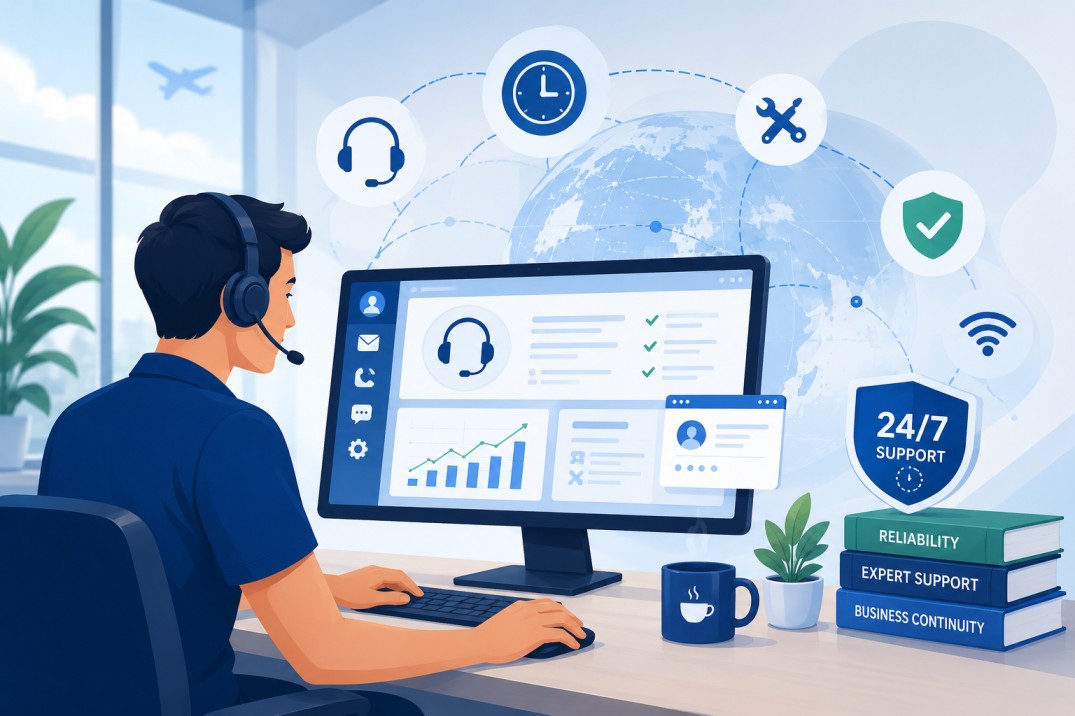
Remote IT support is exactly what it sounds like: a technician fixes your problem from wherever they happen to be, maybe two continents away, using screen-sharing tools and a ticketing queue. A frozen app, a broken email client, a late-night server patch, none of it requires a human in your building. That’s why remote technical support has quietly become the default. It’s cheap to deploy and nobody has to sit in traffic to get there.  

On-site is the opposite story. Someone has to physically show up, because some problems just don’t respond to a remote session. Think a dead router, a chewed-through cable, a new server rack going in. It takes longer to schedule, it costs more per visit, and for those specific failures, there’s no shortcut around it.  

A lot of remote technical support contracts promise a first response inside fifteen minutes, sometimes less. On-site is a different animal; even a well-staffed provider is often quoting same-day or next-business-day, since someone has to physically drive there.  

Most outsourced technical support providers  bundle remote and on-site under a single contract, so you’re not managing two vendors for one job. Companies that lean on business process outsourcing services for their broader IT function tend to land here too, mostly because it beats building an in-house help desk from the ground up.  


 Remote vs. On-Site IT Support: Cost Comparison 

Remote wins on scale. No mileage, no gas, no technician stuck behind a truck while your team stares at a frozen screen. One provider can cover dozens of clients from a single desk, and that’s exactly why remote technical support tends to be cheap: the overhead per ticket is tiny. A lot of technical support services now charge a flat fee per user or per device for remote coverage, which makes budgeting simple.  

  On-site is a different math problem. You’re not just paying for the fix, you’re paying for someone’s time on the road. A single visit can run several times the cost of a remote session, more if it’s after hours or the technician’s driving across town. Retail chains with point-of-sale terminals, factories with production-line machinery, that kind of business ends up paying a real premium for that access.   

The bigger savings usually show up when you skip a full-time hire altogether. Businesses using business process outsourcing services for IT tend to beat a salaried hire on cost outright, since a full-time employee costs more across a year than most outsourced technical support contracts, even ones bundling remote and occasional site visits.  

The honest cost comparison isn’t remote versus on-site in isolation. It’s remote-first with on-site as needed versus either extreme on its own, which is usually the cheaper path over a full year. Say a business fields fifty support tickets in a month. Route most of those through remote coverage and the bill is a fraction of what it’d be if a technician drove out for every single one, even counting the few that genuinely need a visit.   


Remote vs. On-Site IT Support: Which Is Better for Your Business? 

 If you deal mostly in cloud software, shared drives, and laptops, remote technical support will handle almost everything you throw at it. Password resets, patching, connectivity headaches, none of that needs a body in the room, and a remote technician can usually jump on the ticket before anyone finds parking outside your office.  

Running physical infrastructure changes the calculation completely. Servers, switches, specialized machinery, point-of-sale hardware, none of it fixes itself remotely. That’s why manufacturing, healthcare, retail, and hospitality businesses tend to land on a hybrid setup: remote handles the daily grind, on-site gets called in for the hardware stuff.  

Size matters too. A small team on a tight budget usually gets more mileage from remote-first technical support services, since paying for an on-call technician who rarely gets used is wasted money. Bigger operations, spread across locations or running complex equipment, need a provider who can show up on short notice, which is where a blended contract earns its cost.  

Then there’s compliance. Healthcare and finance, in particular, sometimes need someone physically present for reasons that have nothing to do with broken hardware, like auditing who has access to a server room. In those cases, remote technical support alone can’t satisfy the regulatory obligation.  

The practical move is to audit what actually breaks in your business over a typical quarter. If most tickets are software-related, weight your support plan toward remote. And if hardware keeps failing on you, don’t skip the guaranteed on-site response times in your contract; that’s the clause you’ll actually need. 


Final Thoughts 

Remote versus on-site isn’t really a rivalry. They’re two different tools for two different jobs. Remote technical support is faster and cheaper for the software and connectivity issues that make up most of your ticket volume. On-site earns its higher cost the moment hardware, cabling, or physical infrastructure enters the picture. Most businesses don’t actually need to choose a side; what they need is a provider that moves between both without friction, which is exactly what a well-built outsourced technical support setup should do.  

Call-To-Action 

Regardless of the size of the business you represent, if you’re considering hiring IT support experts for your projects, VoxtenD is here to help. Our suite of VA services covers all aspects of IT and beyond, ensuring that your business gets the help it needs, no matter the size or needs of your business. With round the clock availability, VoxtenD is your partner in achieving business success. Contact us today to explore how our services can benefit your business. 


Frequently Asked Questions 

Q1: What is the difference between remote and on-site IT support? 

A: Remote IT support happens from a distance, through remote access tools and ticketing systems, and covers most day-to-day software and connectivity problems. On-site support means a technician comes to your location for hardware failures, cabling, or installs a remote session can’t touch. 


Q2: Is remote IT support cheaper than on-site support? 

A: Usually, yes. Remote technical support skips the travel time entirely and scales easily, so hourly rates and monthly costs stay lower. On-site visits cost more because you’re covering the technician’s travel and time, not just the actual fix. 


Q3: When should a business choose on-site IT support? 

A: Go on-site whenever the problem is physical, damaged hardware, cabling, server room work, new equipment going in. If remote access literally can’t reach the problem, you need someone standing in front of it. 


Q4: Can remote IT support handle cybersecurity issues? 

A: Mostly, yes. Remote technical support handles security patching, firewall setup, malware removal, and ongoing monitoring without trouble. It’s the physical side, like locking down who can walk into a server room, that still needs someone on-site. 


Q5: Can businesses use both remote and on-site IT support? 

A: Yes, and most businesses should. A blended plan through outsourced technical support, or broader business process outsourcing services, uses remote coverage for daily tickets and reserves on-site visits for hardware and infrastructure problems, which tends to be the most cost-effective setup overall. 
Best Practices for Hiring ChatGPT Experts for Enterprise AI Projects

Best Practices for Hiring ChatGPT Experts for Enterprise AI Projects

Enterprise AI is not an experiment or a dream anymore; it has evolved and become an inseparable part of business operations. McKinsey says 65% of companies now use generative AI for at least one part of their business, which is almost double what it was just ten months ago. But here’s the catch: MIT’s Project NANDA found that 95% of these AI projects at big companies don’t actually provide the measurable result they promised. So why do so many AI projects fail to deliver? Usually, the reason comes down to who’s leading the project. That’s why now the majority of smart companies hire the best ChatGPT experts instead of relying on a random project manager or coordinator. In this article, we’ll explore what these ChatGPT experts actually do, how to choose the right one in India, and how to keep your company’s data safe in the process. 

What Does a ChatGPT Expert Actually Do for Big AI Projects? 

A ChatGPT expert is not someone who is hired because he’s good at typing prompts or creating new prompts. Some of them even think they make the AI do the whole job. For enterprise-level work, you need to find and recruit someone who really understands how these AI models work once they’re plugged into a real business. Relying on someone with a basic idea on how they behave in a chat window can actually downgrade your business. A ChatGPT expert is a specialist who works on the complex, technical, and strategic aspects of the AI that never appears in a demo.  

Their work begins with picking and tuning the right AI Model. Most companies don’t just use ChatGPT straight from OpenAI. A good ChatGPT expert figures out which version of the AI model actually fits the job role, decides if whether it needs any extra training such as RAG (which helps the AI to fetch information from your company’s data) and sets up safety standards and goals so that it doesn’t give incorrect inappropriate responses or violate company policies. 

Next comes connecting the AI model to real business systems. A chatbot that only shows up when given a prompt or lives in a browser tab is not much of a great help to a company’s business operations. A ChatGPT expert integrates or connects the AI model into the tools or systems people already use, known as legacy systems such as CRMs, internal databases, or ticketing systems. This in turn helps the AI chatbot to gather live data, take necessary action, and fit perfectly into the existing business workflows instead of becoming another ordinary app that people tend to forget.  

Then there’s designing guardrails and governance. This is the unglamorous and critical part of the ChatGPT expert’s role. What happens if the AI model gets asked something it shouldn’t answer? What if it hallucinates and adds random numbers to a client-facing report? The expert here builds content filters, approval steps, logging, and fallback behavior, so the systems don’t respond to these kinds of unpredictable situations rather than creating a major threat to the whole organization.  

After that comes their contribution in the testing phase. The expert stress-tests the AI model under real conditions. It’s not a five-minute demo. It’s exposing the AI model to actual scenarios with multiple complexities, messy, unclear, real-world inputs, edge cases, and adversarial prompts to see where the AI model stands and where it breaks. They make sure they find these weaknesses before customers or employees do. 

Finally, there’s measuring, mentoring, and improving. Almost 92% of the Fortune 500 companies are using Open AI’s tools for one task or the other, so it’s important to keep an eye on the AI model once it is live. A ChatGPT expert is responsible for analyzing how the chosen AI model is actually performing. They critically check aspects like accuracy, speed, cost per query, and user satisfaction, and keep on refining the prompts, retrieval sources, or fine-tuning data based on the result of the newly acquired real data. They don’t assume the first version as the final one. 

There’s so much technical skill involved, and that’s why so many businesses choose to hire the best ChatGPT experts instead of trying to build this whole skill set in-house from scratch with a newbie. Here, India has a unique place. Diverse companies specifically try to hire ChatGPT experts in India, as the country has a legacy on nurturing strong AI and IT talents. When compared to other expenses, the cost of onboarding them is relatively cheaper than creating an entire team.  


How to Find and Hire the Right ChatGPT Expert for Your Business 

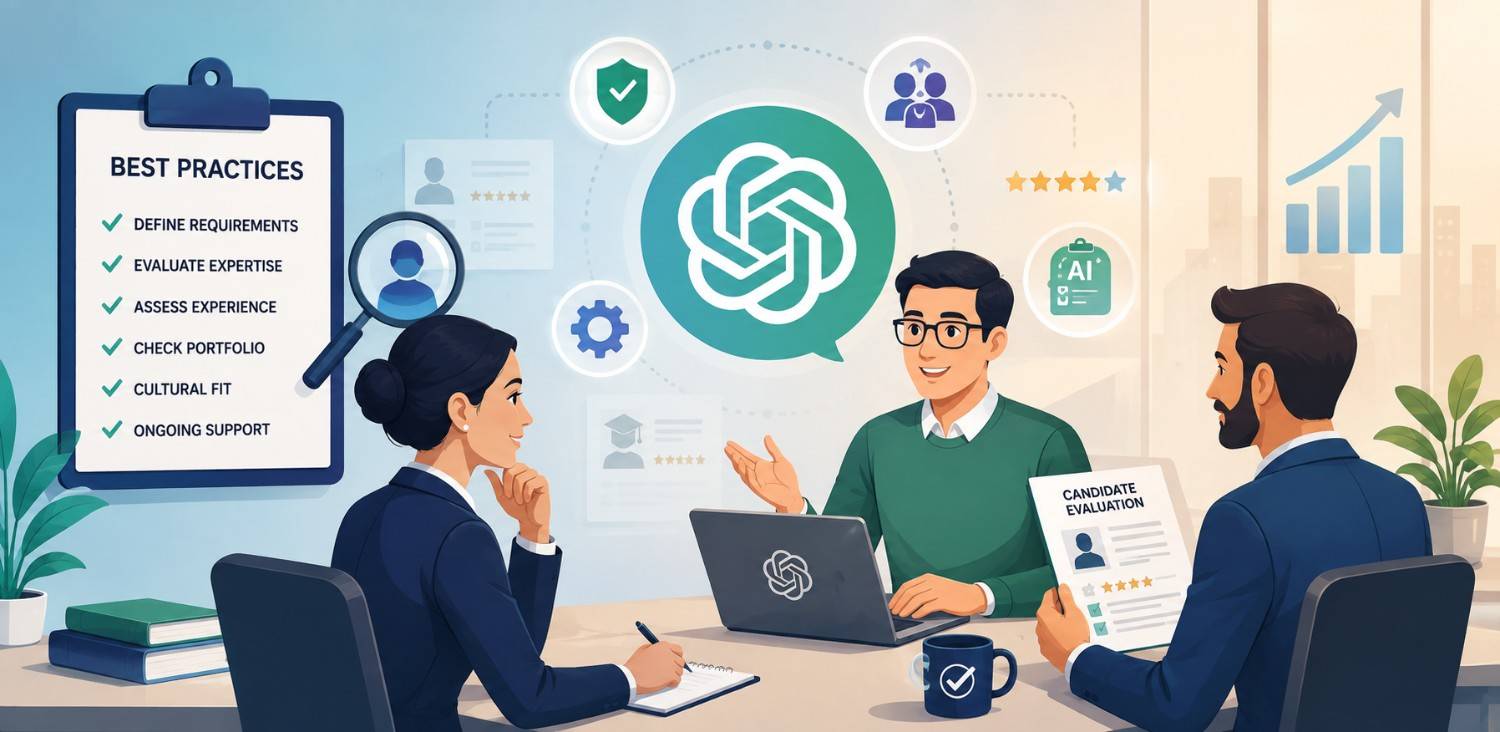
Hiring a ChatGPT expert is kind of risky if you are not clear about your business needs. Multiple roles like AI integration specialists, prompt engineers, and chatbot designers, etc. are often grouped together, so getting a clarity at first can make the recruitment more accurate. In order to hire the right one, you can consider these few steps: Define the role clearly and ask candidates to present a portfolio listing the projects that they’ve worked on. The candidates can even include the skill sets that they’ve achieved through each project if they want. Another workable thing you can do is, before signing a person for a long period, give them small paid tasks like building a simple chatbot workflow. Next, check how well they can communicate with others. Since it’s a role that needs collaboration with other teams like product, IT, and compliance, communication is a key factor when hiring a ChatGPT expert. This is exactly why ChatGPT experts in India are in high demand. They bring a strong technical background, good communication skills, solid time management, and cost advantages to the table. 

How to Keep Your Data Safe When Hiring ChatGPT Experts 

Data security is probably one of the biggest things holding companies back from investing too much into AI. Nobody wants to wake up to a headline about customers panicking over data leaks through some chatbot. But protecting your company’s data doesn’t have to be treated with that complexity.  

Always start with the boring but essential stuff. Get an NDA signed, and don’t even think about avoiding the data agreement. List out everything including how your data will be stored, who can all use it and when it should be deleted. This is the foundation and everything else builds on this basic thing. Next, you can ask about the certifications that he has like ISO 27001, SOC 2, or GDPR compliance, anything that is relevant to your industry or firm. If you’re in healthcare or finance, HIPAA or your local requirement is not something that you can ignore and consider optional. A ChatGPT expert who is not confident to give an answer is potentially a red flag, and you can disqualify him.  

You don’t have to give everyone permission or access to everything. It’s always tempting to bring more people onto a project and allow them to work on it, but the smarter move would be limiting access to people who need it.  That way, unknown damage is easily contained. A genuinely skilled ChatGPT expert will also be aware of the consequences of pasting sensitive company data into public AI tools. They will be working closely with private, business-grade versions of AI technologies. A good candidate won’t even treat security as a one-time checkbox or secondary. For a ChatGPT specialist, regular check-ins and testing is not something new, especially around anything that’s involved with customer data. It should be a part of the routine work rather than something that you think after a problem hits. 

Get these basics right, and you can hire the best and most reliable ChatGPT talent without compromising your business data. 

Final Thoughts  

AI adoption is progressing in a massive way, but the results are not living up to the hype. The companies seeing real, impactful payoff are the ones who bring in the right kind of people for the job — folks who understand AI rather than underestimating or overestimating it. They know how AI models fit into real business systems and how to keep everything secure and sound. Whether it’s your first AI project or your tenth, taking the time to hire the best ChatGPT experts and evaluating them properly is what separates a project that actually succeeds from one that fails in the long run.  

Call-To-Action 

Regardless of the size of the business you represent, if you’re considering hiring technical support experts for your projects, VoxtenD is here to help. Our suite of VA services covers all aspects of technical support and beyond, ensuring that your business gets the help it needs, no matter the size or needs of your business. With round the clock availability, VoxtenD is your partner in achieving business success. Contact us today to explore how our services can benefit your business. 


FAQs 

Q1: What exactly is a ChatGPT expert? 

ChatGPT expert is someone who understands various AI models or tools like ChatGPT and knows how to set up, customize, and connect them to the business systems that employees use regularly. Their job is not about being good at prompting; it’s about fine-tuning the selected AI model, building business workflows, connecting or integrating that AI into existing business systems, and making sure everything is done in a secure manner.   
 

Q2: How do I go about hiring a ChatGPT developer for a big project? 

Start by analyzing your company needs, whether that is anything related to integration help, prompt writing or conversation design. Check all the past works and try to give them a small task or test project. You can even pay for them if the project size is too big. Also, pay attention to their communication skills as they have to collaborate with multiple teams. Many firms are hiring ChatGPT experts in India as they come with strong technical skill and affordable rate.  
  

Q3: What skills should a good enterprise ChatGPT developer have? 

A good enterprise ChatGPT developer should have a basic understanding of natural language processing. They should also possess certain technical skills such as prompt generation and workflow building, have experience with RAG, integration skills to connect the AI model to existing business systems, and knowledge of security and compliance standards like ISO 27001 and SOC 2. Beyond a strong technical side, a good ChatGPT expert should also have strong communication skills. 

Q4: How much does it cost to hire a ChatGPT expert? 

The cost factor really depends on where you hire from. Hiring someone in the US or Western Europe usually costs a lot more than hiring offshore. That’s a big reason companies hire ChatGPT experts in India. In India, you can find strong talent without the high price tag, and without sacrificing quality. 

Q5: Should I hire individual ChatGPT developers or go with an AI company? 

Hiring depends heavily on how big your project is. If your requirement is something small and specific, hiring an individual developer is fine. But with respect to bigger projects that need a lot of attention to detail, ongoing support, security and integration across your whole business functionalities, partnering with an AI development company or VA provider is usually the best thing you can do. Ultimately, the goal is the same: hire the best ChatGPT experts who have performed well in your industry.  

How ChatGPT Experts Can Improve Business Processes and Efficiency 

How ChatGPT Experts Can Improve Business Processes and Efficiency 

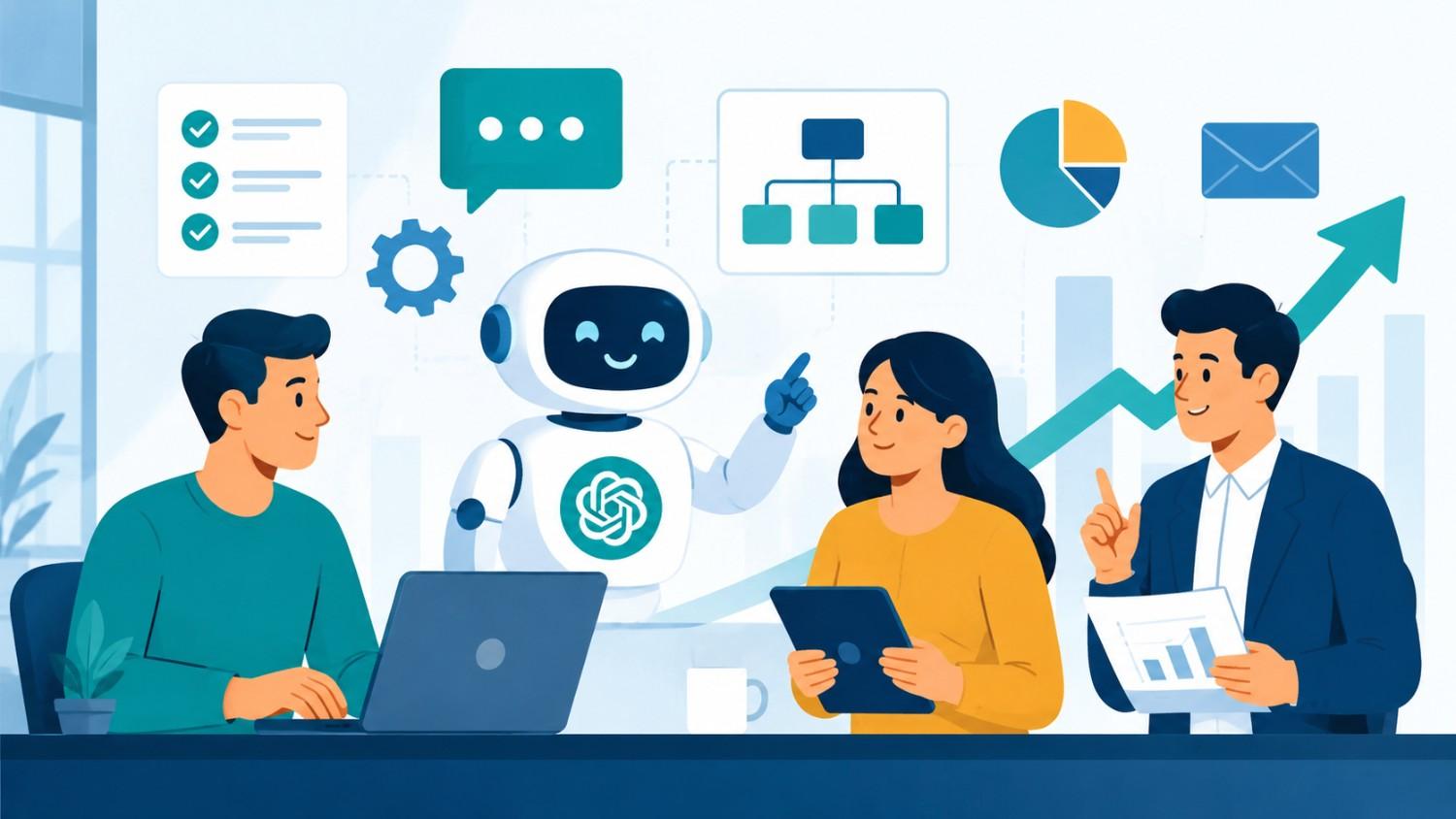
Forty unread tickets in the support inbox. A marketing brief still untouched from last week. An ops manager pulling numbers from three tools by hand before a Monday meeting. Almost any mid-sized company has some version of this scene, and it’s the exact grind that sends businesses looking for ChatGPT experts. Fixing it takes more than a chatbot and hope. A ChatGPT expert learns how a business runs before writing a single prompt, then builds integrations and automations that take work off people’s desks instead of handing them one more tool to babysit. This piece covers why companies keep hiring ChatGPT experts in India, what changes once one is inside your operations, and why the best results go to businesses that hire the best ChatGPT experts instead of whoever answers the job post first.   


Why Businesses Are Hiring ChatGPT Experts in 2026 

Hardly any company planned its AI rollout from day one. It just happened: someone tried ChatGPT for a task, got a decent result, and soon three departments were each using it their own way with nobody coordinating it. Calling that a strategy would be generous.    

The difference shows once you compare the two side by side: a support team using ChatGPT experts to build a trained, on-brand response system looks nothing like a team copying and pasting from a free chat window.  

Hiring ChatGPT experts in India specifically has become common practice, and the reasoning is straightforward. Indian tech talent already runs a huge share of the world’s enterprise software integrations, so applying that same skill set to ChatGPT deployments isn’t a leap, it’s a natural extension of work already being done well.  

Competitive pressure plays a role too. A company that automates ticket routing, report generation, and campaign drafting with ChatGPT experts can simply move faster than one still doing all three by hand, and speed differences like that eventually show up in customer retention and cost per unit. That’s pushing more businesses to hire the best ChatGPT experts before their competitors lock in the advantage first.  

AI left to run itself tends to cause nearly as much trouble as it fixes. Managed properly, it usually doesn’t.  


How ChatGPT Experts Improve Business Processes 

Customer service is usually first up. A generic chatbot annoys people fast because it doesn’t know a company’s products, policies, or its tone with customers. ChatGPT experts fix that at the source, training the model on real documentation and an approved voice, so it sounds like someone who works there. Tickets clear faster, and the team spends its time on cases that genuinely need a human.  

Internal operations see similar gains. A custom GPT built by ChatGPT experts can turn out a status report draft, boil down a week of email threads, or rough out a routine contract before someone’s finished their coffee, so the job becomes editing instead of starting from nothing.  

Marketing and sales teams get speed. ChatGPT experts set up systems for lead scoring, outreach personalization, and content drafts for testing, all built around approved brand voice guidelines rather than generic templates. A week of content production can shrink to a single afternoon of review.  

Data access improves too. ChatGPT experts wire the model into internal databases and business software through APIs, so someone in operations can just ask the question instead of hunting through spreadsheets. 

Plenty of people can write a decent prompt. Fewer can do prompt engineering, finetuning and API work all at once, and that’s the real difference between a ChatGPT expert and someone who got lucky for a week.  


Key Benefits of Hiring ChatGPT Experts for Your Business 

 Time savings are key. Drafting reports, answering the same question for the fortieth time, pulling data together before a meeting, all of it shrinks from an afternoon to about ten minutes once a ChatGPT expert has built and tested the workflow.  

Cost control follows naturally. Instead of adding headcount to keep pace with repetitive demand, businesses lean on automation built by ChatGPT experts, which holds costs steady even as volume grows.  

Consistency and accuracy improve too. When ChatGPT experts fine-tune a model against information the company has actually verified and kept current, wrong answers and off-brand replies stop being the constant background risk they are with an unmanaged setup.  

Decisions happen faster because the information does too. Leadership teams connected to ChatGPT-powered reporting can get answers on demand instead of waiting on a colleague to compile something manually.  

Scale becomes less of a headache. Systems built by ChatGPT experts absorb growth in customer volume or data load without requiring a matching increase in staff, which matters a great deal to any business trying to grow without ballooning payroll.  

There’s also a quality gap worth acknowledging. Plenty of freelancers slap “ChatGPT services” on their offering without the track record to back it up. Go for proven players instead.  


Final Thoughts 

The technology isn’t the differentiator anymore. Everyone has access to ChatGPT. What separates the businesses actually getting value from it is who’s setting it up, and that’s the entire case for ChatGPT experts. If your business is still experimenting with AI on an ad-hoc basis, or scaling something built without a real plan, working with experienced ChatGPT experts in India or elsewhere can save months of trial and error.  


Call-To-Action 

 Regardless of the size of the business you represent, if you’re considering hiring ChatGPT experts for your projects, VoxtenD is here to help. Our suite of VA services covers all aspects of AI, LLMs and beyond, ensuring that your business gets the help it needs, no matter the size or needs of your business. With round the clock availability, VoxtenD is your partner in achieving business success. Contact us today to explore how our services can benefit your business. 


Frequently Asked Questions 

 
Q1: What does a ChatGPT expert do for a business? 
 
A: A ChatGPT expert takes ChatGPT out of the generic chat window and builds it into how a company works. That means prompt engineering, fine-tuning it against the company’s own data, building custom GPTs for specific tasks, and wiring it into existing business software through APIs. 


Q2: How can ChatGPT improve business efficiency? 
 
A: It takes the repetitive stuff off people’s plates, drafting reports, handling routine questions, pulling data summaries together, so staff spend their time on work that needs judgment. When ChatGPT experts handle the setup, that speed doesn’t come with the quality drop of a rushed, unmanaged rollout. 


Q3: Which industries benefit the most from ChatGPT solutions? 
 
A: Customer service, e-commerce, healthcare admin, finance, and software development tend to see the strongest results, though any industry doing repetitive communication or data work has something to gain. Good ChatGPT experts shape the setup around each industry’s workflows and compliance rules, not a one-size-fits-all template. 


Q4: Can ChatGPT be integrated with existing business applications? 
 
A: Yes, and this is usually where most of the payoff sits. ChatGPT experts connect it to CRMs, helpdesk software, internal databases, and project management tools through APIs, so it works with a company’s real data instead of sitting off to the side. 


Q5: Why should businesses hire ChatGPT experts instead of using standard AI tools? 
 
A: A standard AI tool gives everyone roughly the same generic output. ChatGPT experts build around one business’s actual data, workflows, and goals instead, which is why companies that hire the best ChatGPT experts end up with better accuracy and consistency than the ones using an off-the-shelf setup and hoping.